



Unleashing Gen Z's Potential: New AI-Powered Training Program for Autonomous Growth
Empowering Gen Z Through Innovative AI-Driven Learning
In a progressive move within corporate training, Shake Inc., based in Chiyoda, Tokyo, has unveiled a groundbreaking initiative aimed at Gen Z new employees. In partnership with Code Tact, known for their reflection management system Team Tact, they have introduced a new employee development program named CYCLE. This initiative addresses contemporary challenges in workforce training and adjusts to the motivational characteristics of Gen Z.
The Need for Change
Recent findings from Shake Inc. reveal significant trends and challenges in training new employees. Notably, this generation values individuality and personal growth as primary aspects of their career motivation. For instance, they may express discontent with their roles, stating, “If my placement request isn’t met, I’ll leave” or perceiving mentorship criticism as harassment, highlighting their sensitivity to workplace dynamics.
Challenges for OJT Trainers
OJT trainers and management often face difficulties communicating feedback due to the fear of misunderstanding or potential harassment claims from new hires. This hesitation can leave new employees unaware of necessary improvements in their performance, creating a cycle of ineffectiveness.
Limits of OJT Dependency
Today’s workforce tends to favor a collaborative and validated approach to learning. However, busy workplaces may struggle to provide sufficient interaction to build the necessary understanding and engagement among recruits. As such, a self-management structure is essential, shifting the onus of learning onto the new employees themselves.
Recognizing these complexities, Shake Inc. created the CYCLE program to enable new employees to autonomously develop their skills and cultivate a resilient work ethic through shared learning experiences.
Core Features of the CYCLE Program
The CYCLE program comprises three significant components which aim to enhance self-producing capability among recruits.
1. Self-Producing Skills for Workforce Integration
In an era where skills can quickly become outdated, the program emphasizes not just the acquisition of competencies but also the relational dynamics that make one a desirable team member. The curriculum promotes a proactive approach to relationship-building and encourages recruits to seek and utilize constructive feedback for personal and professional development.
2. Continual Learning through Peer Collaboration
The program maintains relationships among trainees even after formal placement, facilitating an environment where shared learning and personal reflections can thrive. Participants develop their individual goals and engage in the experiential learning cycle by setting objectives, acting on them, and reflecting on the outcomes consistently.
3. Utilization of Team Tact for Structured Reflexivity
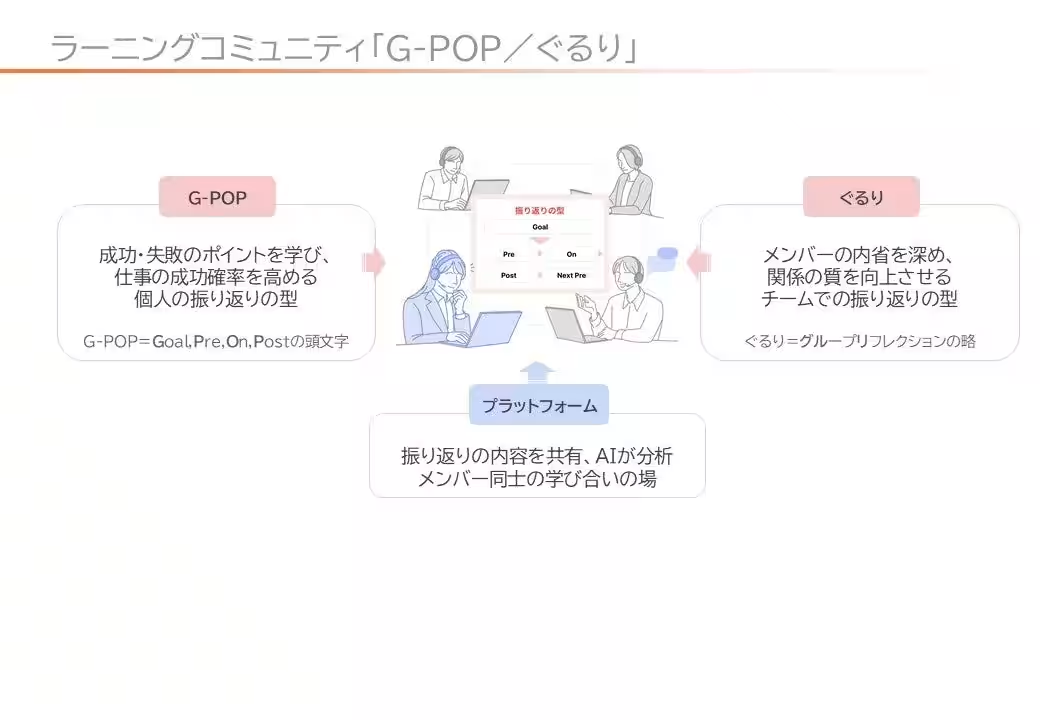
G-POP, a methodology combining goal setting, pre-activity preparation, on-the-job execution, and post-activity reflection, will serve as the backbone of the program. This structured approach will enable teams to share experiences regularly, while leveraging AI analytics to inform and improve learning cycles.
Implementation Overview
Pre-Placement Training
New hires will undergo preparatory sessions focused on distinguishing assertiveness from trust-building and recognizing qualities in mentors that foster collaboration. They will learn about the experiential learning cycle, fostering resilience in the face of setbacks.
Post-Placement Follow-Up (3-6 months)
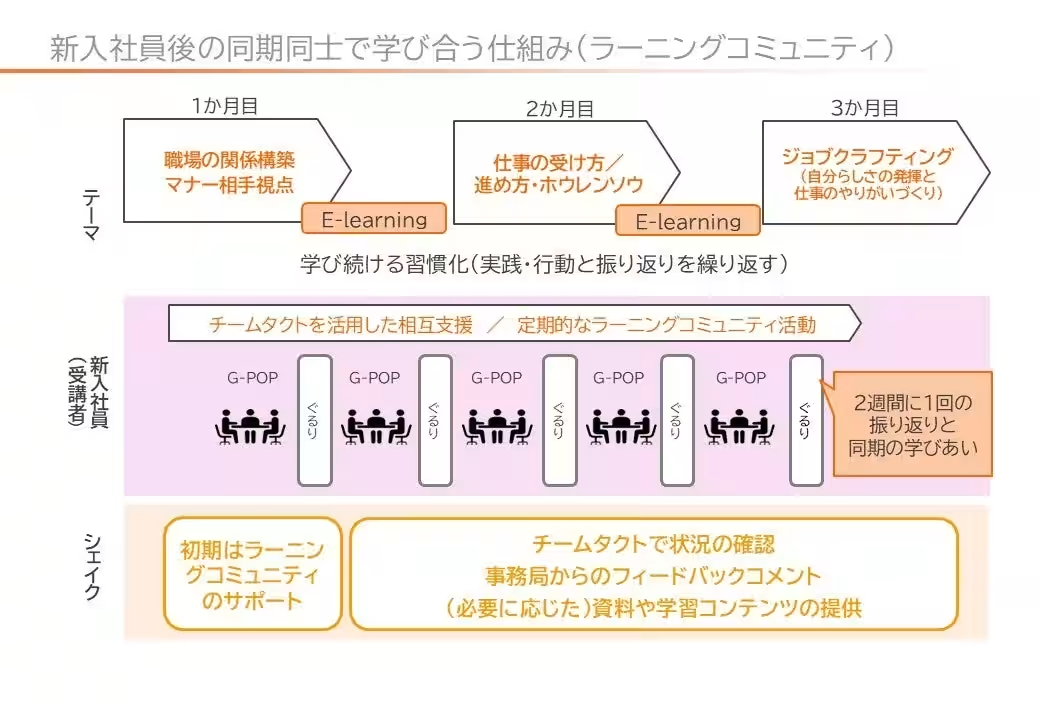
After placement, trainees will continue with bi-weekly reflections and peer learning sessions utilizing Team Tact. The first month focuses on workplace relationship building, followed by work process orientation in the second month, culminating in job crafting techniques in the third month.
Optional Add-Ons
Incorporating simulation-based training or custom-tailored interventions for specific organizational circumstances and guidance for OJT trainers remains available based on corporate needs.
Overcoming Critical Hurdles
Bridging the divide between

Topics People & Culture)
【About Using Articles】
You can freely use the title and article content by linking to the page where the article is posted.
※ Images cannot be used.
【About Links】
Links are free to use.