



A Shocking Study Reveals One in Four Employees Unaware of Company Policies on Harassment
Understanding Harassment Awareness in the Workplace
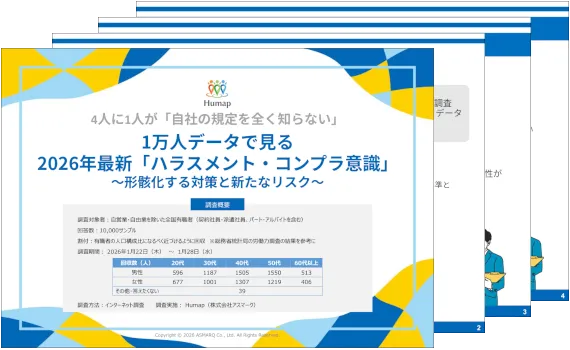
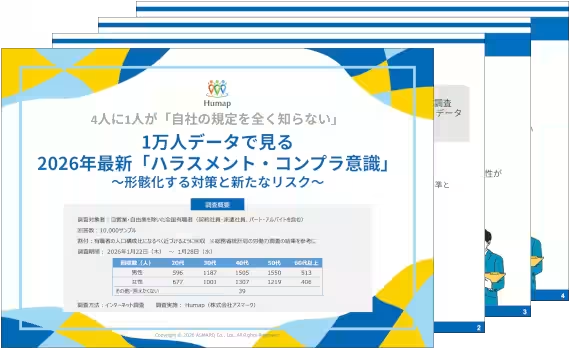
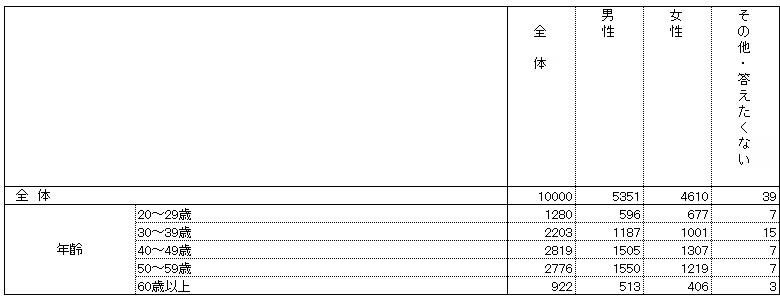
In a groundbreaking survey conducted by Asmarq's employees' engagement service, Humap, it was found that an alarming one in four employees are completely unaware of their company's harassment policies. This report, which encompasses data from 10,000 working individuals across Japan, reveals concerning trends regarding compliance and harassment awareness in the workplace.
Survey Overview
The survey, titled "Harassment and Compliance Awareness Survey 2026," aimed to gather insightful data on how well employees understand their organization's policies on harassment and compliance. The research was conducted online between January 22 and January 28, 2026, and serves as a benchmark to analyze changes and trends in workplace culture over the past three years, particularly following the mandatory implementation of the Power Harassment Prevention Act.
The results show a stark contrast between the perception of harassment awareness and actual knowledge of policies among employees. While companies have developed training programs and instituted regulations to combat workplace harassment, many employees feel that these measures have become mere formalities—often referred to as being 'window-dressing'.
Key Findings
1. Compliance Scores Increase, Yet Awareness Declines: While the overall evaluation scores for compliance have improved, the awareness of these policies has diminished. This reversal indicates a growing disconnect between formal compliance and actual understanding.
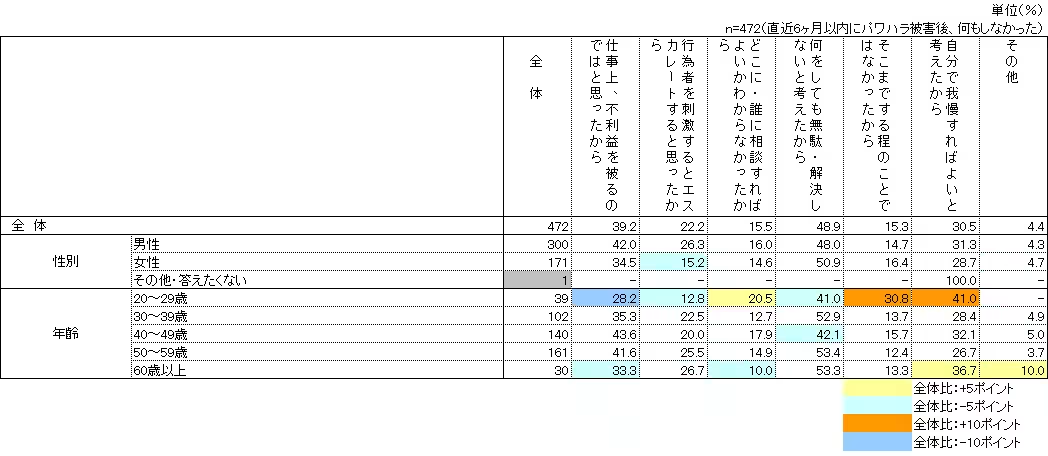
2. The Impact of Power Harassment: It was revealed that nearly half of those who experienced power harassment did not take any action, with many expressing the sentiment that "nothing would change or be resolved". This significant lack of trust in the effectiveness of existing measures indicates a pressing need for reform.
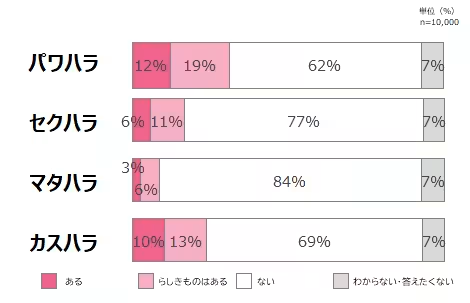
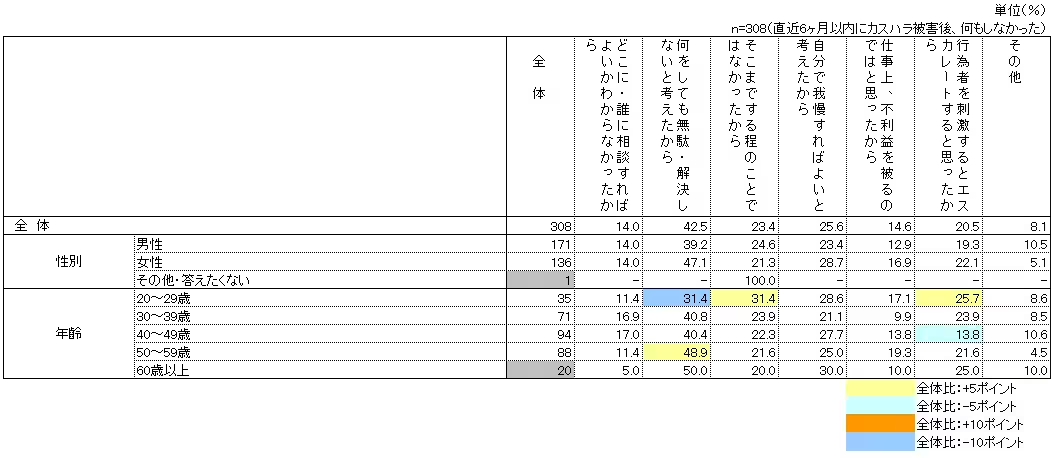
3. Emerging Risks of Customer Harassment (Casu-Hara): For the first time, the survey included data on customer harassment, with 10% of respondents reporting experiences related to this issue. The data highlights that employees may feel unsupported by their companies in cases involving difficult customer interactions, further isolating issues of harassment in various forms.
4. Communication Gaps: The survey revealed that 35% of employees felt that negative reports from the workplace did not reach upper management, suggesting that communication barriers are fostering an environment conducive to compliance violations and harassment.
Why Awareness Matters
Understanding workplace policies is crucial for fostering a safe and supportive environment. With the data showing a significant portion of employees unaware of regulations, companies must take proactive measures to ensure clarity and transparency surrounding their policies. Training programs need to be revisited and updated to engage all levels of staff consistently.
Moving Forward
With these insights in hand, Asmarq aims to assist companies in revising their compliance and harassment strategies through Humap’s services. The push for enhanced communication, employee training, and robust reporting mechanisms is essential in addressing these issues effectively.
In conclusion, organizations must recognize the gravity of these findings and act decisively to cultivate an informed workforce that can engage in positive dialogues about harassment and compliance. It is not just a legal obligation but an ethical imperative to ensure that every employee feels respected and informed in their working environment.
For More Information
To download the full report and gain access to the detailed findings of the survey, please visit the Humap website.

Topics People & Culture)



【About Using Articles】
You can freely use the title and article content by linking to the page where the article is posted.
※ Images cannot be used.
【About Links】
Links are free to use.