



The Netherlands to Implement Truck Tolls from July 1, 2026 to Enhance Sustainability
The Netherlands to Introduce Truck Tolls in 2026
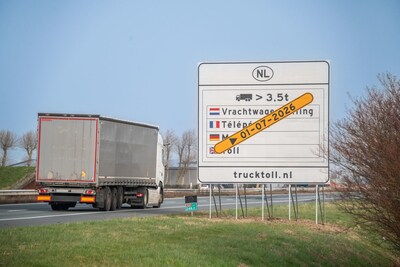
The Netherlands is set to implement a truck toll from July 1, 2026, marking a significant policy shift aimed at enhancing road safety and promoting sustainable transport practices. Beginning on this date, all truck owners, including those from foreign countries, will be subject to a toll charged based on the distance traveled.
What You Need to Know About the Toll Implementation
The newly established toll will apply to trucks categorized as N2 and N3, which have a maximum authorized mass exceeding 3,500 kg. Almost all Dutch highways, along with certain provincial and municipal roads, will be included in this toll framework.
To facilitate this, truck owners must equip their vehicles with an operational On-Board Unit (OBU), which will monitor and register the kilometers driven. The toll can be paid using contracts signed with service providers who supply this necessary hardware and oversee the toll transactions.
The truck toll aims to replace the existing Eurovignette system in the Netherlands, which will cease on the same date. Current projections indicate that around 725,000 unique foreign trucks travel across Dutch roads annually, spotlighting the import of implementing this toll for revenue generation and transport regulation.
Payment and Compliance Requirements
For smooth operation, the OBU should be activated at all times while the vehicle is on Dutch roads. Unlike some systems in other countries, individual route tickets will not be available; compliance entails constant registration via the OBU.
Several providers are authorized to supply these units. Among them, the European Electronic Toll Service (EETS) vendors cater to multiple nations, while NedLinq focuses solely on Dutch routes. For foreign truck owners who already possess OBUs, many providers will allow extension of coverage, although existing German and Belgian units like Toll Collect and Satellic are incompatible in the Netherlands.
Goals Behind the Toll Introduction
The principal aim behind the truck toll is to charge truck owners according to distance traveled, thereby incentivizing cleaner and more efficient transport solutions. The toll fees will vary depending on vehicle weight, CO2 emission class, and in certain instances, Euro emission standards. More detailed information, including fee calculations, can be accessed on the official site www.trucktoll.nl.
A significant portion of revenue generated from this toll will be allocated towards subsidies designed to improve sustainability within the trucking sector.
Enforcement and International Awareness Campaign
From the outset of this initiative, all N2 and N3 trucks entering the Netherlands must have a functioning OBU as a means of compliance. Failure to adhere to this requirement can result in penalties for the vehicle owner.
To support this rollout, a broad international information campaign has been launched to educate truck owners and relevant stakeholders about the upcoming toll system. Providers are actively engaging with customers to ensure they are well-informed ahead of the roll-out date.
For further details about the toll system and for fee information, individuals can visit www.trucktoll.nl. This change represents an ambitious step towards not only regulating road usage more effectively but also fostering a shift towards more sustainable transport methods in the Netherlands.

Topics Auto & Transportation)
【About Using Articles】
You can freely use the title and article content by linking to the page where the article is posted.
※ Images cannot be used.
【About Links】
Links are free to use.