



Rapid Uptake of Multi-Genetic Testing for Lung Cancer Amidst Unmet Needs
Rising Adoption of Multi-Genetic Testing in Lung Cancer Treatment
A recent study published in the Cancer Science journal has shed light on the growing trend of multi-gene testing for lung cancer patients in Japan, specifically those with Stage IV non-small cell lung cancer (NSCLC). Conducted by a collaboration between Kansai Medical University, the Alliance for Lung Cancer (A4LC), Kindai University, and Global Health Consulting Japan (GHC), the study analyzes data from over 24,000 patients across 300 hospitals from April 2019 to May 2024.
Findings of the Study
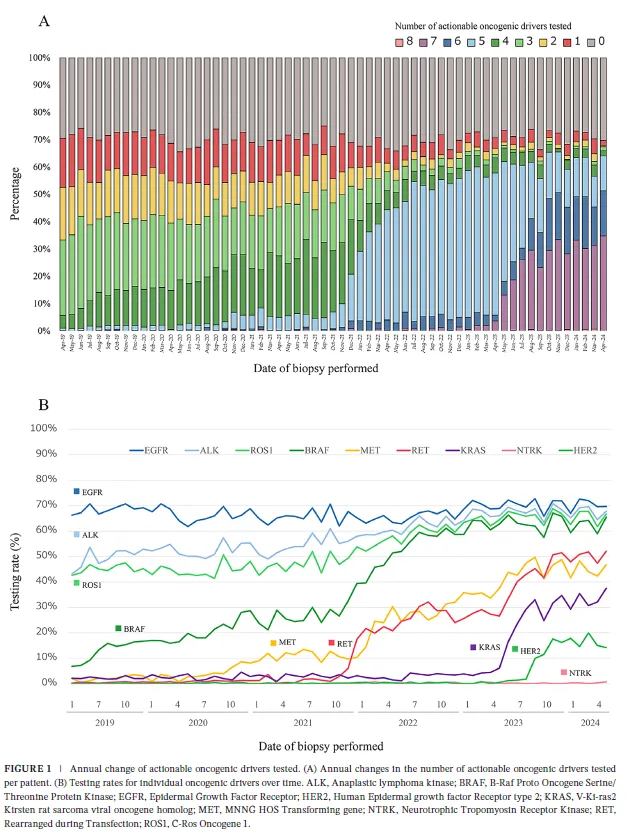
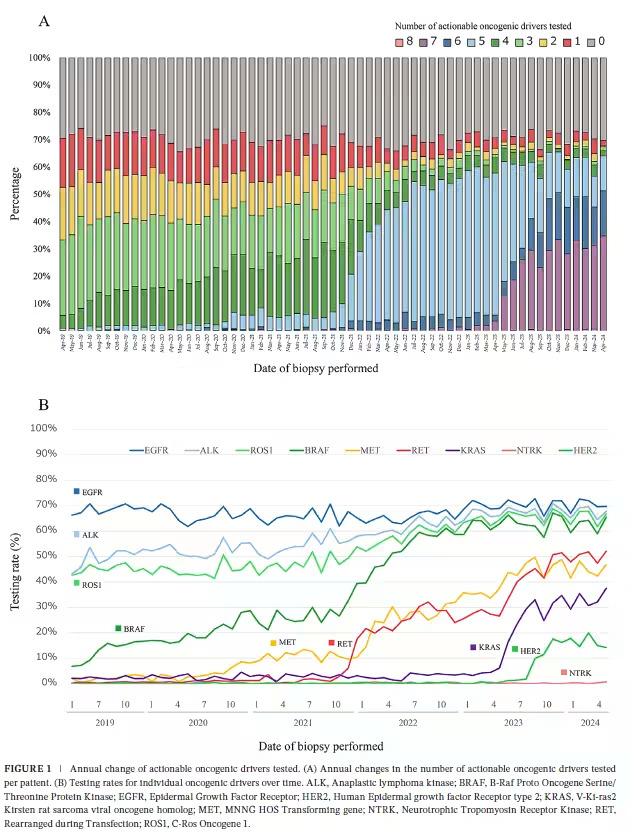
The research indicates a significant increase in the usage of multi-gene testing, highlighting the importance of targeted therapies aimed at rare driver genes responsible for oncogenesis. Although the adoption of these comprehensive tests has increased, the study also found that approximately 30% of patients still have not undergone any genetic testing, regardless of geographic or age-based factors.
In the past, fewer patients were tested for five or more driver genes, yet data gathered from 2021 onwards show a marked increase, with testing for six to seven genes becoming more common by mid-2023. Notably, while the testing rates for EGFR remained consistently high, those for ALK, ROS1, and BRAF have also surged significantly, reaching levels comparable to EGFR.
The Silent Gap in Testing
Despite advancements, this persistent gap where nearly a third of patients do not receive genetic testing is alarming. This finding was consistent across various regions in Japan, showing that irrespective of age demographics, many patients are left untested. Factors contributing to this issue may include the patients' physical conditions, inadequacies in tumor tissue samples, and the urgency of initiating treatment.
Furthermore, over 25% of those who did not receive genetic testing also did not undergo subsequent drug therapies, prompting concerns that some patients were deemed unfit for such treatments due to their conditions.
Increasing Treatment for Rare Genetic Mutations
Those who did receive multi-gene testing saw a gradual increase in the utilization of molecular-targeted drugs over the five-year study period. While treatments targeting well-known genes like EGFR and ALK constituted a majority, there is a growing trend towards therapies addressing rarer driver genes, such as MET and RET—indicative of how multi-gene testing fosters broader treatment options in clinical settings.
Ensuring Accessibility to Testing and Treatment
The findings emphasize that while the penetration of multi-gene testing is accelerating among lung cancer patients in Japan, the existence of an untested cohort remains a critical concern. The research team advocates for improved patient education on genetic testing and the establishment of shared decision-making processes between healthcare providers and patients as essential strategies to close this testing gap.
The collaboration among medical professionals and organizations like GHC and A4LC aims not only to enhance the quality of cancer treatment but also to engage patients in their care processes more effectively.
In summary, while Japan is witnessing notable progress in the realm of genetic testing for lung cancer, simultaneous efforts must aim to bridge the gap for those who have yet to benefit from these potentially life-saving advancements.
Topics Health)





【About Using Articles】
You can freely use the title and article content by linking to the page where the article is posted.
※ Images cannot be used.
【About Links】
Links are free to use.