



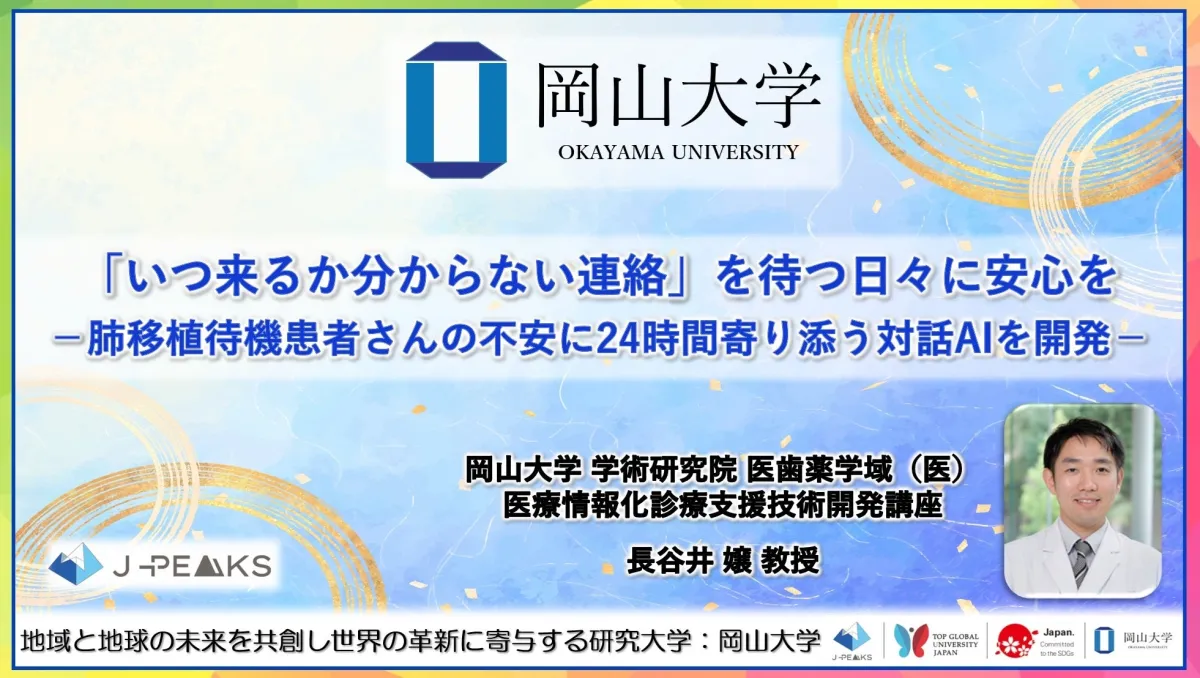
Innovative AI Peer Supporter Developed for Lung Transplant Patients Waiting for Transplants
Introduction
In a groundbreaking initiative by Okayama University, a new AI peer supporter tailored for lung transplant patients has been developed. This innovative system seeks to alleviate the anxiety and isolation experienced by those awaiting life-saving transplants, which often require patients to endure extended waiting periods.
Understanding the Challenges
The challenge of long wait times for lung transplants in Japan has become increasingly pressing. Patients can face an average waiting time of over 900 days, leading to heightened feelings of uncertainty and distress as they navigate the complexities of their health situations. This often culminates in sleep disturbances and severe emotional strain. Furthermore, due to a shortage of brain-dead donors, the number of transplants performed remains limited, resulting in a scarcity of available peer supporters who can relate to the direct experiences of these patients.
The Development of AI Peer Supporter
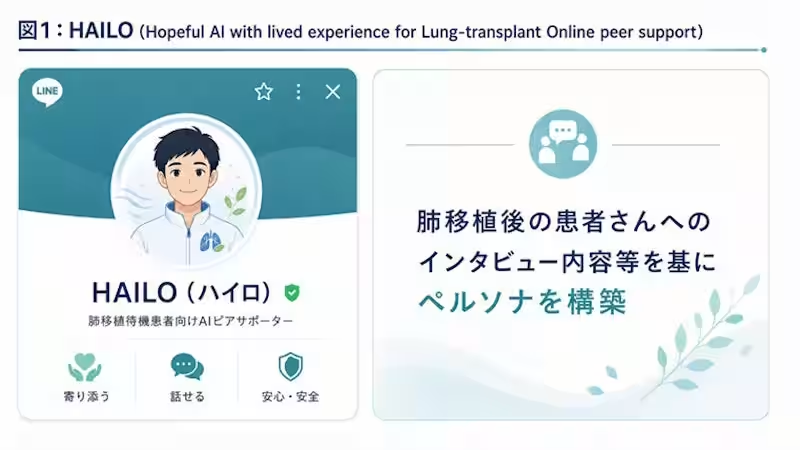
The AI peer supporter developed at Okayama University is designed specifically to respond to the emotional needs of lung transplant patients. Unlike traditional medical advice systems, this AI focuses exclusively on providing empathetic listening and support. The development process was collaborative, involving input from medical professionals within the organ transplantation medical center and members of the lung transplant team. After thorough testing, adjustments were made based on feedback from both patients and healthcare providers to ensure the system effectively addresses the real-life challenges faced by patients.
Patients can access this AI program conveniently via their smartphones, allowing them to communicate their feelings and desires without reservation, regardless of the time or place. This ongoing dialogue is intended to empower patients by providing a sense of connection during an otherwise isolating experience.
Research and Implementation Plans
Okayama University is beginning a study to evaluate the satisfaction and quality of life (QOL) of patients using this AI system. This is part of a broader initiative funded through the JST Startup Ecosystem Co-Creation Program. The research aims to systematically assess the effectiveness of the AI peer supporter in enhancing the emotional well-being of lung transplant patients.
Insights from Developers
Professor Hiroshi Hasei, who leads the project at Okayama University, emphasized the importance of addressing the psychological needs of patients waiting for transplants. He stated that these individuals often grapple with unresolved fears and loneliness as they wait for uncertain transplant opportunities. The development team has been dedicated to creating an AI that not only reflects the clinical realities faced by patients but also serves as a reliable source of emotional support. Having previously developed an AI peer supporter for breast cancer patients, the team now aims to reiterate their commitment to mental health care through this latest initiative.
Future Developments
As the implementation phase progresses, the team plans to continuously refine the AI based on user feedback to ensure it remains a valuable resource for patients. By facilitating a supportive environment during the lengthy waiting periods, they hope to transform what can be an isolating experience into a more manageable reality. This initiative is not just about technological advancement; it represents a step forward in compassionate healthcare that prioritizes the emotional and mental well-being of patients.
Conclusion
Okayama University is proud to contribute to the advancement of patient care with this innovative AI peer supporter, designed specifically for lung transplant patients. This effort highlights the university’s commitment to enhancing the quality of life for those enduring significant health challenges and sets a benchmark for future developments in AI-driven patient support systems.
For further information on this initiative and ongoing research, visit the official Okayama University website.





Topics Health)



【About Using Articles】
You can freely use the title and article content by linking to the page where the article is posted.
※ Images cannot be used.
【About Links】
Links are free to use.