



2026 Ranking of Japan's Best Employers: Conditions for Success in an Era of Labor Shortages
The Best Workplaces in Japan for 2026
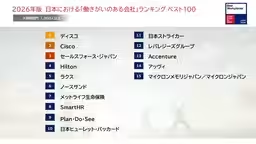
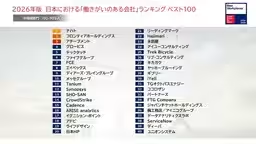
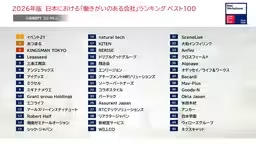
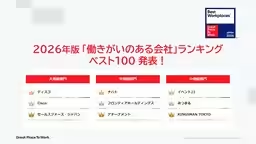
The Great Place to Work® Institute Japan (GPTW Japan) announced its 2026 ranking of Japan's best workplaces on February 6, showcasing companies that have excelled in creating environments that foster employee satisfaction and engagement. This year's survey, with a focus on identifying viable conditions for attracting talent in an era where labor shortages are a pressing issue, encompassed responses from 683 companies and recognized the top 100 as 'Best Workplaces 2026.'
Key Findings
The survey ran from July 2024 to September 2025, and revealed that domestic firms dominated across all size categories for the first time in nine years.
- - Large Companies: DISCO (Manufacturing) took the top spot, followed by Cisco (IT) and Salesforce Japan (IT).
- - Medium Companies: NAHAT (Advertising & Marketing) emerged as the leading firm, moving up significantly from 11th place last year.
- - Small Companies: EVENT21 (Others) maintained its top position for the second consecutive year.
Challenges in Japan’s Workforce
Facing unprecedented labor shortages, with 427 reported bankruptcies attributed to workforce issues by 2025, Japanese companies are grappling with retention and engagement challenges. Many are addressing these challenges through wage increases and operational improvements; however, these reactive measures do not sufficiently tackle deeper systemic issues like employee turnover and disengagement.
Importance of Employee Engagement
The research underscores that for companies to thrive, boosting employee engagement—where workers feel motivated and fulfilled—is essential. High engagement leads to better retention rates and stronger recruitment capabilities, a finding supported by years of research.
As more companies participate in the GPTW survey—683 in total this year—there is a clear trend of businesses prioritizing employee engagement, marking the survey’s 20th edition.
Selection Process of the Rankings
The companies were evaluated based on two main criteria:
1. Quantitative Assessment from Employee Feedback: Anonymous surveys collected genuine feedback from employees about their experiences, translating their sentiments into measurable data. In addition, companies answered questionnaires covering their management philosophy, HR policies, and specific initiatives. Thorough analysis of both sides provided a multifaceted evaluation of workplace environments.
2. In-depth Assessment Based on 30 Years of Research: Using the Great Place To Work® Model—anchored in the pillars of trust, pride, and camaraderie—the evaluation aims not solely at benefits but captures the essence of workplace satisfaction through the relationships between employees and management, pride in one's work, and a collective spirit among teammates.
Insights from the 2026 Rankings
The rankings confirmed that all size classifications (large, medium, and small) had domestic firms taking the top spots, emphasizing a cultural shift toward valuing employee satisfaction within Japanese businesses.
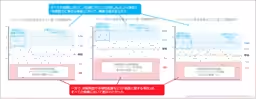
The standout characteristics of the top 100 firms included a workplace culture that encourages enjoyment of work, a product of effective talent management, and consistent leadership practices. Interestingly, differences in structural aspects like vacation policies or diversity initiatives showed marginal variance compared to other recognized firms. This indicates that a company’s overall quality of management and a culture that celebrates work enjoyment are significant contributors to high employee engagement.
About Great Place To Work® Institute
Founded to evaluate employee engagement globally, the Great Place To Work® Institute conducts surveys in over 170 countries, assessing more than 21,000 companies annually. Their rankings have become a vital tool for talent branding and investor relations in organizations looking to enhance their workplace culture. In Japan, the licensing operations by Great Place To Work® Institute have given rise to GPTW Japan, which continues to promote meaningful employee engagement as a standard of success.

Topics People & Culture)

【About Using Articles】
You can freely use the title and article content by linking to the page where the article is posted.
※ Images cannot be used.
【About Links】
Links are free to use.