



Understanding Employee Perceptions on In-House Secondments: Key Findings from a Recent Survey
Overview of the Employee Awareness Survey on In-House Secondments
In December 2025, the Industrial Employment Stabilization Center, headquartered in Koto, Tokyo, conducted a web-based survey targeting employees from companies with over 300 employees who are currently on secondments. With a total of 1,000 responses, the results shed light on employee opinions regarding the in-house secondment system and its implications for future employment mobility.
Key Findings
The survey revealed several points of interest regarding the reasons for secondment, future plans, evaluations of the experience, and perceived benefits.
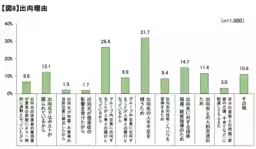
1. Reasons for Being Seconded
When asked about the reasons for their secondment, 31.7% indicated that it was to address labor shortages at the host company. Another 26.4% stated it was due to the organizational tradition of inter-company secondments within corporate groups.
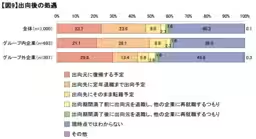
2. Future Plans Post-Secondment
A significant 40.3% of respondents reported uncertainty regarding their plans following the end of their secondment. Additionally, 23.7% planned to return to their original company, while another 23.6% intended to remain at the host company until retirement, and 8% looked to transition permanently to the host company.
A breakdown by group revealed that those seconded to internal companies were more likely to stay until retirement, while those in external companies planned to return to their original positions.
3. Evaluation of the Secondment Experience
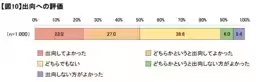
Half of the participants (50.0%) expressed positive sentiments about their secondment experiences, indicating they felt it was beneficial. In contrast, 38.6% remained neutral, and 11.4% viewed it negatively.
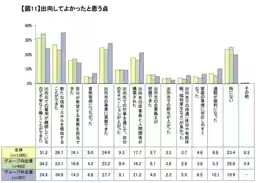
4. Benefits of Secondment
Among those who appreciated their secondments, 31.2% cited the ongoing employment with their original company as a source of security. For secondments to external companies, 34.9% valued the opportunity to acquire new skills and expertise, highlighting a positive correlation between secondment experience and skill development.
Survey Methodology
The survey was conducted through a private market research company using an online questionnaire format.
Respondent Details
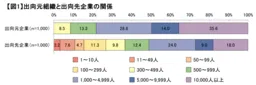
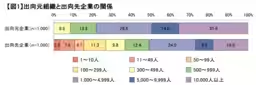
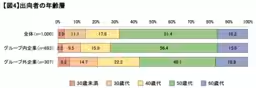
The average age of respondents was 51.1 years. The majority (51.4%) were in their fifties, followed by those in their forties (17.8%) and sixties (16.2%). Secondments to internal companies tended to skew towards older age demographics, while external secondments had a more diverse age range.
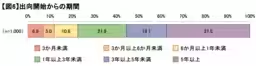
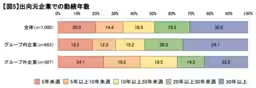
Respondents' tenure with their original companies showed that 30.6% had been employed for over 30 years, indicating a strong commitment to their original employers. Also, 37.5% had been on secondment for more than five years, demonstrating the potential for long-term assignments in the current employment landscape.
Relationship Between Transferring and Origin Companies
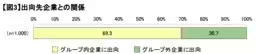
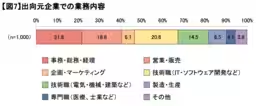
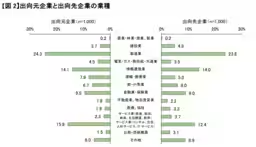
About 69.3% of transfers occurred within group companies, while 30.7% were to external companies, showcasing a trend of internal labor movement among large corporate entities. Manufacturing industries led the source of secondments, while service sectors showed a substantial presence, supporting a pattern of skill-sharing within associated businesses.
Conclusion
This survey reveals that while a significant portion of employees underline the positives of in-house secondments, concerns about future employment remain prevalent. The effectiveness of secondment as a tool for skill enhancement and organizational development is mirrored in the respondents' feedback, underscoring the need for thoughtful progression in employment mobility strategies within corporate structures. The findings will aid the Industrial Employment Stabilization Center in reinforcing support for seamless labor transitions with minimal job loss.
Topics People & Culture)



【About Using Articles】
You can freely use the title and article content by linking to the page where the article is posted.
※ Images cannot be used.
【About Links】
Links are free to use.