



Okayama University Collaborates to Develop Sustainable Medical Model with Reusable Calf Cuffs
Collaborative Innovation in Healthcare
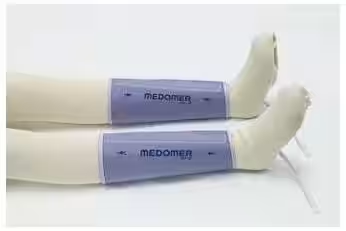
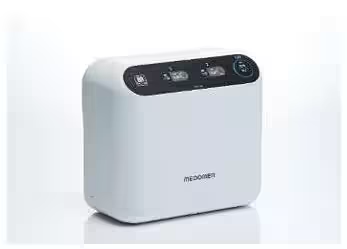
Okayama University and Nitto Kohki Co., Ltd. have joined forces to develop a forward-thinking product: the reusable calf cuff designed for use in sequential pneumatic compression devices that prevent venous thrombosis. This innovative approach emerged as a solution to manage rising costs and address the increasing waste associated with single-use medical products.
The Need for Change
In recent years, hospitals have predominantly used disposable cuffs for compression devices, driven by hygiene concerns. However, this practice has contributed not only to escalating costs but also to significant environmental waste. The project team, led by Shinn Iwatani, a clinical engineer at Okayama University Hospital, aimed to tackle these challenges by creating a sustainable alternative that does not compromise on safety or practicality.
A New Approach to Medical Devices
The reusable calf cuff was developed with a commitment to durability and ease of cleaning. Utilizing feedback from nursing staff and clinical engineers, the team undertook extensive interviews and surveys to understand the specific needs and pain points in the usage of existing products. This iterative process involved repeatedly testing prototypes to enhance comfort and usability, ensuring that both patient needs and healthcare providers' workflow were prioritized.
The resulting product features a design that aids in effective cleaning and drying, allowing it to be reused multiple times without sacrificing hygiene standards. This presents a win-win situation for hospitals, significantly reducing waste and costs associated with medical supplies.
Sustainable Healthcare Practices
The project not only shines a light on the importance of sustainability in healthcare but also aligns with the United Nations' Sustainable Development Goals (SDGs). As the healthcare industry grapples with environmental challenges, innovations like the reusable calf cuff represent vital steps toward more sustainable medical practices that can help reduce the industry's ecological footprint.
Shinn Iwatani stated, "Our goal is to make durable products that can be valued over time in the healthcare environment." His dedication to integrating practical insights from clinical practices into product design is evident, showcasing a serious commitment to enhancing both the efficiency and sustainability of medical operations.
What's Next?
As the development reached its conclusion, Okayama University aims to expand its research into other reusable medical products to further support the healthcare sector's shift towards sustainability. This initiative underscores the significance of collaboration between academic institutions and industry partners in driving innovation that benefits society as a whole.
With the reusable calf cuff now a reality, healthcare facilities can look forward to more responsible practices that not only improve patient care but also contribute to broader environmental goals. This project sets a promising precedent for future developments in healthcare-related technology, marrying patient needs with ecological stewardship.
For more details, please visit the Okayama University official page.



Topics Health)
【About Using Articles】
You can freely use the title and article content by linking to the page where the article is posted.
※ Images cannot be used.
【About Links】
Links are free to use.