



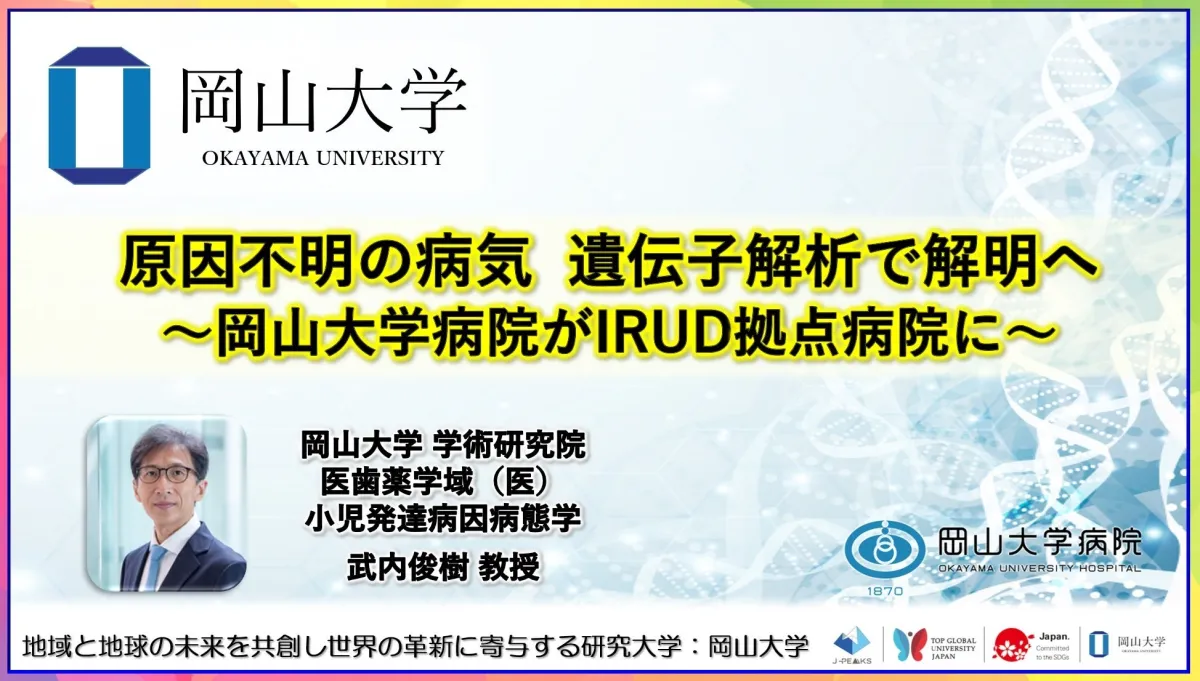
Okayama University Hospital Joins IRUD Initiative to Tackle Unknown Diseases
Okayama University Hospital Takes a Major Step in Rare Disease Research
On April 1, 2026, Okayama University Hospital will proudly join the 'Initiative on Rare and Undiagnosed Diseases' (IRUD) as a core hospital designated by the Japan Agency for Medical Research and Development (AMED). This initiative aims to discover the causes of rare and undiagnosed diseases through collaboration between university hospitals and research institutions across Japan.
The IRUD initiative has been a pivotal project focusing on patients suffering from undiagnosed rare diseases and disorders for many years. By employing advanced genetic analysis and research methodologies, the goal is to provide clarity and potential diagnoses for patients who have had long-standing medical mysteries surrounding their conditions. With Okayama University Hospital's participation, there is great hope that patients and families grappling with undiagnosed ailments in the Chugoku and Shikoku regions will find new pathways to diagnosis and treatment.
Strengthening Regional Healthcare
With Okayama University Hospital acting as a key player in this initiative, the institution will collaborate closely with various medical facilities throughout the Chugoku and Shikoku areas. The hospital hopes to serve as a connection point, linking undiagnosed patients to a broader national network of research resources and expertise.
Hospital Director Yoshinobu Maeda emphasized the importance of creating a seamless communication channel among healthcare institutions: 'By participating in the IRUD, we aim to connect patients in our region with the expansive research network across the country. Our goal is to ensure that no patient feels isolated in their struggle against undiagnosed diseases.'
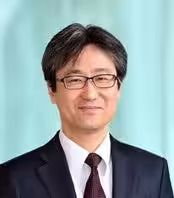
As reported by Professor Toshiki Takeuchi, who is deeply involved in the initiative, many patients live for years without a definitive diagnosis, which brings significant emotional and physical burdens. 'It is not uncommon for individuals to endure long periods of uncertainty regarding their health. We want to collaborate with other medical institutions in the area to advance research into these undiagnosed diseases,' he said.
Collaborative Opportunities and Future Perspectives
The IRUD initiative allows for a robust, collaborative infrastructure that will enhance patient care through joint research efforts. As the program progresses, the combined efforts of the participating institutions are expected to facilitate significant advancements in understanding and diagnosing rare diseases.
In this context, Okayama University Hospital plans to harness its expertise in pediatric developmental disorders and other specialties to contribute to the overarching framework of the IRUD.
By fostering partnerships with pharmaceutical companies and medical device developers, the hospital hopes to further innovate and expand the intervention options available for patients grappling with challenging medical conditions.
Additionally, for professionals in the health and research sectors seeking to engage with Okayama University Hospital's initiatives, it will become a central hub for navigating the complexities of rare diseases. This might lead to groundbreaking discoveries and optimally managed care strategies tailored to individual patient needs.
Conclusion
As Okayama University Hospital embarks on this significant journey within the IRUD framework, it reinforces a commitment to addressing the needs of patients affected by unknown conditions. The institution looks forward to making a meaningful impact for those who have struggled to find answers, bringing hope and clarity to many families in the region.
With this venture, Okayama University is not only contributing towards solving local healthcare challenges but is also positioning itself as a leader in the battle against rare and undiagnosed diseases on a national scale.
For further information and updates regarding the IRUD initiative and ongoing research at Okayama University Hospital, please explore their official channels.




Topics Health)
【About Using Articles】
You can freely use the title and article content by linking to the page where the article is posted.
※ Images cannot be used.
【About Links】
Links are free to use.