



Revolutionary Insights into CD8 T Cell Induction via Ascochlorin Derivative N184 from Okayama University
Novel Antitumor Mechanism Discovered at Okayama University
On April 19, 2026, a research team from Okayama University, led by Professor Heiichiro Udono and including lecturer Mikako Nishida and graduate student Natsumi Imano, reported groundbreaking findings on the role of a derivative of the antibiotic ascochlorin. This compound, named N184, exhibits promising potential in enhancing the efficacy of CD8 T cells in cancer immunotherapy.
Key Findings
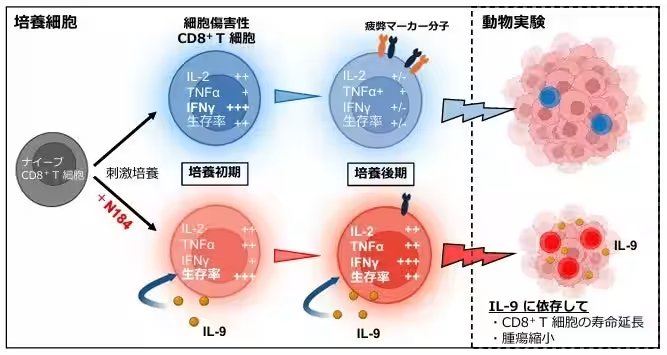
The team discovered that N184 significantly promotes the differentiation of CD8 T cells into interleukin-9 (IL-9) producing cells. This transformation not only enhances the survival of these immune cells but also suppresses markers of immune exhaustion. The presence of N184 during stimulation culture increased the production of vital immune factors such as interferon-gamma (IFNγ), interleukin-2 (IL-2), and tumor necrosis factor-alpha (TNFα). Moreover, N184 induces anti-apoptotic molecules, effectively preventing the premature death of CD8 T cells.
CD8 T cells typically lose their effector functions and proliferative capabilities shortly after infiltrating solid tumors, diminishing their antitumor activities. However, the lifespan-extending effects of N184 may provide a solution to this critical challenge. This enhancement implies the possibility of synergistic applications alongside existing immunotherapeutics, including immune checkpoint inhibitors and CAR-T cell therapies, opening new avenues for clinical research in cancer treatment.
Background of the Research
The research team focused on selecting less cytotoxic derivatives of ascochlorin, isolated from filamentous fungi. N184 was identified as a compound that not only significantly prolongs the lifespan of CD8 T cells but also improves their functionality in antitumor responses. Previous studies hinted at the potential of 2-type diabetes medication, metformin, indicating that compounds with amplified activity on AMP-activated protein kinase (AMPK) could enhance immune activity. N184, which has 1000 times the AMPK activity of metformin, was introduced by NRL Pharma, showcasing its vital role in immune oncology research.
While the in vivo cancer suppression effects of N184 were documented, the precise molecular mechanisms remained elusive initially. However, subsequent differentiation induction experiments established that heightened IL-9 production was pivotal in improving cell survival rates. This revelation guided the team toward successful publication in the British Journal of Pharmacology in February 2026, paving the way for potential clinical applications.
Insights from the Researchers
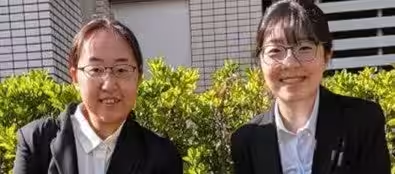
In comments regarding their research journey, both Mikako Nishida and Natsumi Imano expressed their excitement and the challenges encountered during their investigations. Their work not only aligns with ongoing immunotherapy research but also highlights the unexpected pathways that can lead to significant discoveries in the cancer treatment landscape, reinforcing the significance of persistence in scientific inquiry.
Research Funding and Collaboration
This research was supported by the Japan Society for the Promotion of Science (JSPS) and companies such as NRL Pharma and Green Core. There are high anticipations for continued development and validation of N184 in real-world clinical settings to ultimately improve outcomes for cancer patients.
Conclusion
The innovative findings from Okayama University signify a critical advancement in the field of cancer immunotherapy, addressing unresolved aspects of CD8 T cell functionality in solid tumors. The research team's dedication and the promising capabilities of N184 mark a hopeful step forward in providing more effective cancer treatment options based on enhancing immune system performance.
For further details on this study, check the complete research article published in the British Journal of Pharmacology here.
Contact Information
For inquiries about this study, please reach out to:
- - Professor Heiichiro Udono, Okayama University, Faculty of Medicine, Dentistry and Pharmaceutical Sciences
- - Phone: 086-235-7887
- - Email: Metabolism and Immune Control Lab
Topics Health)
【About Using Articles】
You can freely use the title and article content by linking to the page where the article is posted.
※ Images cannot be used.
【About Links】
Links are free to use.