



New Book on Developmental Disabilities Aims to Empower Schools and Students
A New Era of Support for Developmental Disabilities
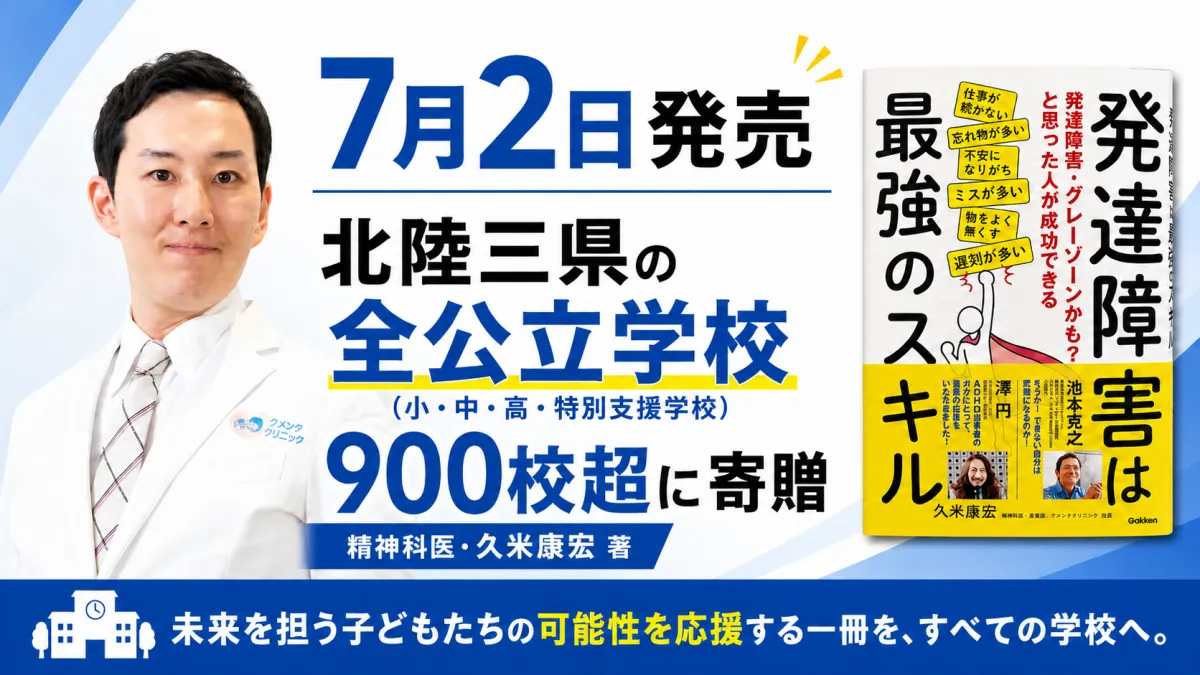
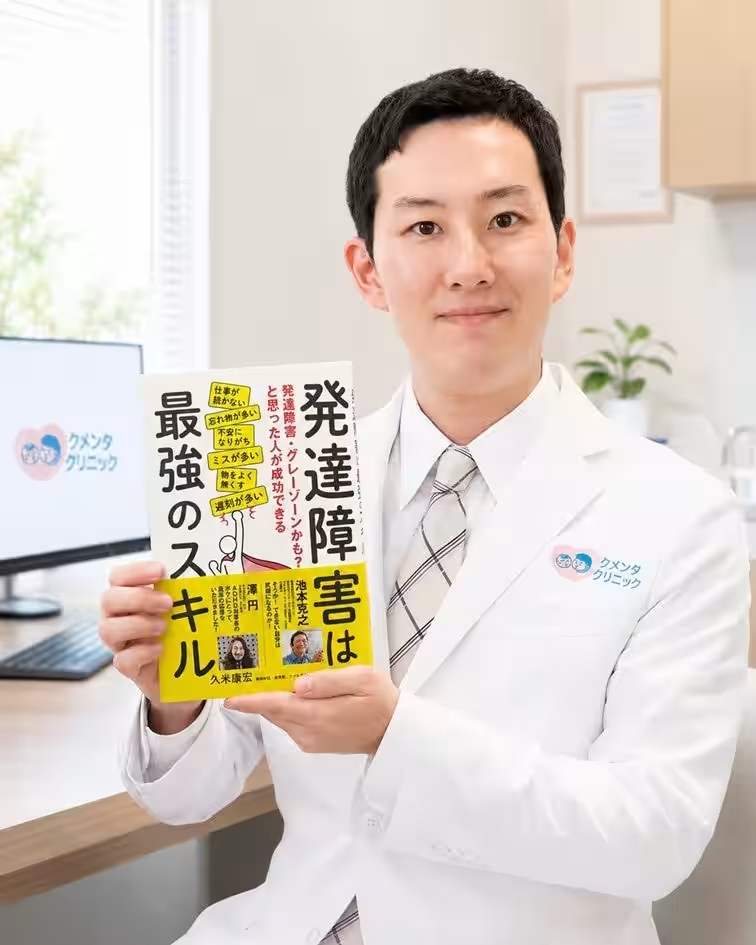
On July 2, 2026, Dr. Yasuhiro Kume, a former health management physician at the Reconstruction Agency, will release his new book, “Developmental Disabilities are the Best Skills” (Gakken). This publication aims to provide a guide and support for those living with developmental disabilities and their allies in educational settings.
In an inspiring initiative, Dr. Kume has announced the donation of over 900 copies of his book to public schools across the three prefectures of Hokuriku: Ishikawa, Toyama, and Fukui. This donation will cover elementary, middle, high schools, and special support schools, alongside various educational boards. The book includes a QR code that links to videos of developmental support lectures, aiming to foster a deeper understanding of developmental disabilities in school environments.
Understanding the Challenges
Children with developmental disabilities, along with those who may fall into the “gray zone,” often face unique challenges in school settings. These challenges may include forgetfulness, difficulty concentrating in class, anxiety stemming from changes in routine, and sensory sensitivities that can lead to fatigue. It is crucial to emphasize that these hurdles are often not merely signs of laziness or willfulness but are instead rooted in the innate functioning differences of the brain.
Yet, Dr. Kume emphasizes that the characteristics associated with developmental disabilities can also lead to strengths like creativity, problem-solving abilities, focus, and strong observational skills when they are understood and cultivated appropriately. Recently, a large-scale survey by the Japan Pediatric Society revealed that less than 10% of teachers feel that collaboration with healthcare providers is effective—an issue that Dr. Kume's book seeks to address by offering practical strategies to transform perceived weaknesses into strengths.
A Timely Resource
The aftermath of the Noto Peninsula earthquake has added pressure on children’s living environments, schools, and local communities in the Hokuriku region. In this context, providing resources that help educators understand and support the nuances of developmental disabilities becomes increasingly vital. Dr. Kume hopes that this book will serve as a valuable tool for teachers, supporters, and parents—enhancing understanding and support of these children.
Comprehensive Support Resources
Within the book, readers can find a QR code granting access to video content from the developmental support lectures held at the Hokuriku Reconstruction Support Events. These lectures tackle practical approaches to engaging with children who have developmental disabilities, addressing common issues in educational settings, collaborating with parents, and strategies to prevent secondary disabilities. By integrating both reading and video resources, the book aims to provide extensive support for educators looking to implement validated strategies based on real-world scenarios.
A Holistic Perspective on Developmental Disabilities
This book speaks to a wide audience: individuals who suspect they might have developmental disabilities, supporters of individuals with disabilities, and educators who work with children with specific traits. Rather than framing developmental disabilities as something needing to be “fixed,” Dr. Kume presents them as variations of brain function that can lead to unique strengths, advocating for how understanding and environmental adjustments can optimize these abilities.
Dr. Kume’s personal experience as an individual with both ADHD and ASD complements his professional insights as a psychiatrist. His dual perspective aids in illustrating practical methods for transforming challenges into opportunities within society.
Endorsements from Experts
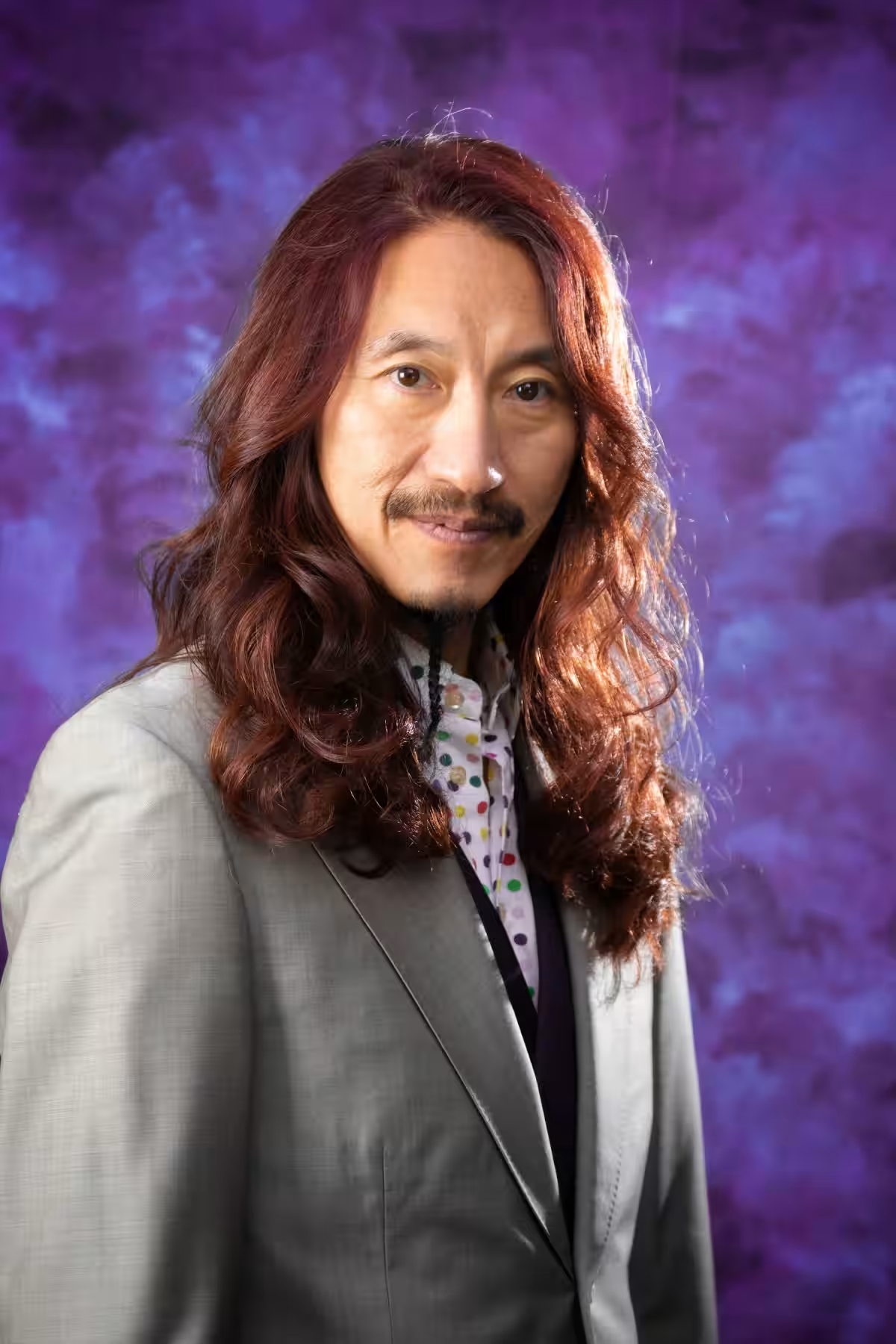
The book has already garnered positive endorsements from notable figures such as Madoka Sawa and Katsuyuki Ikemoto, who highlight its practical approach and the empowering messages contained within its pages. Sawa expresses how the book provides essential encouragement for those with ADHD, while Ikemoto underscores the potential for disability to be seen as a strength rather than a limitation.
Conclusion
As the release date approaches, the anticipation for “Developmental Disabilities are the Best Skills” grows. Alongside the book, the Hokuriku Reconstruction Support Events are set to take place to provide further support and collaboration opportunities among local educators and healthcare professionals. This initiative marks a significant step towards enhancing understanding and support for children with developmental disabilities in Japan.
For more information about Dr. Kume and this initiative, follow him on Instagram and Twitter.


Topics People & Culture)
【About Using Articles】
You can freely use the title and article content by linking to the page where the article is posted.
※ Images cannot be used.
【About Links】
Links are free to use.