




Introducing AI Self-Coaching Training to Enhance 1on1 Meetings in Companies
Enhancing 1on1 Meetings with AI Self-Coaching Training
In today’s corporate landscape, the concept of 1on1 meetings has become a standard practice across many organizations. However, while the frequency of these meetings has increased, the quality often leaves much to be desired. To combat this issue, Coaching4U, under the leadership of Yu Watanabe, has unveiled a new program: AI Self-Coaching Training.
The Need for Improvement in 1on1 Meetings
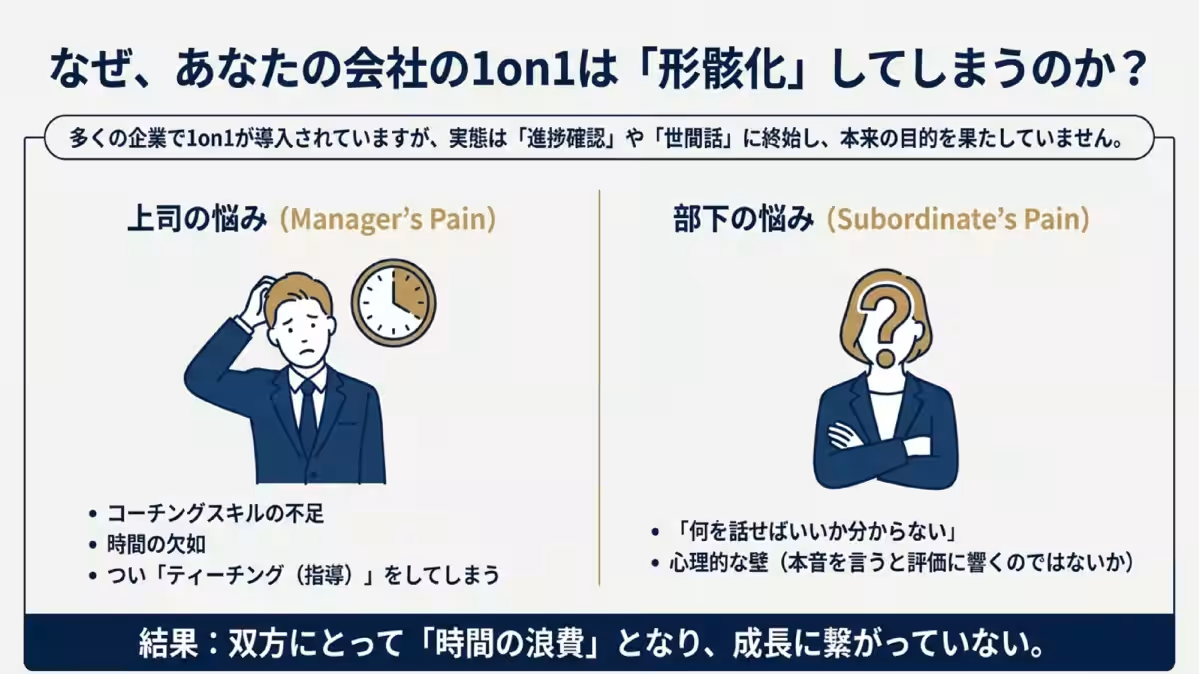
Despite the widespread implementation of 1on1 meetings, several challenges persist:
- - Participants often struggle to voice their true opinions, leading to awkward exchanges akin to mere formality.
- - The quality of these discussions frequently hinges on the skill level of the supervisor, resulting in inconsistency.
- - Many meetings ultimately devolve into sessions focused solely on reporting and checking up on progress.
These issues have prompted companies to seek out solutions, including AI-assisted support services. Yet, without the self-awareness and introspective capabilities needed to harness AI effectively, employees often fail to realize its full potential as a tool for self-development.
The Journey of Coaching4U
Coaching4U has an impressive track record, guiding thousands of professionals across numerous organizations through various coaching and training methods. This initiative is not just an isolated effort; it stems from extensive feedback collected during workshops and through published materials. Yu Watanabe has authored two significant books on the subject:
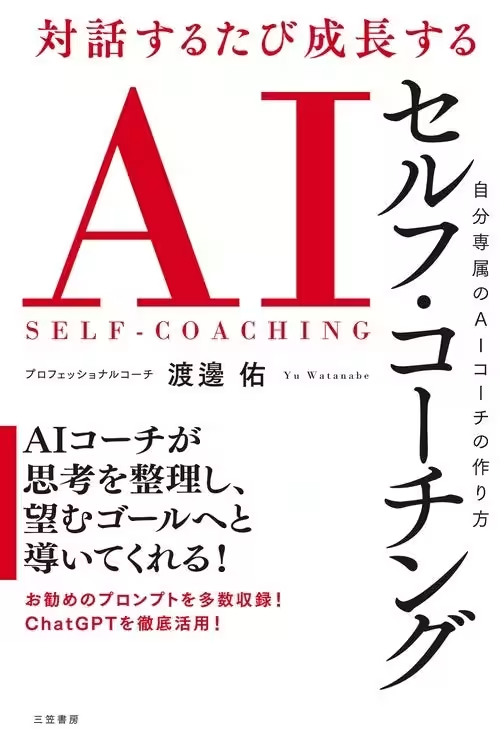
- - Growth Through Dialogue: AI Self-Coaching (to be released on October 29, 2025, with anticipated success leading to reprints)
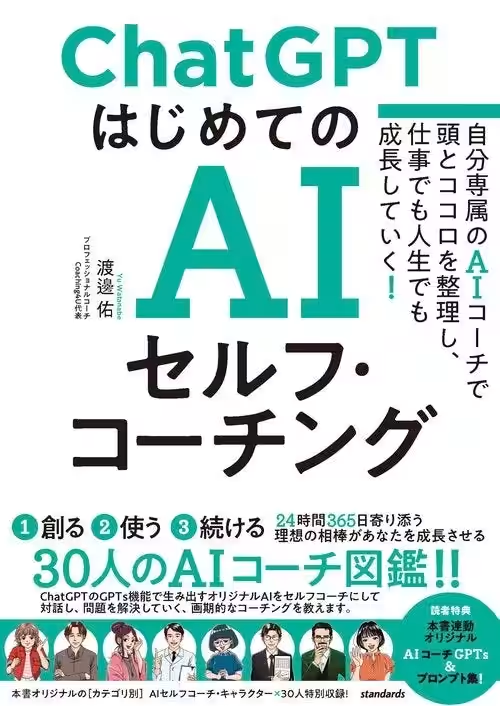
- - ChatGPT: A Beginner's Guide to AI Self-Coaching (coming out on December 17, 2025)
The enthusiasm from readers and workshop participants has reinforced the decision to offer AI Self-Coaching Training tailored for organizations.
Key Features of AI Self-Coaching Training
1. Fostering Proactivity: Instead of seeking answers from the AI, participants are encouraged to think for themselves, engage in reflection, and make independent choices.
2. Understanding Mindset: Training begins by exploring the mechanisms of the mind, such as why people struggle to change despite wanting to, and how questions can transform thoughts and actions. This foundational understanding is vital to effectively utilize AI.
3. AI as a Thinking Partner: Each attendee can design a personalized AI coach that aids in organizing thoughts and reflecting before and after 1on1 sessions.
4. Integration into Daily Operations: It’s crucial for participants to apply what they learn during training to their actual 1on1 meetings and job responsibilities, promoting sustained autonomous behavior.
Training Structure
The standard model consists of three days, broken down as follows:
- - Day 1: Introduction and Theory of Autonomy in the AI Era, Understanding the Mechanisms of the Mind.
- - Day 2: Practical sessions focusing on Creating Custom AI Coaches and engaging in Self-Coaching with AI.
- - Day 3: Consolidation and Sharing Results, implementing the training into 1on1 meetings and daily tasks.
Insights from the Founder
According to Yu Watanabe, “Throughout my experience in consulting and conducting self-coaching workshops for numerous companies, I have continually witnessed that without proactivity, any system or tool can become ineffective.” While AI provides substantial advantages, it can also weaken a person’s capacity for thought if misused. This training program aims to cultivate autonomy and improve its quality by effectively implementing AI in corporate settings.
For those interested in revitalizing their 1on1 meetings and enhancing employee engagement, more information is available at the AI Self-Coaching Training Special Page.
About Coaching4U
- - Company Name: Coaching4U, LLC
- - Representative: Yu Watanabe
- - Services: Coaching and Organizational Development, AI Self-Coaching Training, Mental Capital Management Consulting.

Topics People & Culture)



【About Using Articles】
You can freely use the title and article content by linking to the page where the article is posted.
※ Images cannot be used.
【About Links】
Links are free to use.