



Watami Launches Hydrogen-Powered Truck Initiative for Carbon Neutral Delivery in Aichi
Watami's Bold Step Towards Carbon Neutrality in Logistics
In an inspiring move towards sustainability, Watami Co., Ltd., headquartered in Ota, Tokyo, has embarked on an innovative logistics project aimed at achieving zero CO2 emissions. This groundbreaking initiative, in collaboration with Murou Co., Ltd. and Sanwa Cleaning Co., Ltd., is set to launch the proof-of-concept for hydrogen fuel cell (FC) trucks in Aichi Prefecture starting March 2026. The initiative aligns with Aichi's commitment to fostering sustainable urban development and achieving carbon neutrality by 2050.
The Initiative
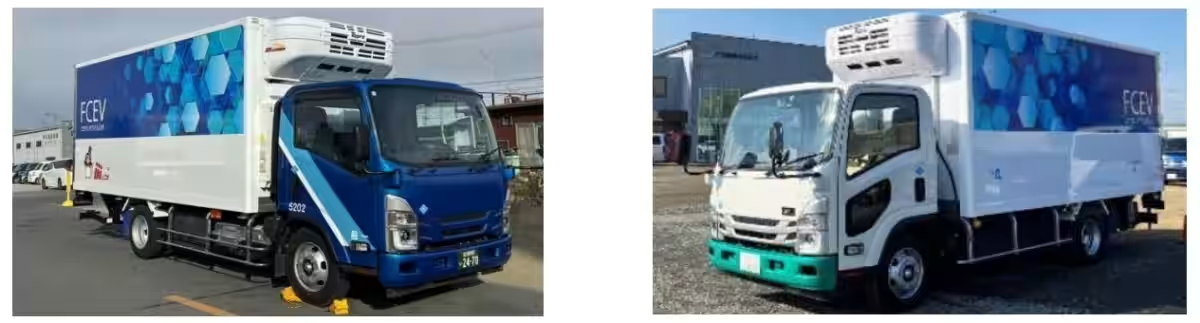
Watami's FC truck project was recognized as a vital contribution to the decarbonization efforts within Japan's logistics sector. Starting from March 2026, three locations in Aichi will begin real-world testing of these hydrogen-powered vehicles, which are capable of transporting temperature-sensitive goods, such as frozen meals and side dishes.
This project is a significant stride towards eliminating carbon emissions during the delivery process. Watami is already renowned for its 宅食 (home meal delivery) service, which spans approximately 500 operational sites across Japan, delivering around 230,000 meals daily.
Background of the Initiative
In response to Aichi Prefecture's call for fresh ideas to capture private sector participation in decarbonization, Watami and its partners presented their proposal focusing on enhancing collaboration between shippers and transport operators. Their project was selected in December 2023, enabling them to delve into detailed discussions and planning for the execution of this ambitious proof-of-concept.
Roles of the Collaborating Companies
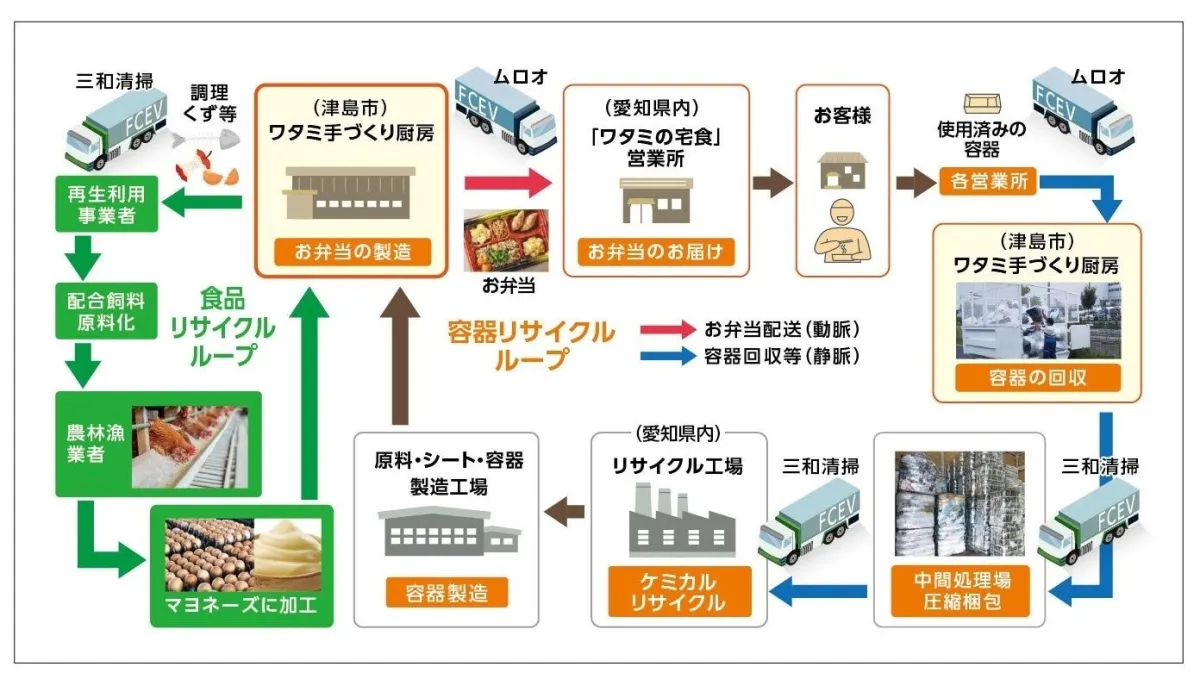
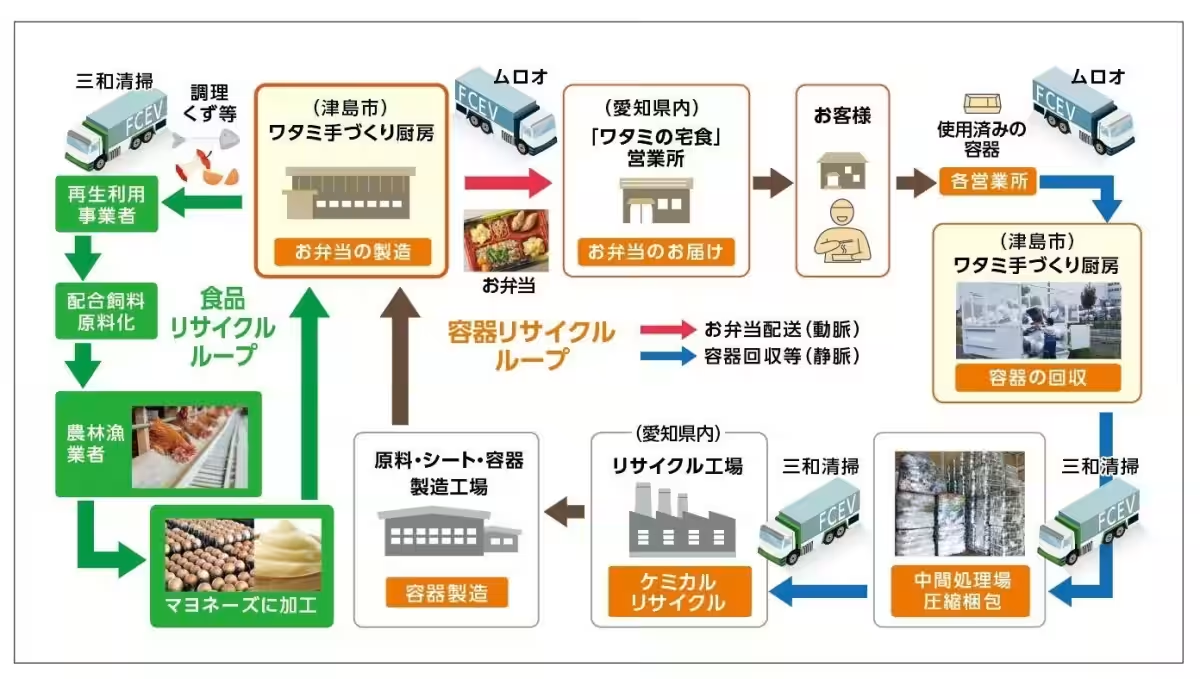
Watami's commitment to achieving carbon neutrality extends beyond just transportation. In 2023, the company declared its “Carbon Neutrality Declaration for 2050.” Notably, their food processing facility, Watami Handmade Kitchen Chukyo Center, located in Tsushima City, Aichi Prefecture, has switched to 100% renewable energy for its power needs. Moreover, with guidance from Aichi Prefecture and Nagoya city, they have pioneered the collection of used plastic food containers and are profoundly engaged in establishing a circular economy through the recycling of food preparation waste.
By implementing hydrogen-powered trucks not just for meal delivery but also for the collection of used containers and food waste, Watami aims to transform its entire supply chain into a greener model. The aspirations include fostering a comprehensive blueprint for logistics decarbonization that could inspire similar efforts across the industry.
About Watami's宅食 Service
Watami宅食 (home meal delivery) is more than just a meal delivery service; it aims to be an infrastructure supporting society by delivering freshly prepared meals and heartfelt service. Delivering 230,000 meals daily, the initiative engages local “heartfelt staff” for deliveries, emphasizing community connections.
Achieving the Number One market share in the sick and elderly meal delivery sector for 15 consecutive years from 2010 to 2024 is proof of Watami's commitment to excellent service. They've also instituted a nationwide initiative to recycle their meal containers, significantly contributing to SDGs goals, marking a pivotal advancement in sustainable practices.
Recognition as an Eco-First Company
Recognized by the Ministry of the Environment as an Eco-First company in 2010, Watami Group’s efforts have been acknowledged as a leader in environmental initiatives within the food service industry. In 2018, they declared commitment to the RE100 initiative, aiming to achieve 100% renewable power across all business locations by 2040.
Company Information
- - Company Name: Watami Co., Ltd.
- - Address: 1-1-3 Haneda, Ota, Tokyo, Japan
- - Established: May 1986
- - Representative: Miyuki Watanabe, Chairman & CEO
- - Website: Watami Official Website
In conclusion, Watami’s progressive initiative not only emphasizes the importance of sustainability in logistics but also sets a precedent for innovative practices within the business sector. As they transition towards a carbon-neutral future, this high-profile project serves as a beacon of hope for responsible environmental stewardship in Japan and beyond.

Topics Consumer Products & Retail)
【About Using Articles】
You can freely use the title and article content by linking to the page where the article is posted.
※ Images cannot be used.
【About Links】
Links are free to use.