



Only One-Third Achieve Ideal Work Engagement Amidst Rising Stress Levels
The Reality of Work Engagement Among Employees
A new study conducted by Dr. Trust, a leading company specializing in workplace health management in Japan, shows that merely 35% of employees report achieving ideal work engagement—a state characterized by low stress and a positive attitude towards work. This alarming statistic raises questions about employee satisfaction and mental health across various age groups.
Understanding Work Engagement
Work engagement is defined as a positive psychological state that encompasses three key components: enthusiasm for work, energy derived from work, and deep immersion in tasks. Highly engaged employees not only perform better but also contribute positively to their teams, enhancing overall organizational productivity.
Key Findings from the Study
The data for this analysis comes from over 555,956 individuals who took a stress check in 2024, and it reveals some stark trends:
1. Ideal Work Conditions are Elusive
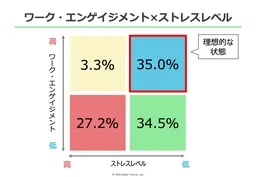
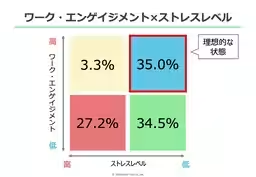
The results indicate that only about one in three employees are in an ideal state of work engagement. The breakdown shows:
- - 35.0% exhibit high work engagement with low stress
- - 34.5% demonstrate low work engagement but also low stress
- - 3.3% experience high work engagement coupled with high stress
- - 27.2% face both low engagement and high stress
This suggests that despite some employees enjoying low stress, many still struggle with engagement.
2. Age-Related Trends
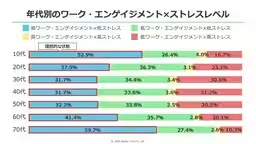
The report highlights a concerning pattern across different age groups:
- - In their 20s: Nearly 37.5% are in a high engagement and low stress category.
- - In their 30s: This figure drops sharply to about 31.7%, indicating a decline as responsibilities and pressures mount.
- - In their 40s and 50s: Engagement levels stagnate at similar rates.
- - In their 60s: Engagement levels rise again to about 41.4%.
These statistics reflect the ongoing struggle many workers face in balancing enjoyment and stress throughout their careers, particularly during their 30s and 40s when stress tends to peak.
3. Factors Influencing Engagement
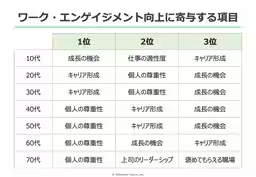
According to age, various factors influence perceived work engagement:
- - Younger employees (20s and 30s) benefit from making sense of their careers, while
- - Employees in their 40s and older emphasize the importance of feeling they can work authentically or 'be themselves.'
Across all ages (excluding those in their 70s), two significant factors stood out: the ability to find meaning in one's career and acknowledgment of personal growth are critical to fostering positive work attitudes.
Addressing Workplace Challenges
The study indicates that workplaces could improve engagement and reduce stress by focusing on these factors:
- - For the younger workforce: Creating an environment that fosters challenges and opportunities for growth.
- - For middle-aged employees: Offering support that allows them to leverage their experiences and focus on their future.
- - For older workers: Fostering a culture of respect for their perspectives and working styles.
Conclusion
The findings from this study paint a complex picture of employee engagement across age groups. While about 35% of the workforce enjoys a high and low-stress working environment, many face significant challenges. Addressing these issues requires nuanced approaches tailored to the diverse needs of specific age groups, underscoring the importance of understanding generational differences in the workplace.
Dr. Trust remains committed to analyzing these trends and advocating for improved health management strategies among organizations. By investing in workplace culture, companies can boost work engagement and enhance employee well-being, ultimately leading to greater productivity and satisfaction.
Topics People & Culture)
【About Using Articles】
You can freely use the title and article content by linking to the page where the article is posted.
※ Images cannot be used.
【About Links】
Links are free to use.