



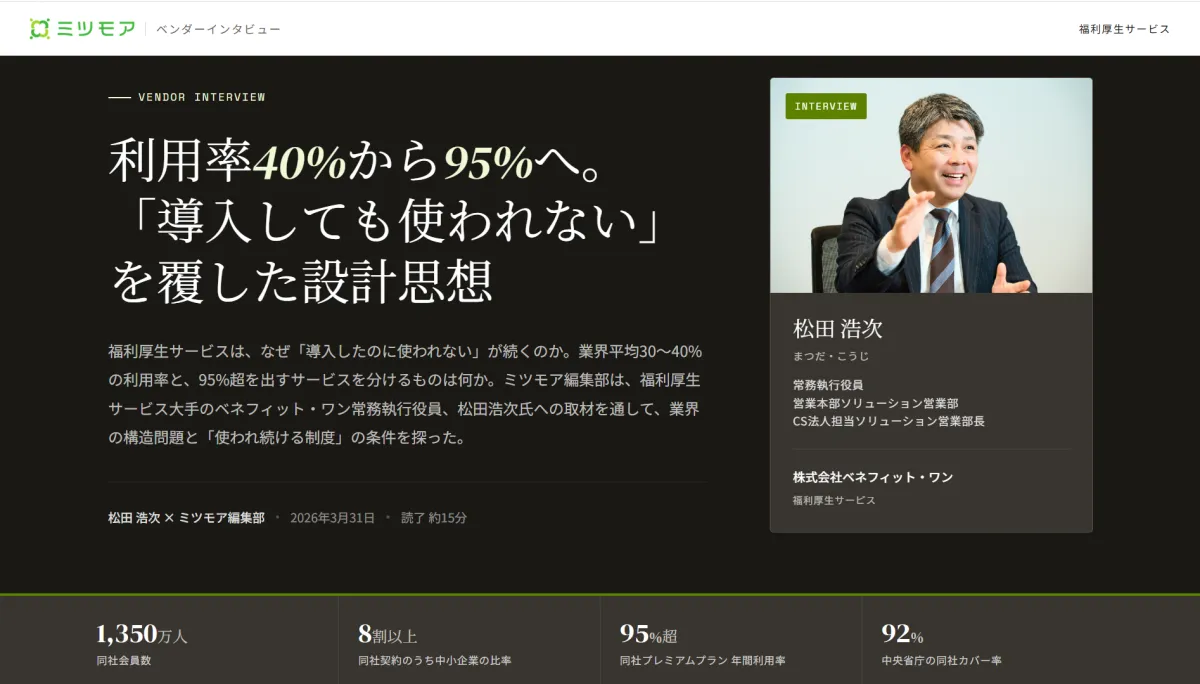
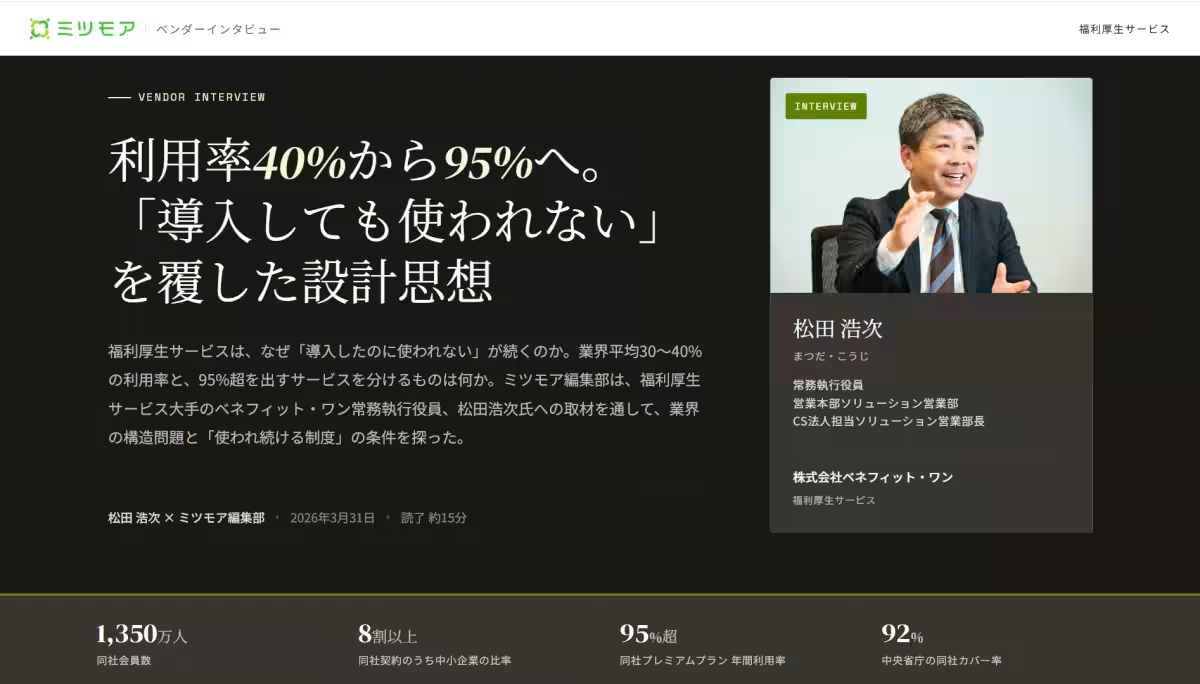
Interview with Benefit One's Executive on Enhancing Utilization of Employee Benefits
Unlocking Employee Benefits: An Interview with Koji Matsuda of Benefit One
In today's competitive job market, employers are looking for effective ways to enhance employee retention, particularly among younger workers. An insightful interview with Koji Matsuda, the Executive Officer of Benefit One, reveals how the company managed to elevate the utilization rate of their employee benefits program from a mere 40% to an impressive 95%.
The Shift in Perception Towards Employee Benefits
With the growing trend of wage increases and challenges with labor shortages, organizations are revisiting the significance of employee benefits. A survey conducted by Mitsumore in March 2026 disclosed that 83% of 20-something employees in small to medium businesses would not leave their jobs even if their base salary does not increase, provided that the benefits are comprehensive. This highlights that benefits can be a vital tool for retention.
However, many employers are often frustrated, noticing that their benefits programs are underutilized. According to Benefit One, the average utilization in the industry hovers around 30% to 40%. This led to the question: How can companies transform underutilized benefits into widely appreciated ones?
Findings from the Interview with Matsuda
During the interview, Matsuda shed light on a critical factor influencing benefits utilization: the design of the program at the time of implementation. Matsuda noted that when benefits primarily revolve around extravagant or occasional experiences—like travel, fine dining, or amusement parks—they tend to attract a niche audience. Those who engage with such benefits do so repeatedly, while others remain indifferent, thus creating a polarization in usage.
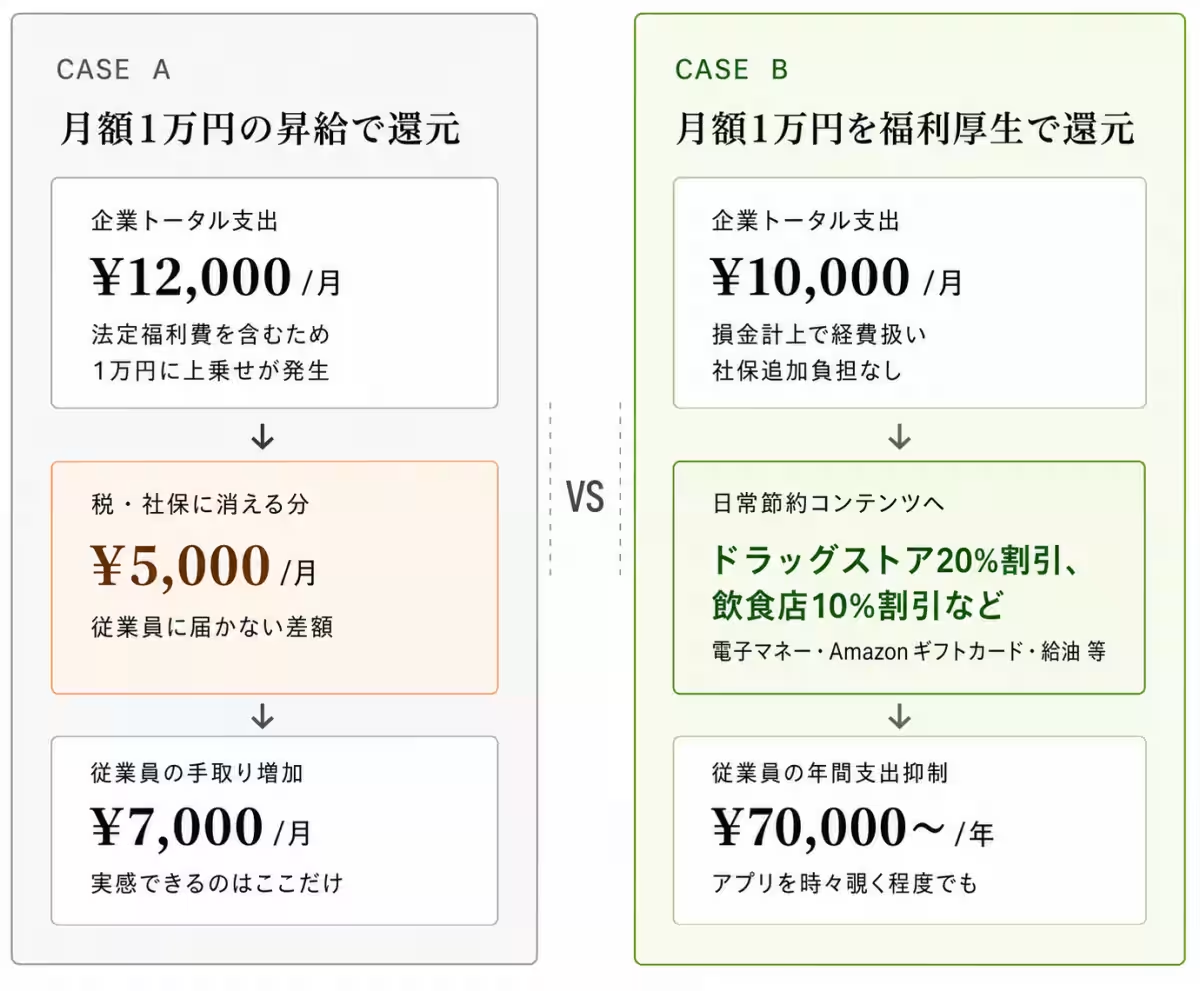
The interview emphasizes the importance of integrating benefits into everyday routines rather than presenting them as luxurious or rare treats. By designing programs that align with daily expenditures, Benefit One reported a significant increase in utilization rates, climbing to 80% on average and surpassing 95% for businesses that collaborated closely during the design phase.
In contrast, Matsuda firmly believes that the responsibility for the lack of usage falls upon the providers. An effective implementation strategy should focus not only on inspiring utilization after deployment but also ensure that the initial design addresses daily needs. He stated, "The utilization rate isn't solely an outcome of post-implementation efforts; it's largely affected by the strategic planning that occurs during the setup phase."
Matsuda proposed that the key to increasing utilization lies not in bombarding employees with messages to utilize their benefits but rather in seamlessly incorporating these benefits into their everyday lives.
Conclusion: Practical Takeaways for Employers
The insights from the interview with Koji Matsuda reveal crucial takeaways for organizations aiming to optimize their employee benefits programs. Firstly, employers should aim to rethink the design of their benefits, shifting focus toward practical and frequent rewards that employees can genuinely find value in. Secondly, establishing a partnership with benefit providers right from the design phase can dramatically enhance the effectiveness of these programs.
By reimagining how benefits are structured and presented, companies can turn previously underutilized services into indispensable assets for their workforce, leading to improved satisfaction and retention rates. For those interested in exploring the complete interview, you can read the full article on Mitsumore's website here.


Topics People & Culture)
【About Using Articles】
You can freely use the title and article content by linking to the page where the article is posted.
※ Images cannot be used.
【About Links】
Links are free to use.