



Exploring the Political Engagement of Undocumented Mexican Immigrants in the U.S.
Introduction
The political engagement of undocumented Mexican immigrants in the United States has surfaced as a noteworthy subject of study, particularly in light of the complicated legal and social landscapes they traverse. This article discusses a recent pioneering study that examines how these individuals, often categorized as "hard-to-reach populations," navigate their political voices amid the concerns stemming from the Trump administration's policies on immigration and deportation.
Background
Research conducted by Yuriko Takahashi, an associate professor at Waseda University's Graduate School of Political Science and Economics, alongside colleagues from Kansai University and Doshisha University, reveals insights into how undocumented Mexican immigrants perceive political participation, specifically focusing on their potential involvement in overseas voting for their home country, Mexico. Despite the lack of electoral rights in the U.S., they can still cast ballots in Mexico's elections, which requires a complex process further hampered by factors such as fear of deportation.
Methodology
The researchers administered a significant survey in Illinois during 2023, employing a respondent-driven sampling (RDS) approach tailored for the undocumented immigrant demographic. This innovative sampling method allows researchers to reach individuals who might avoid direct inquiry due to concerns over deportation. The study successfully gathered responses from 502 undocumented immigrants, delving into their experiences and thoughts on political participation through overseas voting mechanisms in Mexico.
Key Findings
The research uncovered four primary factors influencing the political engagement of these individuals:
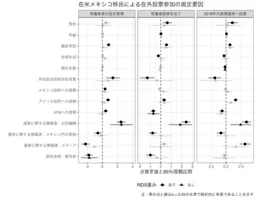
1. Access to Official Information: Those who obtained official electoral information from electoral management bodies were more likely to participate at any stage of the voting process.
2. Trust in U.S. Government: A higher level of trust in the U.S. government correlated with increased participation in each voting stage.
3. Trust in Mexican Government: While having strong faith in the Mexican government stimulated involvement primarily in obtaining voter identification, it did not extend significantly to later participation stages.
4. Perception of Voting Significance: Individuals who felt their vote would matter were notably more active in the initial step of securing voter identification.
Implications
This study sheds light on a demographic often overlooked in political research. Given the rising numbers of immigrants globally and increasing academic interest in overseas voting systems, understanding how undocumented immigrants engage politically is of paramount importance. The insights gathered provide a clearer picture of how immigrant communities can influence their homeland’s politics while also illustrating the systemic barriers they face.
Future Perspectives
This research represents a vital step toward understanding the political consciousness and actions of previously underexplored demographics, emphasizing the need for further inquiries into similar 'hard-to-reach' populations. Expanding on methods like RDS can uncover the political dynamics within these communities, significantly contributing to literature on voting rights and immigrant participation in both the U.S. and their countries of origin.
Conclusion
As global migration continues to reshape demographics, the political agency of immigrants, especially those who are undocumented, becomes increasingly relevant. By illuminating their participation in overseas voting, this research not only enhances academic dialogue but also informs policymakers about the complexities faced by non-citizens in engaging with political processes in their home countries. Continuing to develop and refine methodologies to study these populations remains crucial for a comprehensive understanding of their political behaviors and the implications for both sending and receiving nations.
Topics Policy & Public Interest)
【About Using Articles】
You can freely use the title and article content by linking to the page where the article is posted.
※ Images cannot be used.
【About Links】
Links are free to use.