



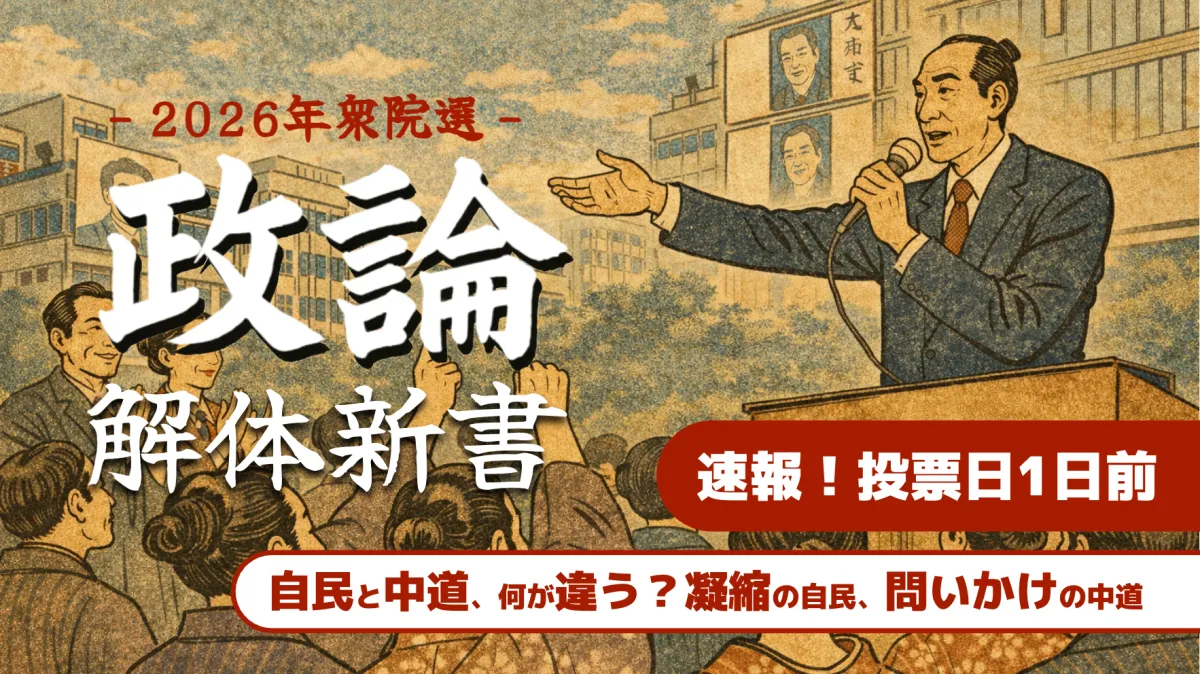
Insights into 2026 Japanese House of Representatives Election: AI Reveals Communication Styles of Political Parties
Introduction to the Analysis
As Japan approaches the House of Representatives election in 2026, a new analysis conducted by Cognitee Inc. has provided insightful data on the communication styles employed by two significant political entities: the Liberal Democratic Party (LDP) and the Center Reform Alliance. Utilizing their proprietary technology, CogStructure, Cognitee focused on the verbal presentations made in various public platforms like press conferences and street speeches to dissect the nuanced differences between these parties. This analysis is not an endorsement of either party's policies but rather a tool for voters to better understand their communication strategies and make informed decisions before casting their votes.
Overview of the Data
The comparative study analyzed a total of four videos, amounting to 191 minutes of content. The longest of these was a policy announcement by the Center Reform Alliance, clocking in at 1 hour and 39 minutes, while the shortest was an LDP manifesto presentation that lasted 26 minutes and 37 seconds. The analysis distinctly highlighted differences not just in content but in structural presentation, including sentence length, questioning techniques, logical flow, and narrative development.
Key Findings on Sentence Length
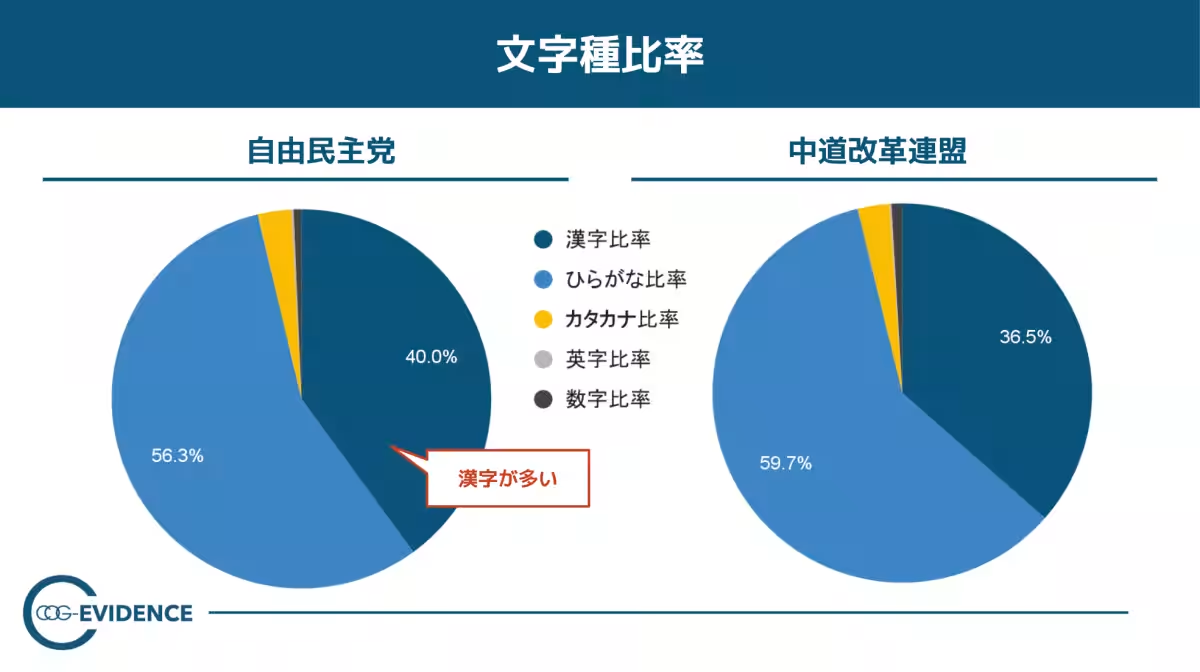
In evaluating the average sentence length, results indicated a stark contrast: the LDP utilized an average of 41.5 characters per sentence, embracing a short-form, concise communication style, termed 'condensed'. Meanwhile, the Center Reform Alliance leaned towards a longer-form exposition, averaging 51.3 characters, demonstrating a more thorough, 'detailed' approach to articulating their points. Additionally, a notable trend emerged regarding the types of characters used, where the LDP displayed a higher ratio of kanji characters, reinforcing their preference for a compact yet informationally rich discourse.
Analysis of Questioning Techniques
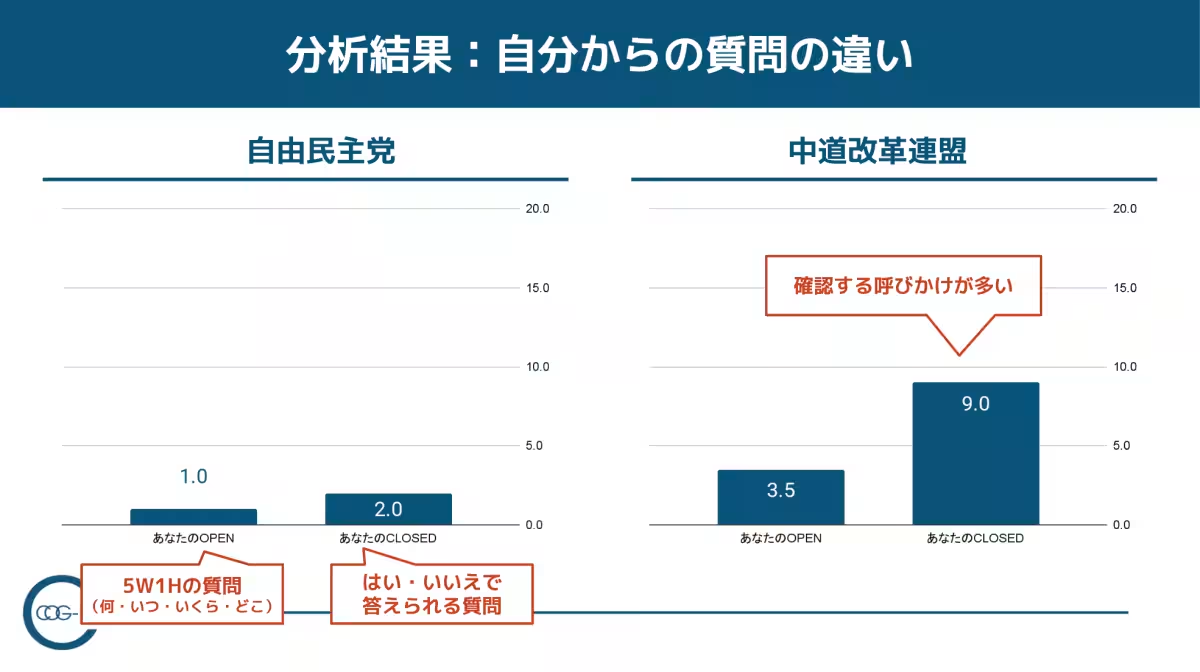
The analysis also delved into the techniques of engagement utilized by the parties. The Center Reform Alliance exhibited a significantly greater incidence of questioning—specifically, closed questions designed to elicit yes or no responses—which were particularly prominent in their speeches. This technique of self-questioning—where speakers pose questions and follow up with their answers—tended towards being longer, indicating a style that fosters a dialogic flow with voters. This approach suggests a trend where the Center Reform Alliance aims for deeper engagement through careful elaboration, distinguishing it from the more succinct style of the LDP.
Featured Analysis Page
A dedicated page has been set up on Cognitee’s platform for users to peruse in-depth analysis of each party's manifesto videos, their logical structures, and key discussion points leading up to the election. This page, titled 2026 House of Representatives Election: Political Discourse Analysis, continues to offer insights, trends, and critical considerations as the election date nears. Find more information here: Cognitee's Election Analysis Page.
Upcoming Analysis
This report marks the third entry in the Political Discourse Analysis series, following previous publications that explored theme analysis from party manifestos and the logic structures deployed in election broadcasts. Later tonight, a final analysis will be released, emphasizing crucial insights just before election day.
Technical Overview of the AI Process
Cognitee's CogStructure technology is engineered to break down and quantify qualitative data rather than generate textual content. Through its focus on identifying and cataloging various communicative patterns, it contrasts notably with generative AI models like ChatGPT, which prioritize content creation. This analytical process makes it possible to visualize differences in presentation styles and characteristics among political parties systematically. The insights drawn can thus provide voters with a clearer understanding of various presentations and their implications.
Conclusion
The robust findings presented by Cognitee highlight significant distinctions in communication approaches between the Liberal Democratic Party and the Center Reform Alliance, offering voters critical insights into how these strategies may influence their decision-making process in the upcoming 2026 House of Representatives election. Understanding the nuances of political communication is vital in navigating the complexities of electoral participation and ensuring a well-informed electorate.
Learn more about how Cognitee can assist in political discourse analysis and to review the new Baseline Review function aimed at improving organizational communication through qualitative data transformation. For more details, visit Cognitee Baseline Review.

Topics Policy & Public Interest)
【About Using Articles】
You can freely use the title and article content by linking to the page where the article is posted.
※ Images cannot be used.
【About Links】
Links are free to use.