



The Shift from Price to Quality in Asian Consumer Trends: Insights from Roland Berger
A New Era in Asian Consumption: Quality Over Price
On April 30, 2026, a major report was unveiled by Roland Berger, one of Europe's leading management consulting firms. This comprehensive study, titled "Unraveling Asia's complex consumer landscape," offers insightful analysis on the evolving consumer trends across Asia. With an anticipated rise in private consumption of approximately 40% over the next decade—which translates to a growth of about 7 trillion USD—Asia continues to be positioned as a central growth engine on the global stage.
However, the report paints a picture of a cautious consumer landscape, where geopolitical risks, rising living costs post-inflation, and income uncertainties have shifted consumer behaviors towards a more selective approach. The findings examine changes in consumer baskets, spending and saving trends, purchasing locations, and decision-making processes. Notably, it highlights the luxury market expectations for growth in 2026, alongside projections for stagnant sectors.
One of the most striking revelations in the report is Japan’s unique position within the Asian market. While growth rates may be relatively low, Japanese consumers exhibit the highest importance on intangible assets such as quality focus, trust, and experiential value among the surveyed 11 Asian countries. In the luxury market, despite overall price sensitivity, over half of consumers across all nations indicated a preference for quality over price, leading with Japan's discerning buyers.
Key Highlights from the Survey
Japan as a Model for Mature Markets
Japanese consumers are described as exceedingly careful, yet willing to invest in products that offer perceived value. The rise in high-frequency and high-quality consumption beginning from convenience stores, coupled with increasing demands for health and functional foods, together with the acceptance of secondary markets (reuse and certified products), signal Japan's emergence as a 'next-generation mature market model.'
Implications for Japanese Businesses
1. Creation of Value Rather Than Growth: Japan is no longer viewed solely as a growth market but rather a vital space for value creation.
2. Showcasing Asia's Strategy in Japan: Companies must frame Japan as a showcase for their broader Asian strategies.
3. Demonstrating Sustainability via Products: Instead of merely discussing sustainability, brands must validate their commitment through their offerings.
4. A Synergy of Aging, Digital, and Experience: The integration of aging populations, digital advancement, and memorable experiences will shape future consumer interactions.
According to Wataru Hayami, Principal at Roland Berger, "The quality of goods and services provided domestically in Japan, alongside external evaluations, is highly valued. Exploring these export methods will be crucial for success."
Return to Essentials and Premiumization
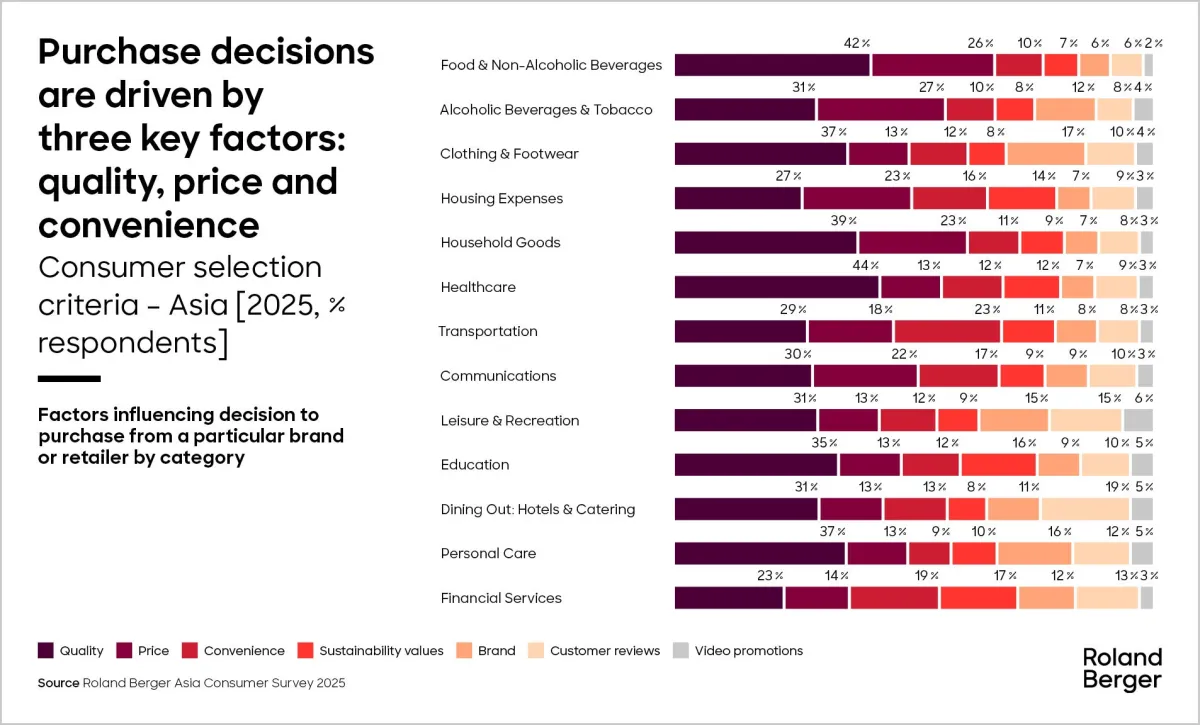
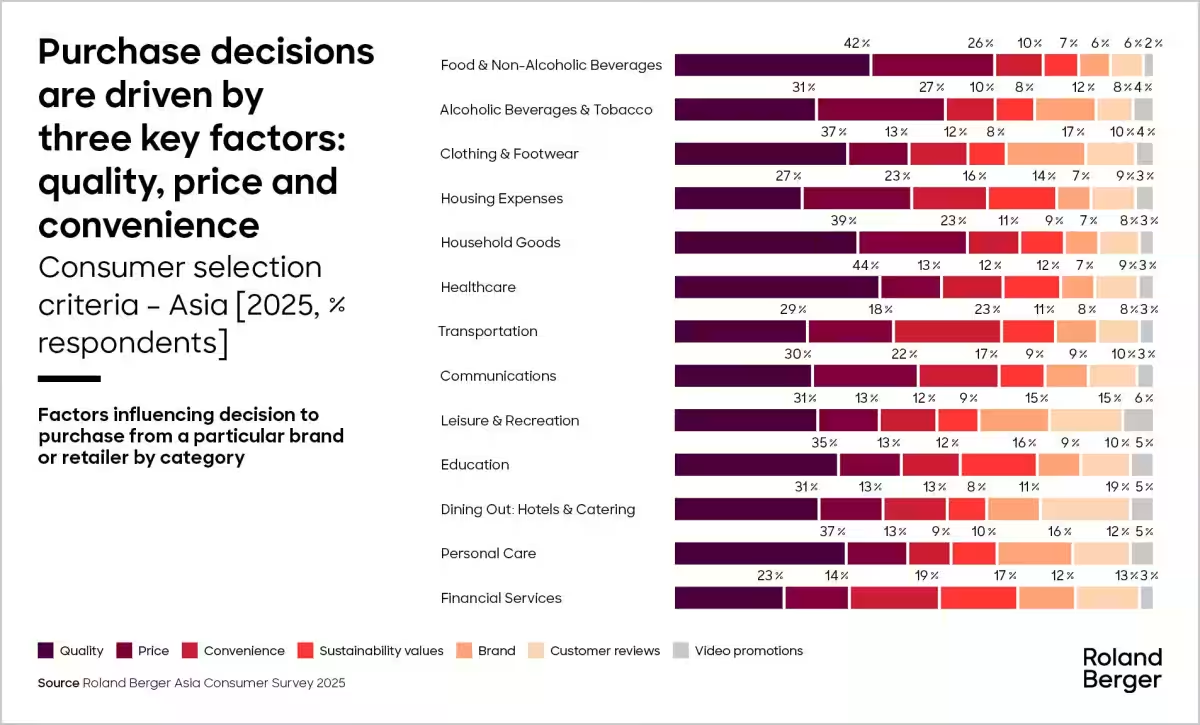
Across Asia, there is a noticeable pivot back to essential goods. Sectors focused on basic necessities, such as food, continue to perform robustly while discretionary spending in luxury segments decreases. Nevertheless, consumers are not simply seeking to save; they are selectively spending on reliable quality, leading to limited premiumization in necessary areas such as health and food quality.
Redefining Sustainability
Interestingly, the survey found that sustainability as a standalone purchasing motivator is receding. Particularly in Japan, South Korea, and emerging Southeast Asian countries, emphasis on sustainability has diminished. This trend does not imply a rejection of ESG values; rather, amid economic uncertainties, consumers are prioritizing assurances of value, longevity, and trustworthy brands over eco-friendly claims. Thus, sustainability needs to be integrated as a component that bolsters quality and durability rather than being positioned front and center.
Luxury Market Dynamics
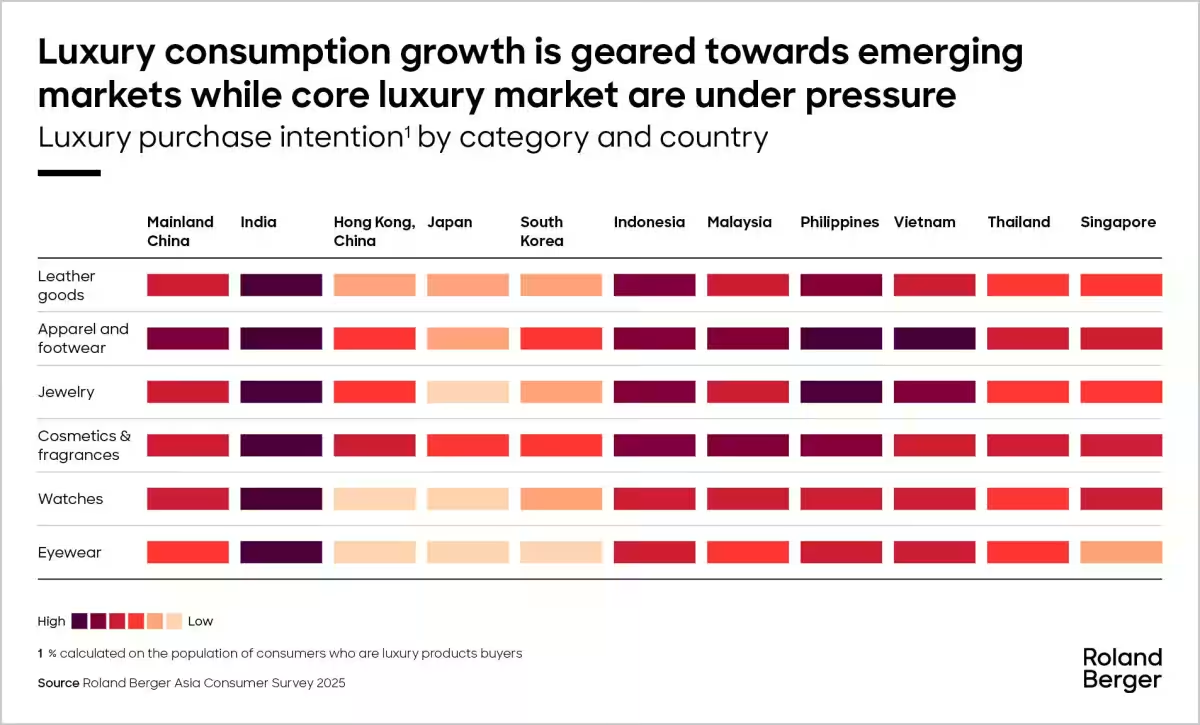
The luxury sector in Asia is showing signs of recovery; however, growth remains uneven. Emerging markets like India and Southeast Asia are witnessing a surge in demand, especially among younger demographics, while established markets such as Japan, South Korea, and Hong Kong experience stagnation. Particularly in Japan, the market seems to have entered a phase focused on deepening existing customer engagement rather than attracting new buyers. As a result, intrinsic values like brand trust and authenticity will play an increasingly significant role in market success.
The Importance of Omnichannel
The blending of digital and physical retail experiences has become a prerequisite for operations in established markets such as Japan and Singapore. As competition shifts from mere existence to speed, frictionless experiences, and the quality of engagement, emerging markets still recognize omnichannel capabilities as essential indicators of brand prestige, fostering premiumization.
Strategic Takeaways for Success in Asia
For sustained success in the Asian market, firms must shift from a focus on expansion towards meticulous orchestration of their strategies. Leveraging the scale in China while investing in future markets like India and ASEAN, and reaping rewards from established players like Japan and South Korea, brands must delineate distinct roles in each market, recalibrating investments across price, brand, channels, and resource allocations. This strategic clarity will be crucial in navigating the coming decade.
For more insights, the latest report, "Unraveling Asia's complex consumer landscape," is available on Roland Berger's website.
Methodology of the Survey
- - Survey Period: December 1, 2025 - January 31, 2026
- - Conducted by: Roland Berger
- - Geography: 11 Asian countries including China, Hong Kong, India, Japan, South Korea, Indonesia, Malaysia, Vietnam, the Philippines, Thailand, and Singapore.
- - Sample Size: 3,500 respondents aged 18 to 55 from various income brackets.
- - Methodology: Online survey with demographic breakdown by gender, age, location, and spending behavior.
About Roland Berger
Founded in 1967, Roland Berger is a renowned global management consulting firm headquartered in Munich, Germany. The company provides services across a wide range of industries, earning trust and recognition for its expertise in transformation, innovation, and performance enhancement. With a mission to merge sustainability into every client engagement, Roland Berger is dedicated to contributing to the sustainable development of enterprises and economies.



Topics Consumer Products & Retail)
【About Using Articles】
You can freely use the title and article content by linking to the page where the article is posted.
※ Images cannot be used.
【About Links】
Links are free to use.