



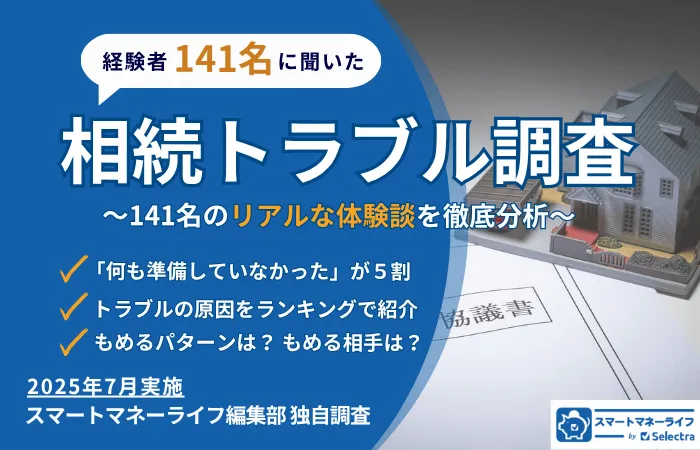
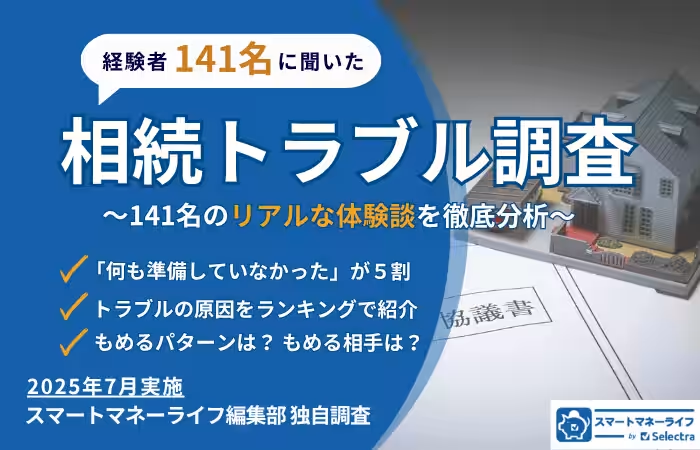
Inheritance Disputes: Key Insights from 141 Experiences Revealed in New Survey
Inheritance Disputes: Key Insights from 141 Experiences
A recent survey conducted by Selectra Japan, via its financial information portal Smart Money Life, has unveiled alarming trends regarding inheritance disputes. The survey included responses from 141 individuals who experienced disputes concerning inheritance, shedding light on common causes and preventive measures.
Overview of the Survey
The survey centered on inheritance-related conflicts, exploring aspects such as the total value of inherited assets and the preparedness of deceased individuals in estate planning. A comprehensive analysis of experiences from 141 respondents reveals critical data:
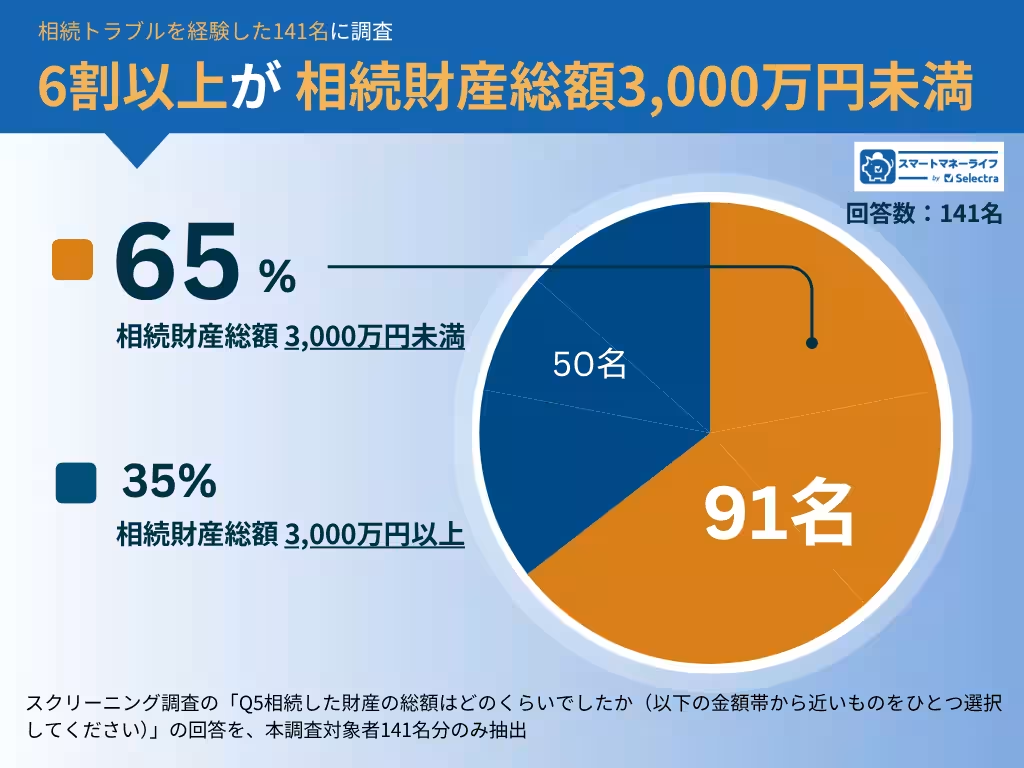
- - Asset Value: Over 60% of participants indicated that the total inheritance value was below 30 million yen.
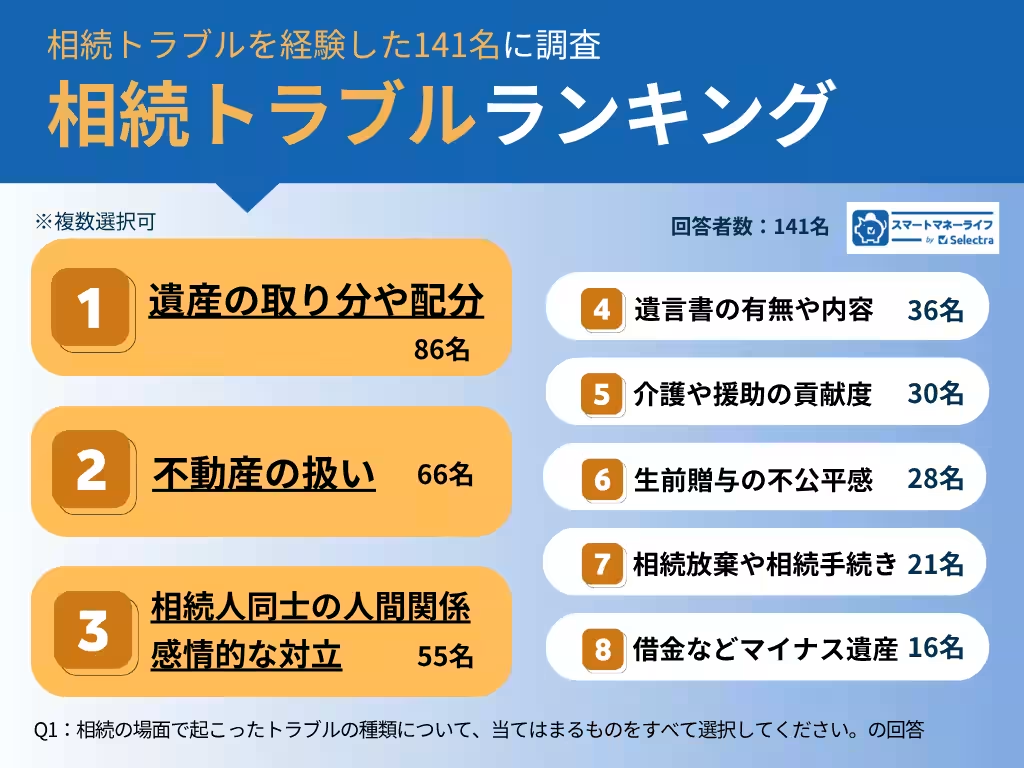
- - Major Disputes: The top three causes of inheritance disputes included:
2. Management of real estate
3. Emotional conflicts among heirs
When delving deeper into the nature of these disputes, it becomes evident that numerous issues often intertwine, leading to multifaceted conflicts that combine legal, emotional, and relational dynamics.
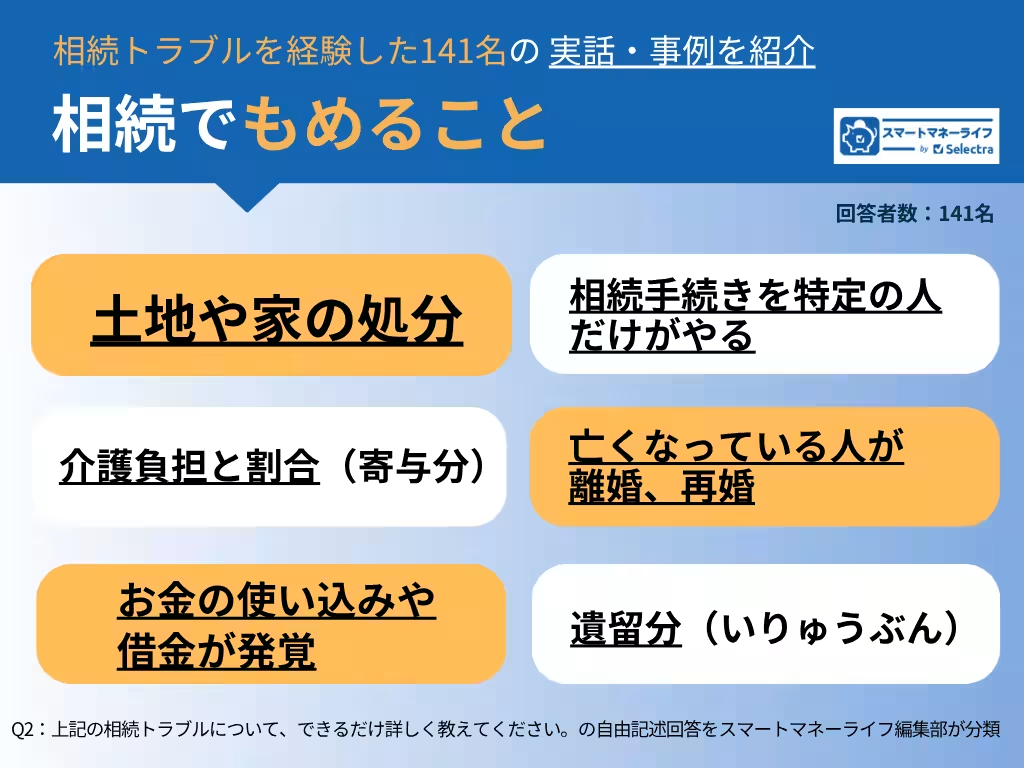
Common Sources of Conflict
1. Real Estate Management
Disputes regarding the selling or management of inherited properties are quite prevalent. Unlike cash, real estate requires agreement among all heirs for sale or usage, leading to conflicts over differing opinions on whether to sell or retain properties.
- Example Experience: A 62-year-old male from Gifu reported delays in proceedings because not all heirs could reach an agreement on property management decisions.
2. Caregiving Disputes
Disagreements often arise when one heir feels their contributions, such as caregiving, have not been appropriately compensated in the division of assets. This can lead to feelings of resentment and emotional disputes.
- Example Experience: A 66-year-old male from Toyama shared his experience of distributing funds unequally among siblings, resulting in severed family ties.
3. Discovery of Financial Mismanagement
Instances where debts or financial mismanagement by the deceased come to light posthumously can lead to conflict among heirs, prompting disputes over financial allocations.
- Example Experience: A respondent from Fukuoka recounted ongoing conflicts with relatives over financial misappropriations discovered after the death of the family member.
4. Handling of Inheritance Procedures
Certain heirs monopolizing decisions regarding the inheritance process can breach trust among other heirs, resulting in divisions.
- Example Experience: A 51-year-old man from Saitama described a scenario where one heir conducted all procedures without transparency, arousing suspicion among other family members.
5. Complications from Remarriages
Remarriages can complicate inheritance agreements, particularly when stepchildren or prior spouses are involved, leading to ambiguity and feelings of unfairness.
- Example Experience: A woman from Yamaguchi expressed frustrations with opaque handling of her father’s estate by her mother after her father's remarriage.
6. Legal Rights Claims
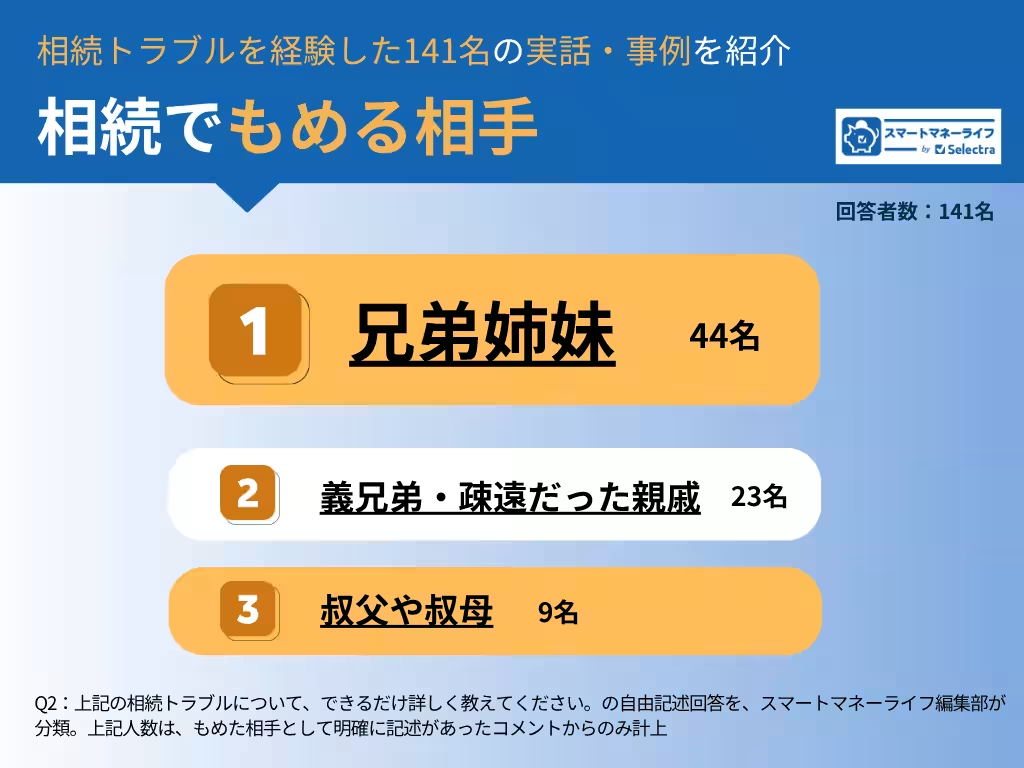
Claims made by estranged relatives for their legal share under ‘right of inheritance’ can exacerbate family tensions.
- Example Experience: A 34-year-old female from Okayama reported conflict with a distant aunt attempting to claim her share during the funeral.
Preparedness and Preventive Measures
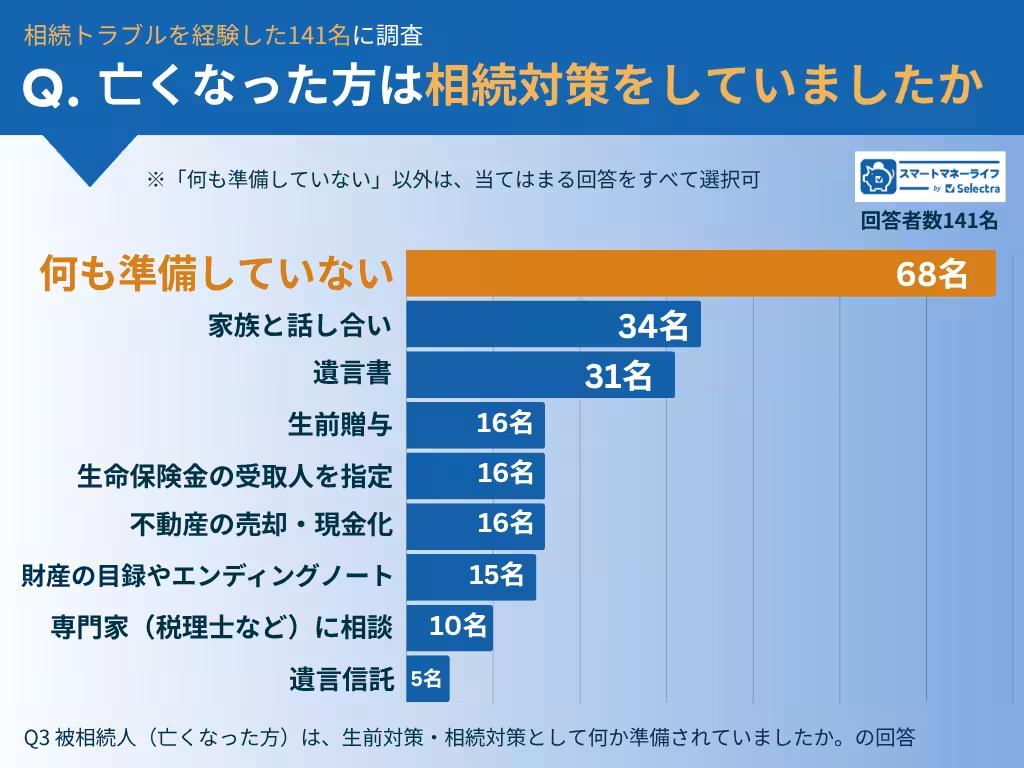
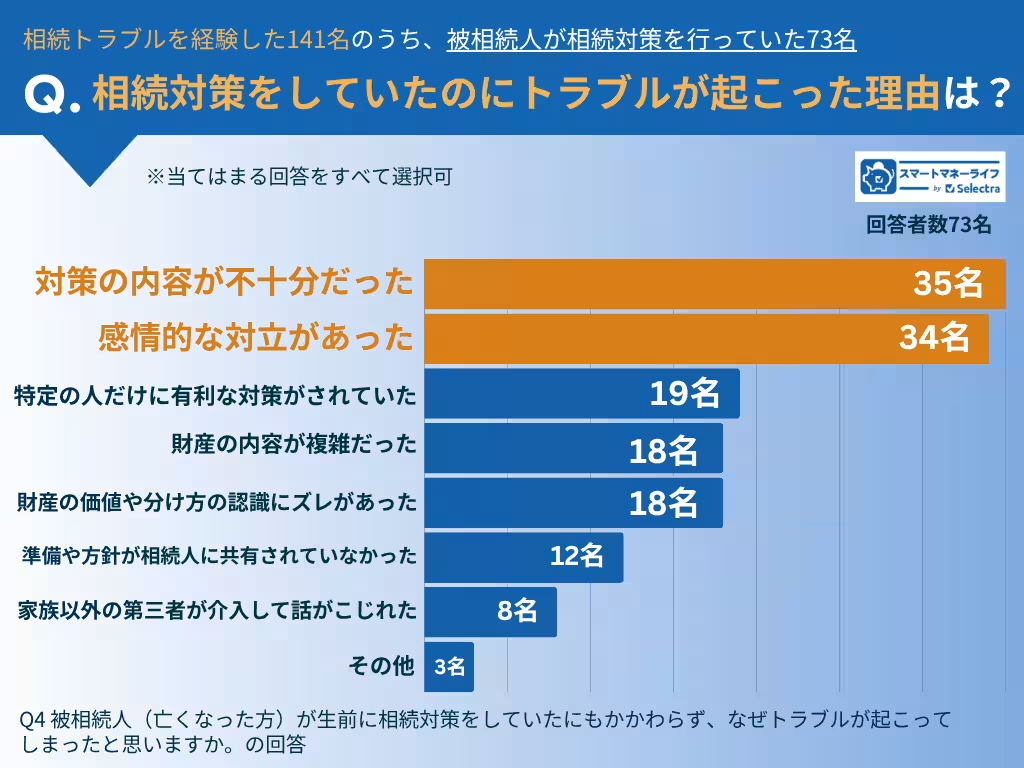
A staggering 48% of the respondents admitted their deceased relatives had not prepared any inheritance plans. Even among those who made some measures, the effectiveness was often lacking due to insufficient communication or inadequate documentation.
Key Recommendations for Preventing Disputes:
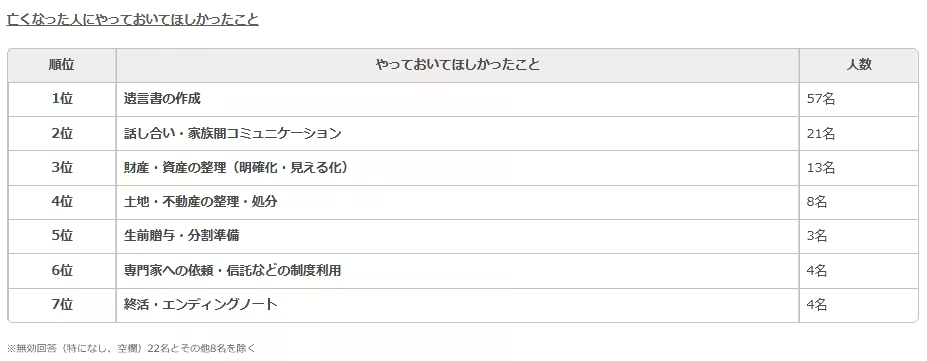
1. Create a Will: Crafting a legally binding will can clarify intentions and expectations, reducing ambiguity.
2. Foster Family Communication: Proactive discussions about financial management and expected outcomes can mitigate surprises later on.
3. Engage Professionals: Involving financial planners or legal advisers can provide guidance on effective inheritance strategies.
4. Clarifying Roles: Designating specific tasks among heirs, such as asset management, can streamline processes and build trust.
In conclusion, this survey highlights the urgent need for comprehensive planning when it comes to inheritance issues. Much can be learned from the experiences shared by these individuals, with a clear emphasis on preparation and communication to prevent disputes that can plague families at vulnerable moments.

Topics People & Culture)


【About Using Articles】
You can freely use the title and article content by linking to the page where the article is posted.
※ Images cannot be used.
【About Links】
Links are free to use.