



Tokyo Office Market Trends as of January 2026: Vacancy Rates and Average Rents
Insights into Tokyo's Office Market Dynamics as of January 2026
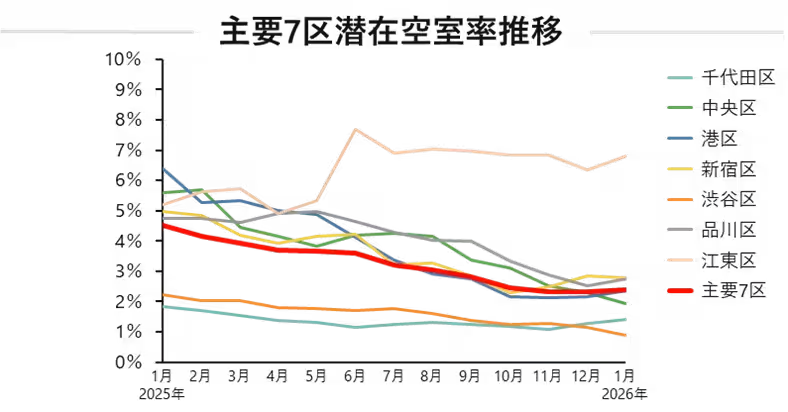
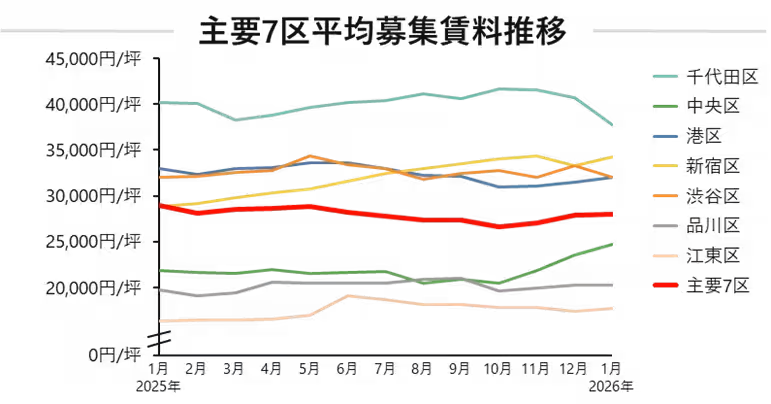
As of the end of January 2026, the Tokyo office market continues to show interesting trends in vacancy rates and average rents, as reported by Mitsubishi Estate Real Estate Services. The overall vacancy rate stands at 2.40%, reflecting a slight increase of 0.09 percentage points from the previous month, while average rent per tsubo is recorded at 28,002 yen, indicating a minor rise of 58 yen.
Vacancy Rates and Average Rents Breakdown
In areas classified as the major five districts, the vacancy rate has been calculated at 1.96%, a marginal uptick of 0.04 points month over month. Meanwhile, the major seven districts experience a similar increase, with their vacancy rate at 2.40%.
The average rent within the major five districts has surged to 32,512 yen per tsubo, reflecting an increase of 206 yen. In contrast, the major seven districts see an average rent of 28,002 yen, indicating a lesser increase compared to the five district average.
Significant Area Developments
Significant changes have been noted in specific districts. For instance, in the Nihonbashi Honcho, Muromachi, and Honmonchi areas, demand has escalated with the availability of about 350 tsubo of new office space. Here, average rents soared impressively to 30,729 yen per tsubo, marking an eye-catching rise of 10,955 yen month over month.
Additionally, two new buildings were completed in the Shiba and Takanawa areas; however, both buildings were opened with just over 20% of their total area immediately available for leasing, suggesting a strong pre-leasing performance.
Vacancy Size by Rent Range
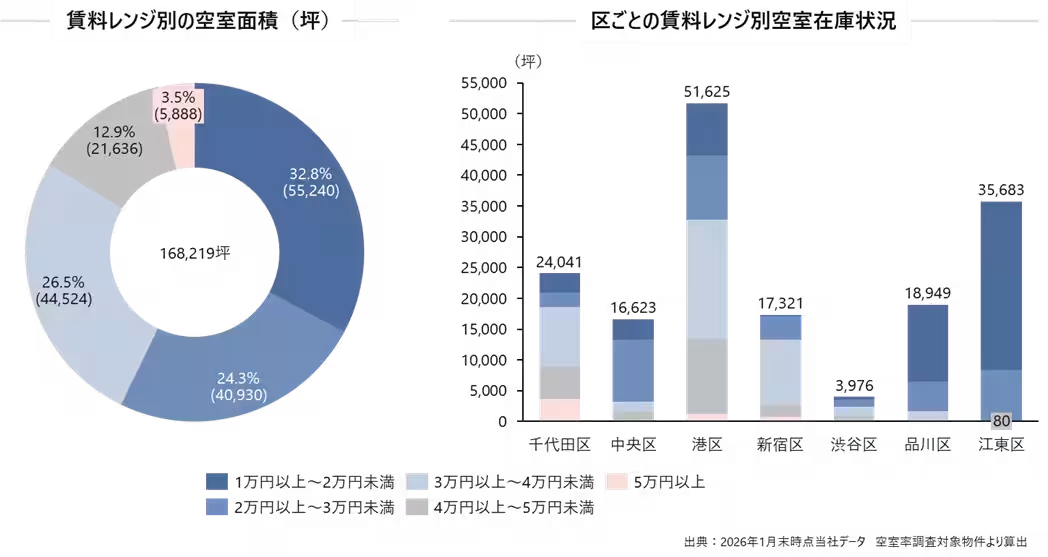
Looking at the overall vacant space across the major seven districts, approximately 168,000 tsubo is available, with around 33% listed at the 10,000 yen price range, making it the most common category. Following this, the 30,000 yen range also sees considerable listings. Notably, Minato holds around 51,000 tsubo of the most significant vacancies, primarily in higher price bands, whereas Koto shows a predominance of lower-priced vacancies. This distinct variance underscores how strategic relocation decisions are dictated by different economic factors across these regions.
While Minato boasts a diverse range of listing prices, the Shibuya area faces severe supply pressures, resulting in limited options. Conversely, Koto effectively serves as a budget-friendly option, highlighting contrasting migration strategies adopted by businesses in varied districts.
Research Methodology Insights
This report’s findings are substantiated by a total of 991 buildings assessed, showing a modest increase since the previous month. The criteria for this survey include structures with a floor area exceeding 3,000 tsubo, located in well-known districts such as Chiyoda, Chuo, Minato, Shinjuku, Shibuya, Shinagawa, and Koto, focusing on buildings that have been completed by the study date. Special considerations were taken to exclude any buildings with unique circumstances affecting the standard office leasing market.
The potential vacancy rate is derived from a long-term supply perspective, emphasizing only spaces available for immediate occupancy. It's done by introducing a newly defined "potential vacancy rate," leveraging traditional benchmarks to dynamically analyze market conditions focusing solely on floors available for rapid occupation.
Furthermore, average rent calculations are weighted averages based on listings at month-end, inclusive of service charges, where applicable. The overall insights demonstrated within this document delineate Mitsubishi Estate’s perspective on the real estate market, which could evolve in response to fluctuating market or economic conditions.
About Mitsubishi Estate Real Estate Services
Mitsubishi Estate Real Estate Services operates as a subsidiary of Mitsubishi Estate, specializing in various real estate endeavors, including broker services, consulting, appraisals, and leasing activities. With years of expertise and a robust network under Mitsubishi Estate, the firm aims to cater to diverse client needs efficiently.
Head Office: 1-9-2 Otemachi, Chiyoda, Tokyo
Representative: Hideichi Shimizu
Establishment: December 20, 1972
Topics Consumer Products & Retail)
【About Using Articles】
You can freely use the title and article content by linking to the page where the article is posted.
※ Images cannot be used.
【About Links】
Links are free to use.