



How Remote Work Supports Caregiving: Insights from Recent Survey by LASSIC
Exploring the Relationship between Remote Work and Caregiving
In a recent survey conducted by LASSIC, a company promoting location-independent work styles, findings revealed profound insights on how remote work can significantly aid in balancing caregiving responsibilities. This study targeted a diverse range of individuals aged 20 to 65 across Japan, focusing on their experiences with remote work and caregiving.
Key Findings
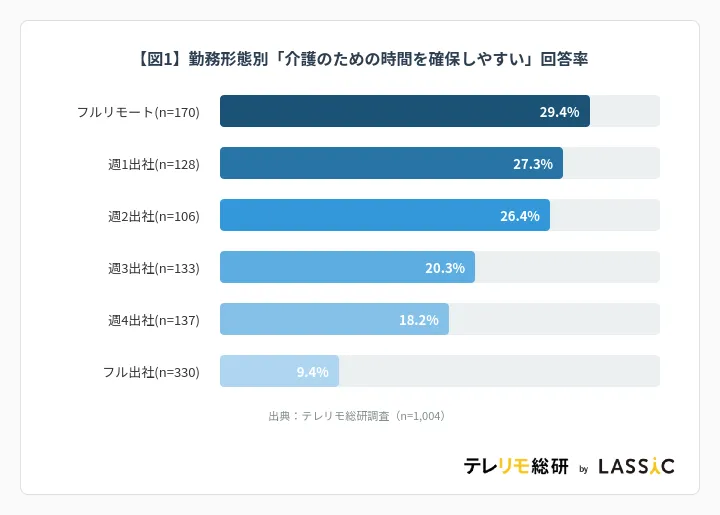
One striking result from the study indicated that approximately 29.4% of full remote workers felt they could secure time for caregiving; this figure notably stands at 3.1 times higher compared to just 9.4% of individuals who work in a traditional office setting. The research included responses from 1,004 remote work participants, prompting them to reflect on their experiences regarding the dual demands of work and caregiving.
The Survey Breakdown
- - Full Remote Workers: Among the full remote workers surveyed, 29.4% expressed that it was easier for them to allocate time for caregiving tasks.
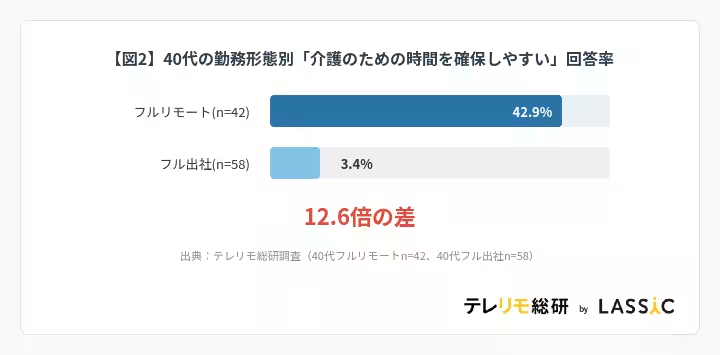
- - Comparison to Office Workers: In contrast, only 9.4% of those who reported to an office felt the same. In a more specific age breakdown, particularly among respondents in their 40s, 42.9% of full remote workers noted they could ensure caregiving time, compared to just 3.4% of full office workers, marking a staggering 12.6 times difference.
Remote Work Frequency and Caregiving
The survey also highlighted a trend where the frequency of remote work appeared to correlate with an increased ability to manage caregiving duties effectively. As employees embrace remote work more regularly—either full-time or a couple of days a week—their perception of being able to ensure caregiving time substantially improves. This correlation suggests that even part-time remote work (one to two days a week) maintains a noteworthy response rate for caregiving comfortability, contrasting sharply with traditional office attendance rates.
Findings for Those Over 40
When focusing on respondents in their 40s, a demographic often challenged by caregiving responsibilities, the survey indicated pronounced differences. Notably, over 40% of full remote workers in this age group reported they could manage caregiving tasks, exhibiting a stark discrepancy with their office-working peers, highlighting the critical role of flexible working arrangements as a remedy for those in this life stage.
Insights on Office Workers
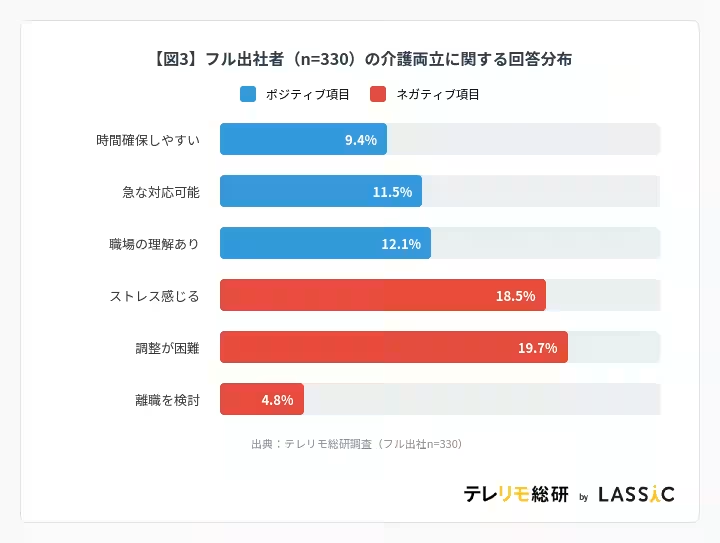
Interestingly, even within the office worker group, 12.1% acknowledged their work environment's understanding and flexibility concerning caregiving. This suggests that while the mode of work significantly impacts caregiving capacity, the overall work culture and support systems are also essential factors.
Implications for Employers and Employees
From the insights of this survey, several key implications arise for businesses and employees alike:
- - Remote Work Policies: Companies are encouraged to establish or enhance remote work policies to better support employees in managing work and caregiving duties effectively. This adaptability can mitigate potential workforce attrition due to caregiving responsibilities.
- - Cultural Shift: Employers should evaluate workplace culture and perceptions towards caregiving, enabling a more supportive environment that acknowledges employee responsibilities outside of work.
- - Strategic Decisions for the Future: As Japan's aging population swells, with caregiving becoming an increasingly common reality, it is essential for organizations to consider how flexibility can serve as a competitive advantage in retaining talent while supporting families.
In conclusion, the findings from LASSIC's survey echo the evolving landscape of work, where caring for family members no longer stands in opposition to a successful career. Instead, remote work appears as a pivotal solution to ensure that professional obligations and family responsibilities can coexist. Organizations should take this into account, as failure to do so may lead to significant challenges in workforce retention in the near future.
For a more in-depth look at this survey and its findings, please refer to the detailed report linked here: LASSIC Survey on Remote Work and Caregiving.


Topics People & Culture)



【About Using Articles】
You can freely use the title and article content by linking to the page where the article is posted.
※ Images cannot be used.
【About Links】
Links are free to use.