



Understanding Generation Z's Communication Preferences: Insights from a Community Survey
Insights into Generation Z's Community Dynamics
A recent survey conducted by Pramacid, a company based in Shibuya, Tokyo, focused on understanding the evolving dynamics of community and relationships among Generation Z, particularly in the wake of the COVID-19 pandemic. From August 8 to 18, 2025, the survey zeroed in on the younger subset of this generation, specifically those born between 2002 and 2010, who are now between the ages of 15 and 22, examining how their modes of communication and social interactions have shifted.
Survey Overview
The survey targeted various aspects of communication, asking a total of 600 respondents, primarily high school students, about their preferred communities, their feelings towards online relationships, and their overall communication experiences. The aim was to gain insights into how the upcoming Alpha generation views school and community as a place of belonging.
Community Preferences
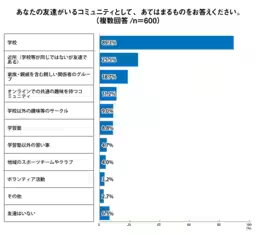
The first question addressed community membership. A striking 89.3% of respondents identified 'school' as their primary community, followed by distant friends from the neighborhood (25.5%), close family or relatives (18.7%), and online communities centered around shared hobbies (11.2%). Notably, the latter outpaced traditional groups, such as clubs or tutoring centers, indicating a growing acceptance of online communities as significant social spaces.
Online Relationships and Community Dynamics
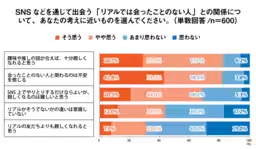
The survey went further to probe the nature of relationships formed through social media. When asked about their opinions on interacting with people they had yet to meet in real life, 82.2% agreed that common interests could facilitate closeness. Meanwhile, 81.7% expressed anxiety about such interactions, showing a duality in their perceptions of online relationships. These findings highlight the tension between excitement and apprehension as Z-generation individuals navigate their social landscapes.
Pramacid's CEO, Akito Iwata, emphasized the role of online communities in fostering connections based on similar interests, suggesting that despite the inherent concerns about online interactions, many young individuals are willing to embrace the potential for friendships that transcend physical boundaries.
Depth vs. Breadth in Friendships
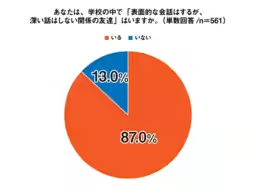
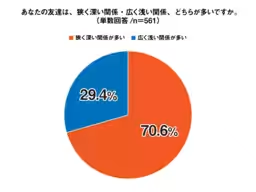
When it comes to the depth of relationships, 70.6% of participants indicated they had many close friendships, casting a spotlight on a trend towards fewer but more meaningful connections. Interestingly, when asked about superficial friendships—those that involved surface-level conversations without deeper inquiries—87% admitted to having such acquaintances. This suggests that while a desire for deeper connections exists, it coexists with an acceptance of more casual relationships.
Communication Fatigue
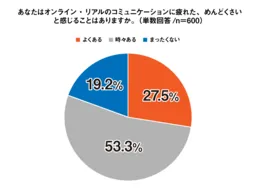
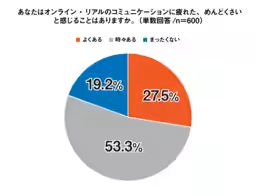
Another finding from the survey was the prevalent feeling of communication fatigue among participants. A significant 80.8% reported experiencing stress or annoyance related to social interactions, particularly when overwhelmed by messages or pressured to respond quickly. This reflects the paradox of social media, where constant connectivity can lead to exhaustion just as easily as it fosters connection.
Loneliness and Mental Wellbeing
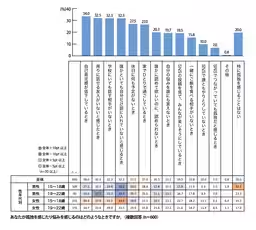
Furthermore, the survey revealed key insights into the emotional struggles of Generation Z. A substantial 34% reported feeling lonely when their self-esteem dipped, while 32.5% felt isolated when they believed they lacked confidants. Notably, the feedback indicated a gender disparity, with females citing relationship issues within their communities, while males felt loneliness during solitary moments, such as unoccupied weekends.
Conclusion
The results of this survey shed light on the changing landscape of youth communities amidst the digital age. Pramacid's report concludes that as Generation Z evolves, so too do their needs for flexibility in learning environments, suggesting an increasing trend towards enrolling in alternative education structures such as correspondence schools. With a desire for tailored experiences, the incoming Alpha generation may further reshape these patterns, continuing to seek environments that facilitate their individual aspirations and social connections.
As we move forward, understanding these dynamics will be crucial in supporting youth as they navigate their educational and social paths, particularly in an increasingly complex digital world.
Topics People & Culture)









【About Using Articles】
You can freely use the title and article content by linking to the page where the article is posted.
※ Images cannot be used.
【About Links】
Links are free to use.