



Top Ten Chinese Cases of Mega-City Management Published at 2025 Conference
Exploring the Best Practices in Mega-City Management from China
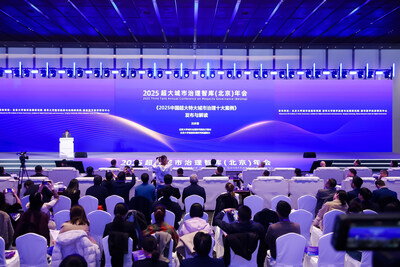
On November 20, 2025, a significant conference hosted in Beijing revealed ten exemplary cases that shed light on the management of mega-cities in China. This event was organized by esteemed think tanks such as the Peking University Institute of Urban Governance, Tsinghua University's Institute for Digital Government and Governance, and the Xinhua Research Center for Digital Government. The primary aim of this gathering was to promote the exchange of innovative methods and practices in urban management, as well as to highlight successful governance experiences across various Chinese cities.
The ten cases presented serve as a testament to the proactive adoption of digital technologies in addressing the challenges faced by urban environments. For instance, Beijing's local governance has embraced a smart platform known as 'Jingban.' This advanced system integrates services across all 16 administrative districts, facilitating efficient responses to service requests and ensuring the smooth administration of public services.
Powered by JD Cloud technologies, the 'Jingban' platform includes over 600 applications designed to enhance urban development through streamlined digital governance. This initiative illustrates how technology can transform local government functions, making them more accessible and efficient for residents.
In Chongqing, another significant case is the implementation of the '1361' intelligent management system. This system serves as a digital operations and management hub for various levels of local government agencies. It has notably improved the overall efficiency of urban operations in this mountainous southwestern city, allowing for better coordination and resource allocation.
Moving to the south, Guangzhou has made strides by integrating market-oriented reforms in its data element sector, leading to the creation of innovative platforms. These platforms leverage digital technologies to enhance the integration of services within the real economy. For instance, the 'Suihaoban' mobile government service application offers a matrix of services that blend online and offline capabilities, supplemented by a hotline for customer support. This combination not only improves service delivery but also fosters resilience within the framework of smart city governance.
Meanwhile, in Shanghai, the introduction of 'QR Code Parking' exemplifies an innovation aimed at simplifying urban management. Residents can utilize the 'Suishen Code,' a city travel code, to access convenient and efficient parking services. This initiative underscores the city’s commitment to promoting intelligent management solutions that cater to the daily needs of its citizens.
Shedding light on these advancements, Shen Tiyan, the Executive Dean of the PKU Institute of Urban Governance, emphasized that these cities demonstrate a commitment to improving public welfare through digital technologies. The focus is not only on governance efficiency but also on enhancing the quality of life for residents through collaborative management approaches.
The application of such multidimensional cooperative governance models indicates a shift towards a more people-centric philosophy in urban administration. The progress showcased in these cases confirms the potential of innovations in elevating urban management systems and capabilities.
As cities globally grapple with rapid urbanization and the complexities it brings, China's experience offers valuable lessons on leveraging technology to foster effective governance. The proactive measures adopted by these leading cities could serve as a model for others in the quest to build more sustainable, efficient, and resilient urban environments.
In conclusion, the conference not only celebrated the achievements of these cities but also provided a platform for knowledge sharing among experts in urban governance. The ten exemplary cases presented serve as a crucial reference point for future endeavors in managing mega-cities efficiently and effectively, paving the way for a new era of urban governance.
Topics Policy & Public Interest)
【About Using Articles】
You can freely use the title and article content by linking to the page where the article is posted.
※ Images cannot be used.
【About Links】
Links are free to use.