



Innovative Digital Management System Tests Emergency Shelter Reception in Suzu City
Introduction
On October 5, 2025, a groundbreaking training session was held at the Ohtani Junior High and Elementary School gymnasium in Suzu City, Ishikawa Prefecture. This exercise formed a part of a collaborative effort between VACAN Co., Ltd., a leader in digital solutions, and the local government of Suzu City. The aim was to showcase a newly developed "Evacuee Management System" that leverages AI technology to streamline the reception process at evacuation shelters, thereby enhancing safety and efficiency during natural disasters.
Background
In light of the rising occurrence of natural disasters, the significance of improving disaster management has become increasingly evident. VACAN has historically provided real-time crowd information and evacuation shelter maps, benefiting over 200 municipalities by transforming visibility regarding shelter congestion. Recently, the company has also implemented digitalization initiatives for the reception of evacuees, aiming for a more rapid and secure evacuation process.
The recent training session in Suzu City was specifically designed to educate local residents about the new digital procedures for shelter reception during emergencies. Participants were encouraged to experience the benefits of digital technology firsthand, with a focus on understanding its practicality and advantages.
Training Details
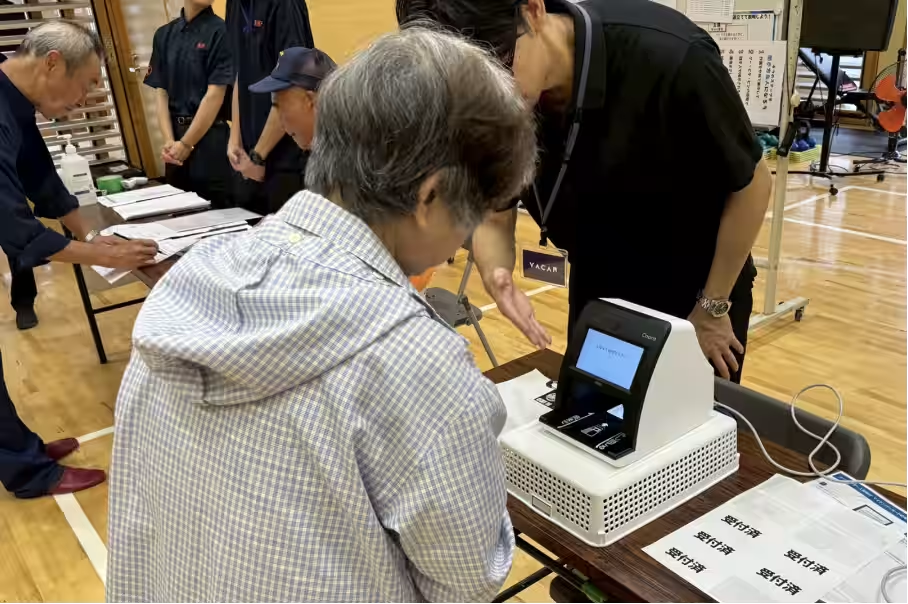
The training took place on a Sunday, targeting residents of Ohtani School's surrounding community. Utilizing backup power from batteries connected to Starlink for internet access, the event employed VACAN's Evacuee Management System to facilitate the registration and aggregation of evacuees. This activity aimed not only to demonstrate the advantages of digital reception systems but also to gather feedback from both residents and staff.
Reception Methods Tested
Participants were encouraged to select their preferred method of registration from four options:
1. Web Form via QR Code: Evacuees scanned a QR code with their cameras to access a web form for data entry.
2. Card Reader: Individuals presented their My Number cards or driver's licenses to a card reader for identification.
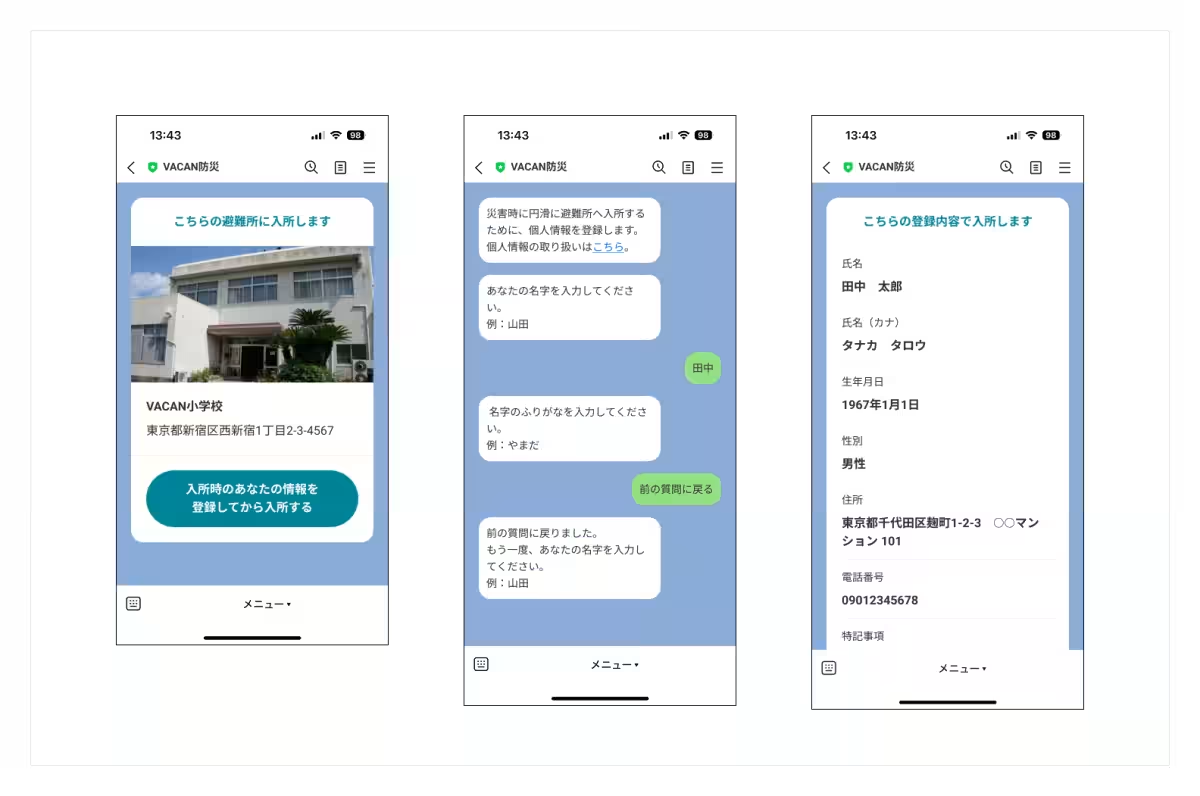
3. LINE Integration: Using VACAN's official LINE account, evacuees could quickly enter their information via QR code scanning.
4. Paper Forms: Traditional completion of paper forms, with staff promptly transferring data into the system.
Results of the Test
The trial involved 38 local residents, allowing each participant to choose their ideal route for the registration process. It was noted that the preference for evacuation routing was highest for the LINE option, followed by the My Number card, paper forms, the web form, and finally the driver’s license. Following the event, a survey revealed strong positive feedback regarding the usability of digital methods. Remarkably, both My Number card and driver’s license registrations received a 100% satisfaction rating for smoothness.
While 67% rated the web form positively, 77% did so for LINE. This demonstrated distinct preferences across age groups: older participants tended to favor card or paper methods, while those aged 30 to 60 gravitated towards smartphone-based solutions. Comments highlighted the familiar usage of LINE as an advantage, reinforcing the effectiveness of digital channels for reception.
Overview of the Evacuee Management System
The Evacuee Management System utilized during this training merges numerous services into a single platform. It features a web service called "VACAN Maps," which allows for real-time visualization of crowd conditions and the occupancy status of shelters. This functionality ensures that evacuation personnel and disaster response teams are informed without additional workloads, simplifying the management of shelter occupancy and enabling residents to make informed decisions regarding their evacuation paths.
Future Directions
Looking ahead, VACAN plans to enhance the system further by incorporating the entry and exit management features based on My Number cards, alongside tools for predicting and managing required supplies and integrating evacuee data with external systems. Plans also include extending the platform to support public facility reservations and disseminating information on tourism and events to ensure ongoing community safety in various contexts.
About VACAN
Founded in June 2016 and headquartered in Chuo-ku, Tokyo, VACAN is a company recognized by the Ministry of Economy, Trade, and Industry as a "J-Startup 2019" entity. Its mission, "to gently connect people and spaces with technology," drives its commitment to transforming urban experiences through comprehensive crowd and area management solutions, as well as innovative media services within restroom facilities.
For more information, visit: VACAN Official Website.
Topics Policy & Public Interest)
【About Using Articles】
You can freely use the title and article content by linking to the page where the article is posted.
※ Images cannot be used.
【About Links】
Links are free to use.