




cellenpia®PLAS Chosen for Aspect's Innovative 3D Printer Material
Revolutionary Material Enhancements in 3D Printing with cellenpia®PLAS
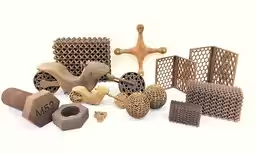
In a significant advancement in the field of 3D printing, the cellulose nanofiber (CNF) reinforced resin, cellenpia®PLAS, produced by Nippon Paper Industries Co., Ltd., is now a key component in Aspect's innovative powder resin material for 3D printing, named ASPEX-PA6+CNF. This collaboration marks a pivotal moment in materials science, combining cutting-edge research with practical applications in additive manufacturing.
Lightweight and Strong: A New Standard in 3D Printing
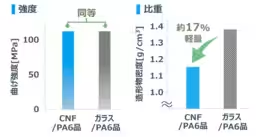
The integration of cellenpia®PLAS has resulted in an impressive 17% reduction in weight when compared to traditional reinforcement materials like glass. This remarkable achievement maintains equivalent strength levels, providing a new standard for designers and engineers looking to optimize their 3D printed components without sacrificing structural integrity.
Upcoming Presentation and Exhibition
The details of this cutting-edge material will be formally presented at the Aspect-Mitsubishi Corporation Technos Joint Seminar scheduled for October 23, 2026. Moreover, during the Formnext International Exhibition in Frankfurt, Germany, from November 17 to 20, the capabilities and benefits of cellenpia®PLAS will be showcased. This global event emphasizes 3D printing technologies, making it the perfect platform to demonstrate this groundbreaking material, which will be available from Aspect starting November 1, 2026.
A Norm of Quality and Innovation
The development of this novel material is rooted in the parameters set forth by the Paper and Pulp Technology Association journal and recognized with the prestigious Pulp and Paper Technology Association Award. The production of cellenpia®PLAS utilizes a unique manufacturing technique that employs cellulose fibers derived from biomass resources, integrating seamlessly into thermoplastic polymers, such as polypropylene (PP) and nylon 6 (PA6). This advanced technique, known as the Kyoto Process, was pioneered by Professor Hiroyuki Yano of the Kyoto University Institute for Integrated Cell-Material Sciences and further refined by the Kyoto City Institute of Industrial Technology in collaboration with Nippon Paper Industries.
Commitment to Sustainable Manufacturing
Nippon Paper Industries is committed to sustainability and innovation in material production. Participation in the NEDO funding project for technology development targeted at the low-cost manufacturing of cellulose nanofiber-reinforced resins positions the company as a leader in this field. With the test and expansion equipment installed at the Fujii Plant, the capability to produce over 50 tons of CNF reinforced resin annually has been established, reinforcing the infrastructure for large-scale production.
Furthermore, with certification to ISO 9001, Nippon Paper Industries ensures that the design, development, and production of CNF reinforced resin are held to the highest quality management standards.
Looking Ahead
The future of cellenpia®PLAS extends beyond its current applications in 3D printing, with plans to accelerate its use in injection molding applications, thus expanding their cellulose-based reinforced resin business. This innovative approach not only highlights the potential of sustainable materials derived from wood resources but also sets a benchmark in the ever-evolving landscape of additive manufacturing.
In conclusion, the collaboration between Nippon Paper Industries and Aspect represents more than just the introduction of a new material – it symbolizes a commitment to advancing technology in alignment with environmental responsibilities. By leveraging biotechnology, they are paving the way for a future where high-performance materials are both lightweight and sustainable.

Topics Consumer Products & Retail)






【About Using Articles】
You can freely use the title and article content by linking to the page where the article is posted.
※ Images cannot be used.
【About Links】
Links are free to use.