



Impact of Remote Work on Parenting: A Study on Work-Life Balance Transformation
Impact of Remote Work on Parenting: A Study on Work-Life Balance Transformation
In recent years, Japan has witnessed a significant transformation in family dynamics, particularly in the context of work and parenting. Since the 1990s, there has been a marked shift from single-income (stay-at-home) households to dual-income families, which now outnumber the former by approximately 2.3 times. This trend has sparked various challenges, including long waiting lists for childcare, solo parenting scenarios, and chronic fatigue from juggling work and family demands.
In response to these issues, a significant legislative change was introduced in 2024 with the amendment of the Childcare and Family Care Leave Law. This reform mandates that employers facilitate telework options for employees with children under three years old, reflecting a nationwide commitment to supporting the balance between work and parenting.
Survey Findings on Remote Work's Effects on Parenting
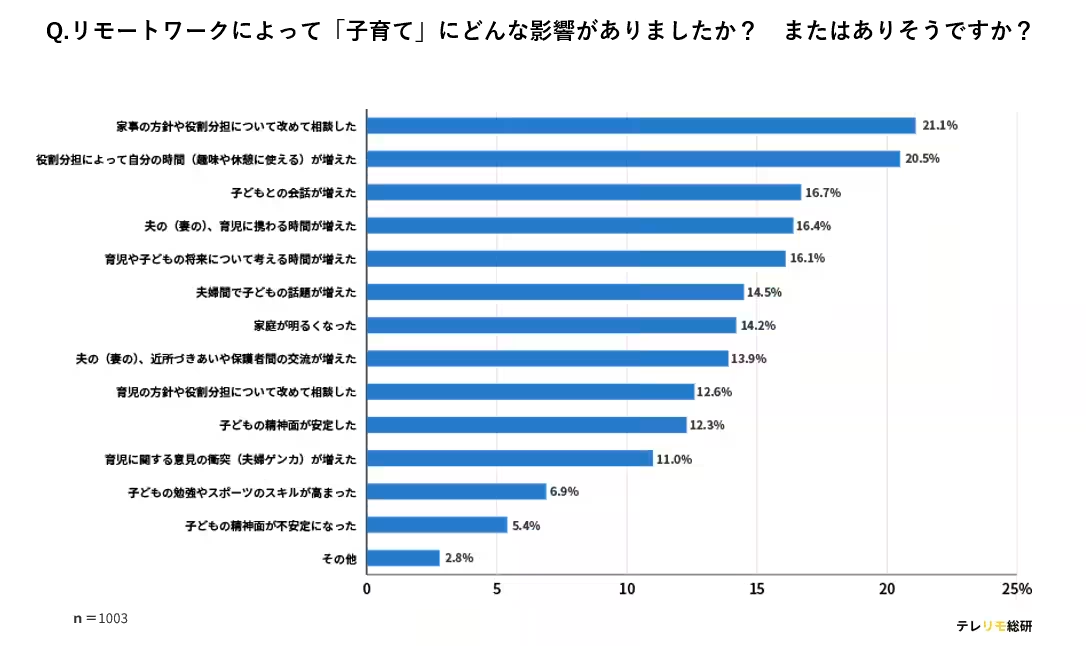
To delve into the impact of remote work on family life, we conducted a survey with 1,003 working men and women aged 20 to 65 who have experience with telecommuting. We asked respondents what effects remote work had on their parenting experience, and the results reveal insightful trends.
Positive Shifts in Family Responsibilities
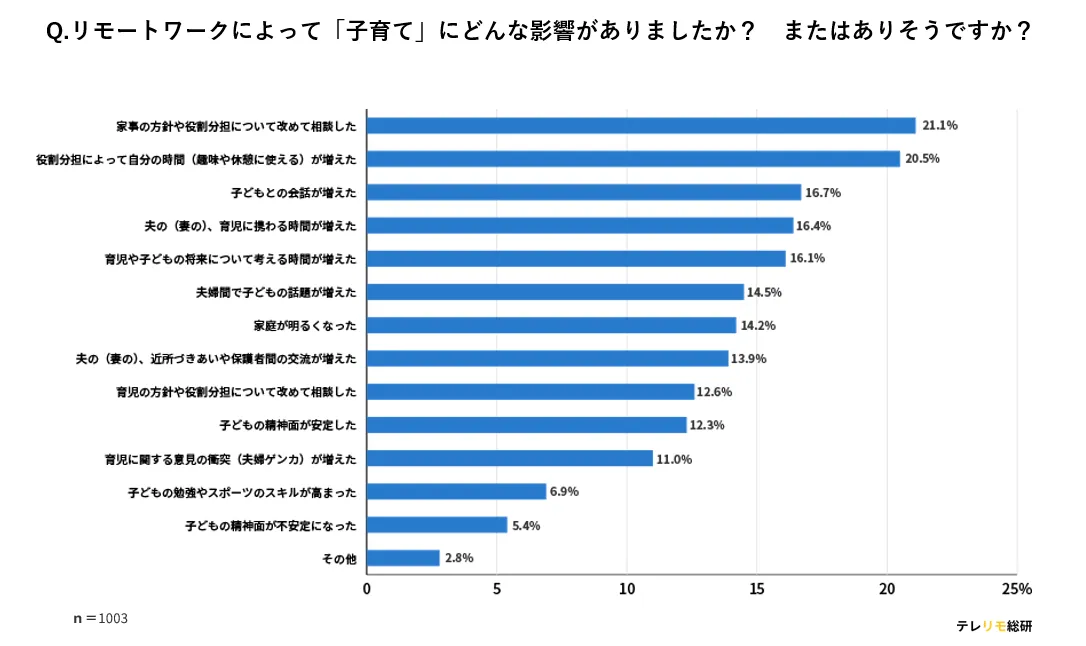
Among the participants, 32% reported that remote work had a significant impact on their parenting experiences. Those who noted positive changes highlighted several key areas:
1. Reevaluated Household Roles: The most common response indicated that couples were more likely to discuss household responsibilities. Previously, many families adhered to unspoken agreements about who would tackle domestic tasks. However, sharing the same space during remote work fostered discussions about roles, leading to improved collaboration.
2. Increased Personal Time: Respondents noted that reevaluating role distribution allowed them more personal time for hobbies and relaxation. Enhanced communication concerning parenting duties contributed to more balanced family dynamics.
3. Quality Time with Children: Many participants reported spending more time conversing with their children and that partners were more involved in childcare, indicating a shift towards shared parenting responsibilities.
These findings suggest that remote work has prompted families to address domestic responsibilities more openly, leading to improved relationships and emotional connection.
Gender Perspectives on Family Engagement
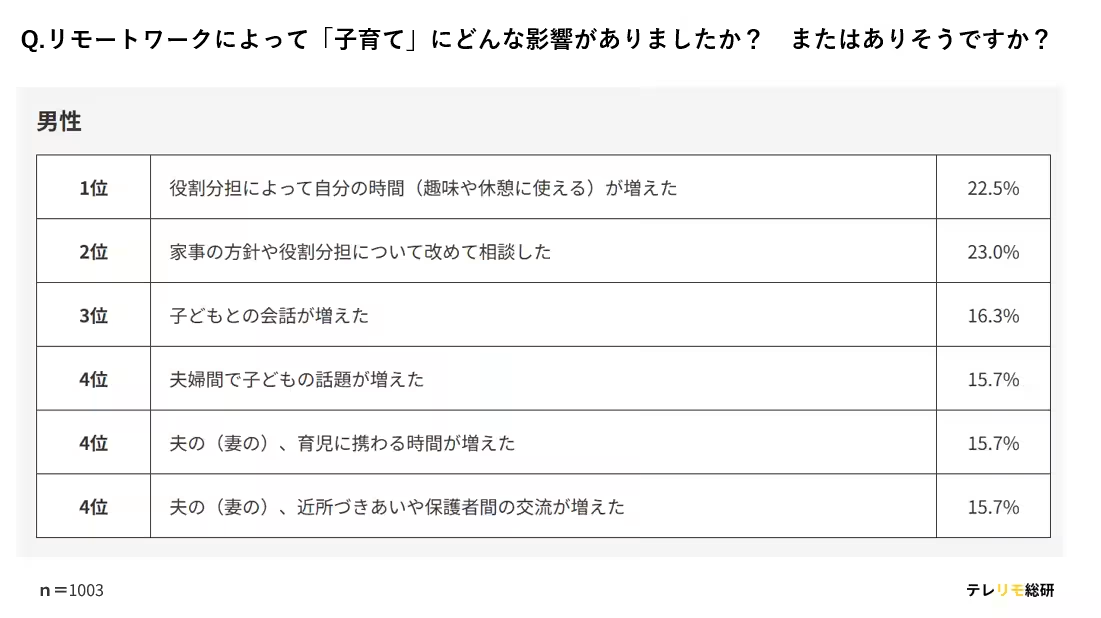
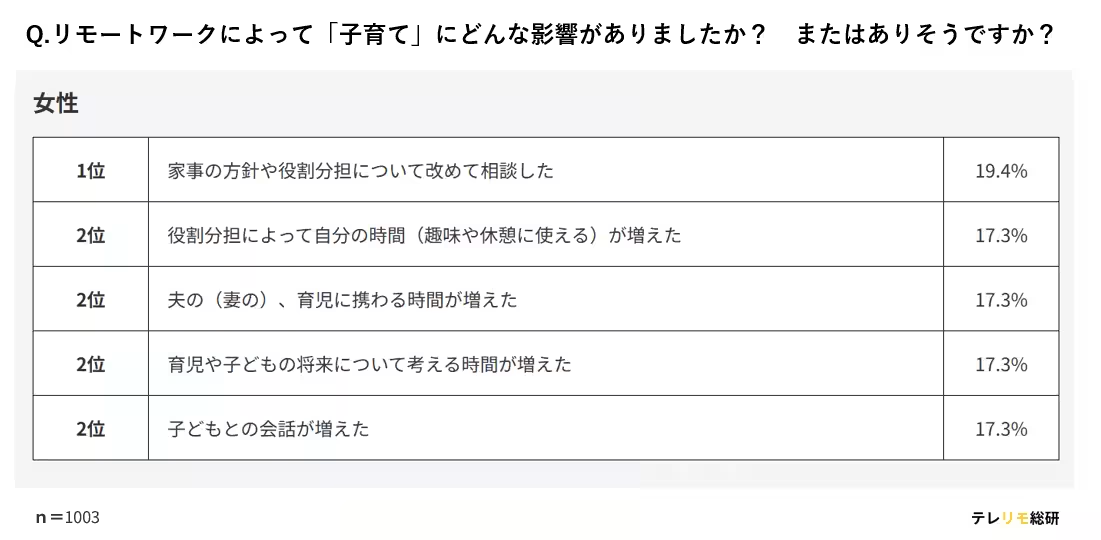
Further analysis of responses based on gender revealed interesting differences in perspectives:
- - Men reported enhanced family engagement across various aspects like housework, child-rearing, and neighborhood interactions, indicating a shift from a work-centric lifestyle to a more holistic view of domestic life.
- - Women, on the other hand, mentioned that the involvement of their partners in household tasks allowed them to decrease their own responsibilities, but found fewer reported increases in personal time compared to men. This suggests that while men focus on overall family participation, women may prioritize direct engagement with children.
These differences in priorities reflect varying approaches to family engagement and emphasize the need for balanced communication within households.
Rethinking Work-Life Integration
The data from our survey illustrate that remote work has encouraged families to reassess how they connect with each other. Although remote work is not a panacea for family challenges, the shift it brings can be a valuable opportunity for reconsidering parental roles and communication patterns.
Remote work encompasses more than just labor outside the office; it involves rethinking family engagement and responsibilities. Families are prompted to address and redefine their work-life balance, fostering deeper connections and enrichening their shared experiences.
It may be beneficial for families to reflect on the nature of their work arrangements and how they influence parenting, particularly in supporting their children's futures. This reflections can lead to a more harmonious balance between work obligations and family life.
Research Overview
- - Survey Period: April 8-16, 2025
- - Participants: 1,003 working adults (aged 20-65) who have experience with telecommuting
- - Methodology: Online survey
Conclusion
As remote work continues to shape modern family life, it prompts questions about effective parenting strategies and the evolving role of work in our lives. Embracing these conversations and fostering open communication can cultivate a more positive family environment and contribute to personal well-being and productivity.
About LASSIC
Founded in 2006, LASSIC aims to revitalize local communities through IT initiatives, focusing on decentering economic activities from major urban areas. By supporting regional innovation and addressing local challenges, LASSIC fosters a collaborative environment for holistic community development.
Topics People & Culture)

【About Using Articles】
You can freely use the title and article content by linking to the page where the article is posted.
※ Images cannot be used.
【About Links】
Links are free to use.