




How Comfort Beats Income in Partner Selection Across All Ages
Comfort Over Income: New Insights into Partner Selection
Recent research conducted by Forit Co., Ltd., which operates the affiliate platform afb, reveals a significant shift in how individuals prioritize qualities when selecting a partner for marriage. With a sample size of 511 unmarried individuals aged between 20 and 69 from various demographics, the survey examined their perceptions of relationships and marriage ideals.
Survey Background
As society evolves, so do the values regarding marriage and partnerships. Given the variety of life stages and personal attributes, the factors influencing partner selection can differ significantly. Thus, a preliminary survey targeted those expressing a desire to marry, leading to the question: “What do you seek in a partner?”
Survey Overview
- - Participants: Unmarried men and women aged 20-69 who wish to marry.
- - Sample Size: 511 respondents.
- - Location: Nationwide, Japan.
- - Method: Online research.
- - Date of Survey: November 18, 2025.
Key Factors in Partner Selection
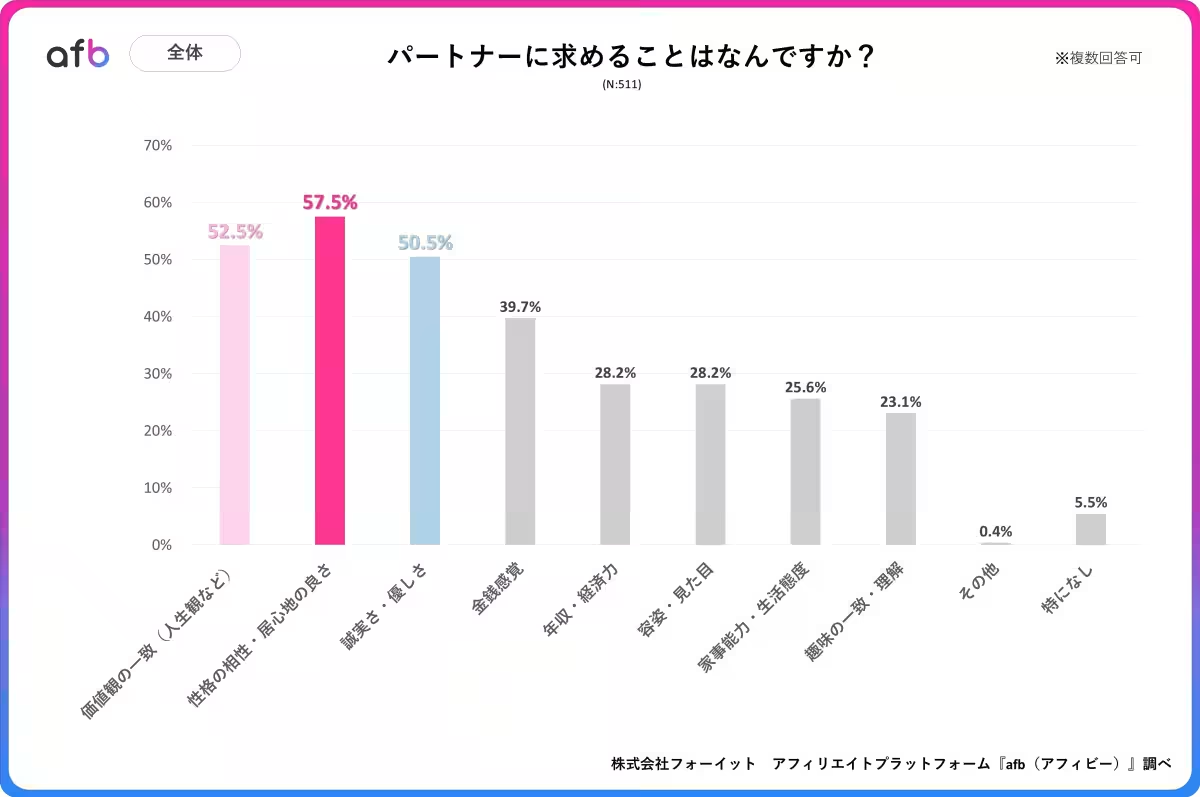
When asked to select what they value in a partner, respondents had several options to choose from, allowing multiple answers. The results were compelling:
1. Personality Compatibility / Comfort Level: 57.5%
2. Value Alignment (Life Philosophy): 52.5%
3. Sincerity / Kindness: 50.5%
4. Financial Sense: 39.7%
5. Income / Economic Power: 28.2%
6. Appearance: 28.2%
It was interesting to see that internal qualities dominated the preferences of many respondents, indicating a preference for a stable everyday life with a partner over merely meeting certain external criteria. Notably, while financial sense was acknowledged by nearly 40% of respondents, the priority placed on actual income and appearance fell to around 28%, suggesting a shift away from these conventional standards.
Generational Divide in Preferences
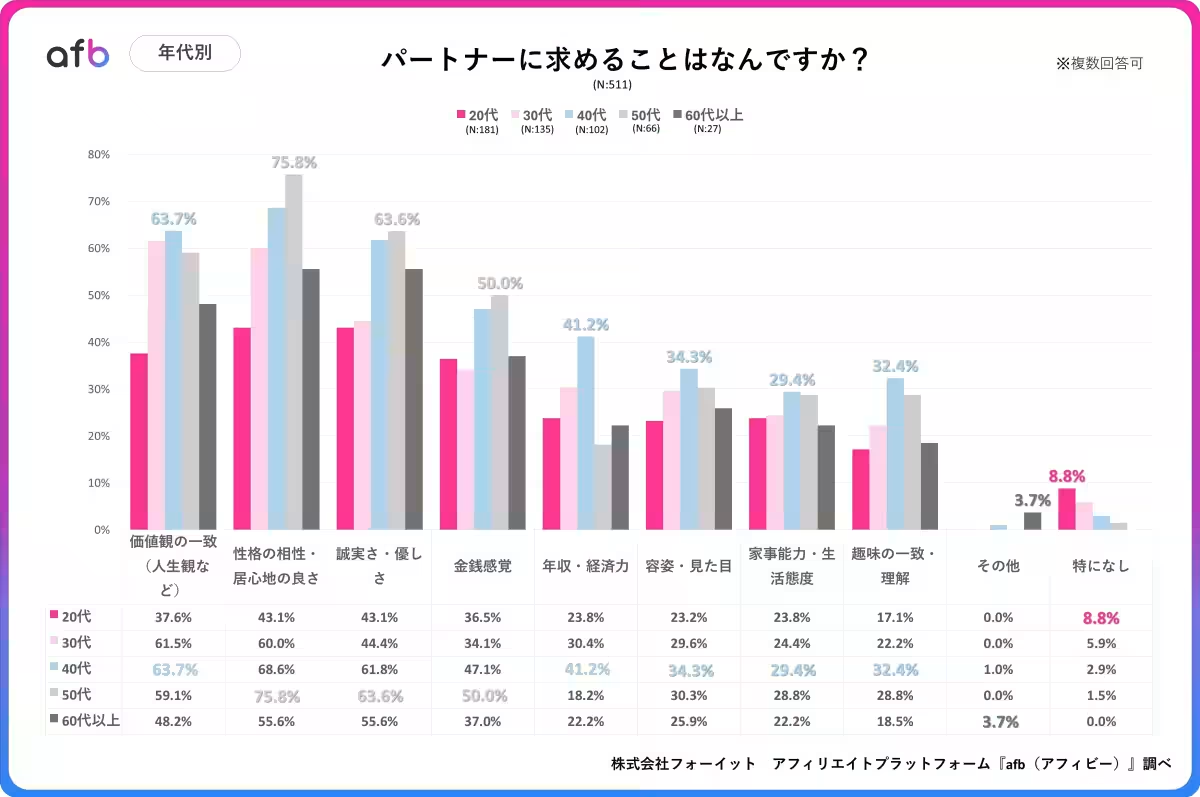
Interestingly, the survey illuminated differences in preferences across age groups. Individuals aged 20 often highlighted the importance of emotional compatibility and kindness over practical considerations. Specifically:
- - 20s: Both personality compatibility and sincerity stood at 43.1%. Value alignment trailed at 37.6%, highlighting a trend of valuing present relationships over future considerations.
- - 30s: This age group saw a notable shift, with value alignment rising to 61.5% and comfort level at 60.0%. Here, financial factors gained relevance, as respondents began to plan for futures involving marriage and family.
- - 40s and Beyond: There was a clear emphasis on financial sense and economic power, reflecting a more strategic approach to partnerships as respondents consider quality of life and mutual roles within a relationship.
Gender-Based Insights
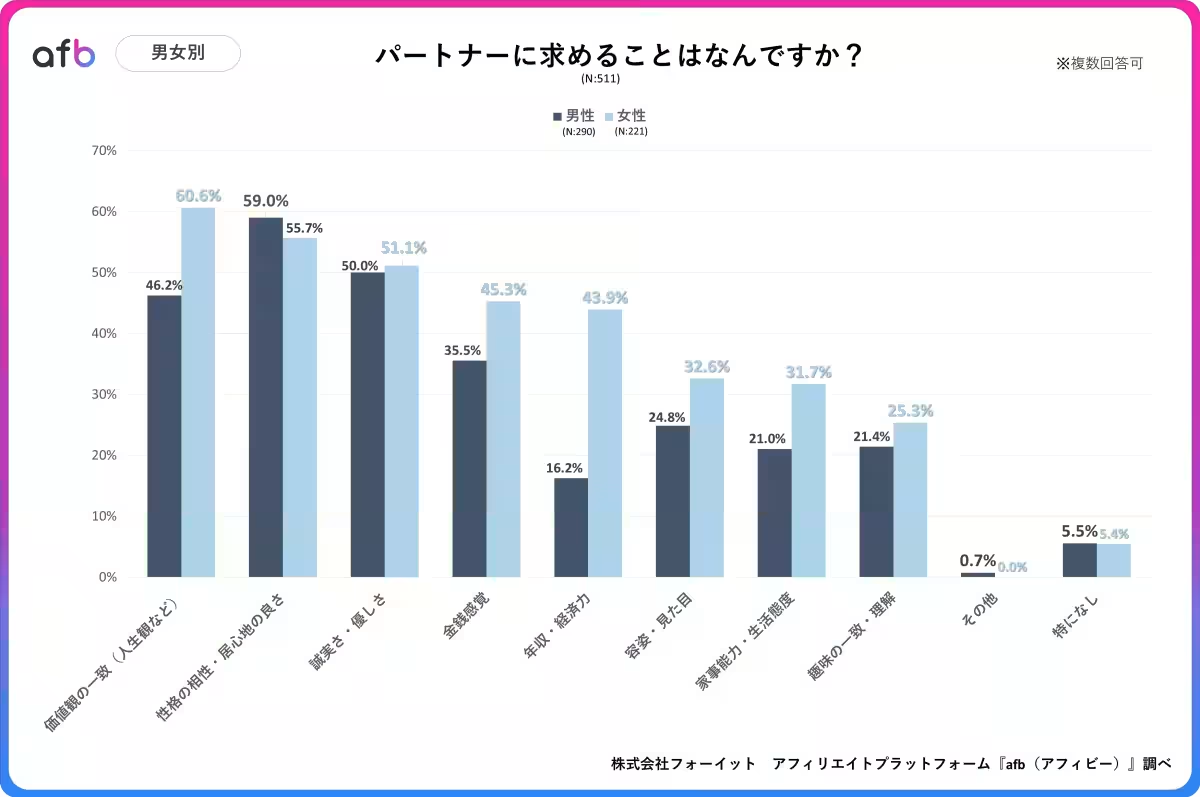
Examining the responses through a gender lens revealed that both men and women consider comfort and personality compatibility paramount, with men at 59.0% and women at 55.7%. However, notable distinctions emerged regarding the importance of value alignment:
- - Value Alignment: 60.6% of women prioritized this, compared to only 46.2% of men, implying that women place a higher importance on shared life perspectives and dreams.
- - Income Consideration: A stark contrast appeared, with 43.9% of women emphasizing economic stability versus a mere 16.2% of men.
Economic Factors Shaping Expectations
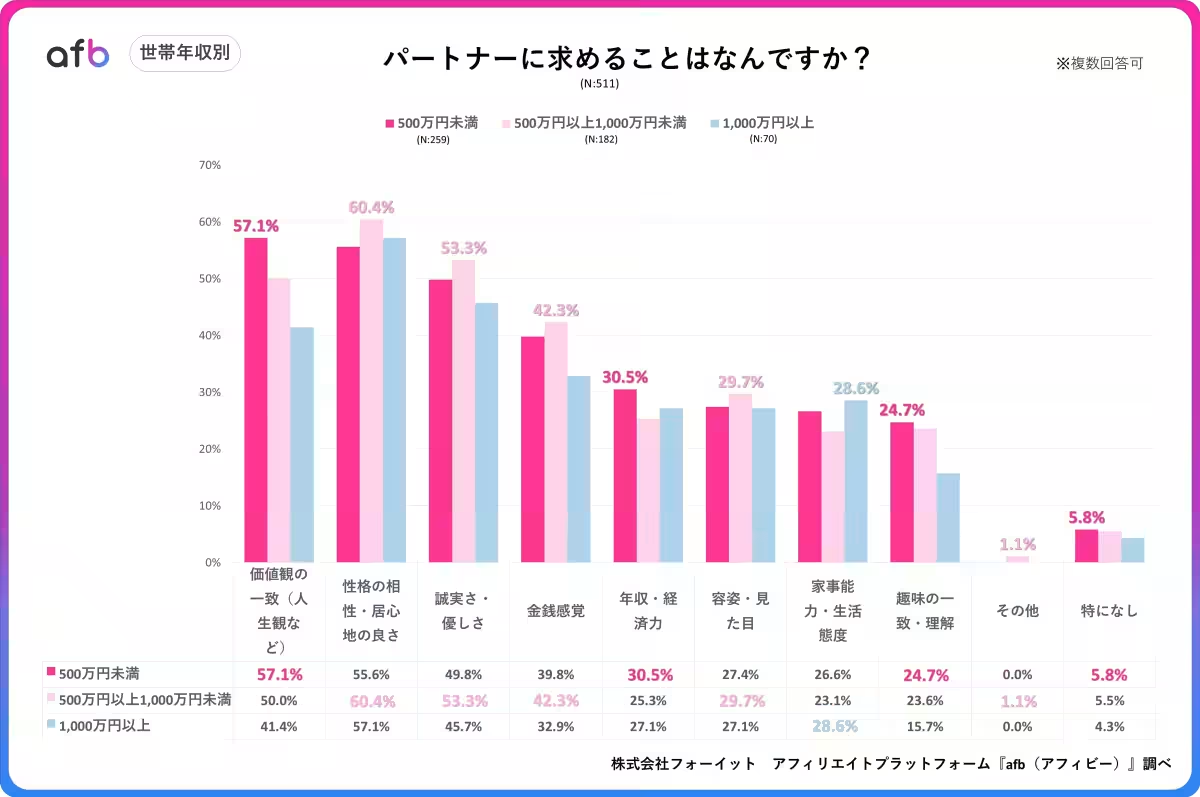
The analysis also took into account household income levels, demonstrating that expectations and priorities diversify with financial stability:
- - Below ¥5 Million: Greater emphasis on emotional connection and comfort was seen, with 57.1% highlighting value alignment. Financial concerns were also prominent, affecting prospective partnerships.
- - ¥5 Million to ¥10 Million: Financial sensibility became more relevant, aligning with greater economic security; the focus on emotional compatibility remained strong.
- - Above ¥10 Million: Here, while personality compatibility still ranked highest, there's a marked increase in valuing domestic abilities and lifestyle attitudes, indicating a nuanced approach to partnerships.
Conclusion
The survey results suggest that a majority of individuals increasingly seek partners with whom they can enjoy long-term, sustainable relationships built on comfort and mutual values rather than solely financial attributes. As societal expectations continue to evolve, future partner selection is likely to focus more on practical cohabitation aspects, fostering relationships that thrive in a complex, interconnected world.
For more information about the affiliate platform and their services, visit afb.


Topics People & Culture)



【About Using Articles】
You can freely use the title and article content by linking to the page where the article is posted.
※ Images cannot be used.
【About Links】
Links are free to use.