



Okayama University Makes Groundbreaking Discovery of Iron-Oxide Protein in Eukaryotes
Groundbreaking Discovery in Eukaryotic Biology
On August 9, 2025, Okayama University and the Japan Science and Technology Agency (JST) announced a significant scientific breakthrough regarding iron oxide formation in eukaryotes. In a collaborative study, researchers have identified a new protein, referred to as Radular Teeth Matrix Protein 1 (RTMP1), which plays a key role in the creation of magnetite, an iron oxide, within the shells of a marine organism known as the chiton.
Understanding the Formation of Magnetite
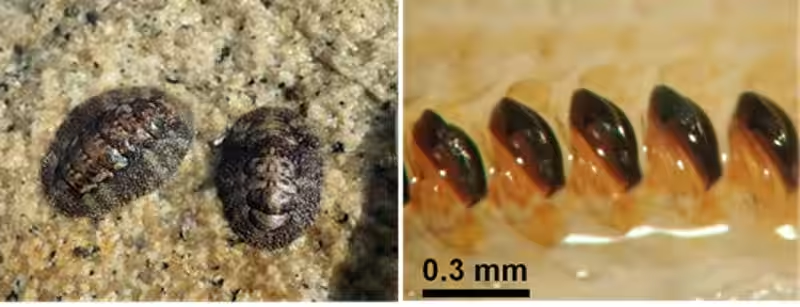
The study published in the prestigious journal Science marks the first instance where the mechanism behind the formation of magnetite by a eukaryotic organism is elucidated. The chiton's teeth, made of magnetite, possess exceptional hardness and durability, reportedly surpassing artificial diamonds in wear resistance. However, until this research, the process by which these teeth form had remained a mystery.
Led by Associate Professor Michiko Nemoto of Okayama University alongside colleagues including graduate student Koki Okada and various esteemed professors, including David Kisailus from the University of California, Irvine, the team utilized advanced biochemical techniques to unravel this biological conundrum. They discovered that the unique protein RTMP1 binds to a pre-existing framework of chitin fibers, catalyzing the deposition of iron oxide on these structures, allowing for the teeth's formidable durability.
Environmental and Biotechnological Implications
The implications of this research extend far beyond marine biology. The ability to synthesize iron oxides in an environmentally friendly manner has potential applications in developing new materials with high strength and durability. Additionally, as iron plays a critical role in various biological processes, including certain diseases, this discovery might pave the way for innovative therapeutic strategies.
Professor Nemoto remarked on the uniqueness of this discovery, emphasizing that while magnetite is typically formed in high-temperature, high-pressure environments, the biological synthesis of this mineral is exceedingly rare. She expressed excitement at how this research not only advances our understanding of mineral formation in living organisms but also leads to environmentally sustainable material development.
Broader Context of the Research
The research was supported by several grants from the Ministry of Education, Culture, Sports, Science, and Technology (MEXT), and other funding bodies, highlighting the collaborative effort in pushing the boundaries of scientific knowledge. Various facets of the research have practical implications ranging from advancements in material science to potential applications in health care, particularly concerning iron-associated ailments.
As the field of biochemistry continues to evolve, the discoveries stemming from this research are expected to inspire further innovation in both scientific and practical applications, contributing to sustainable solutions for modern challenges. The findings celebrate not only the richness of biodiversity but also the capacity of natural organisms to provide invaluable insights into material science and biotechnology.
In conclusion, this groundbreaking discovery by Okayama University opens new avenues for research and development, confirming the institution's role as a key player in advancing scientific understanding for a better future. Researchers and industry professionals alike will now look to harness the unique properties of RTMP1 and other such proteins for the advancement of eco-friendly technologies and innovative medical treatments.

Topics People & Culture)
【About Using Articles】
You can freely use the title and article content by linking to the page where the article is posted.
※ Images cannot be used.
【About Links】
Links are free to use.