


Exploring Gender Perceptions of Managers in Japan's Workplaces: Insights from Job Research
Gender Perceptions of Managers in Japanese Workplaces
In October 2025, Japan witnessed a significant milestone with the election of its first female Prime Minister, sparking discussions around gender roles in leadership positions. A recent survey conducted by Job Research, part of Persol Career Co., targeted 385 working adults to explore how individuals perceive managers based on gender. The study delves into whether the associates of managerial roles perceive gender as a determining factor in organizational dynamics.
Survey Overview
The Job Research survey was conducted between October 22 and October 27, 2025, with responses collected from a diverse group, including men and women ranging in age from their 20s to 50s. The survey aimed to understand perceptions surrounding managers’ gender and its potential impact on organizations. With a focus on interpreting data across different demographics, the study aims to draw insights from both genders while recognizing prevailing stereotypes.
Key Findings
- - Initial Gender Association: Approximately 69.6% of respondents associated the term “manager” predominantly with males, showcasing a traditional stereotype. Meanwhile, 25.2% indicated they do not consider gender when picturing a manager, and merely 5.2% visualized females in this role.
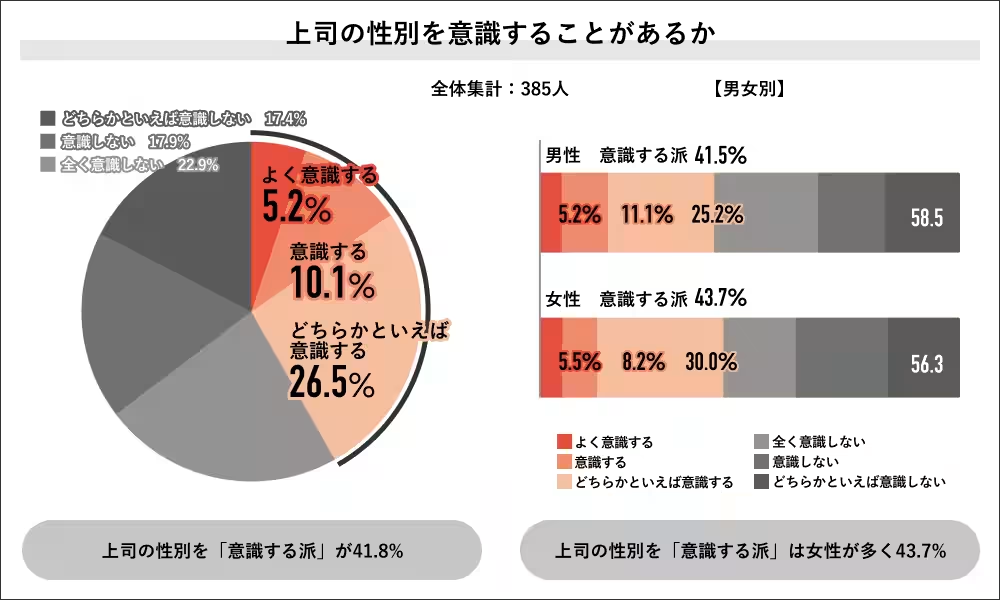
- - Awareness of Manager's Gender: About 41.8% of respondents admitted they sometimes cognitively engage with their boss's gender, showcasing a lingering consciousness about gender roles.
- - Impact of Manager's Gender on Organization: A notable 71.9% of participants believed that the gender of a manager could influence organizational structure and dynamics.
Detailed Insights
In the survey’s gender breakdown, male respondents were more likely (76.3%) to envision male leaders compared to 55.5% of female respondents. Interestingly, a significant number of women (38.1%) reported they did not consider gender when thinking of their boss, indicative of a broader shift in perception.
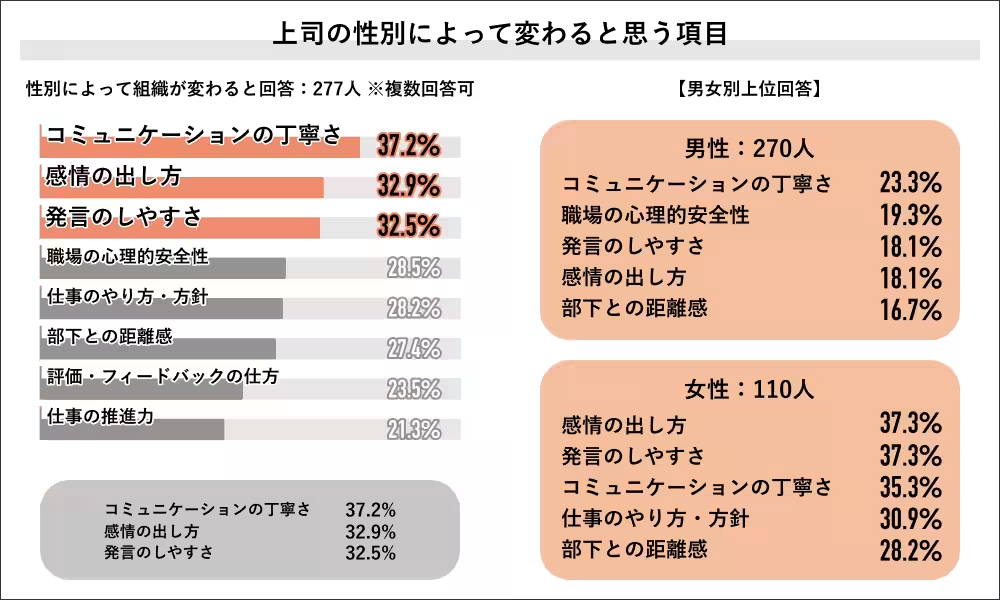
When discussing how a manager's gender may change organizational behavior, participants highlighted several key areas. The leading factors identified were communication style (37.2%), emotional expression (32.9%), and ease of speaking up (32.5%). Men noted a strong association with communication clarity, while women pointed out emotional nuances in leadership styles, often viewing female managers as more emotionally expressive and sometimes overwhelming.
Gender-specific Perspectives
Feedback from the survey yielded diverse views based on gender. Many male respondents expressed positive feelings about male superiors, linking them to decisiveness and strong work capabilities. However, some recognized a clash with outdated perspectives, especially in contexts dominated by older male managers.
Female participants, on the other hand, reported feeling intimidated by female leaders, associating them with challenging behaviors that could lead to a hostile working environment. Some indicated they found it easier to communicate with male managers, highlighting the gender biases impacting perceptions of workplace dynamics.
This analysis suggests that while there is a growing acceptance of diverse leadership styles, deeply rooted gender stereotypes persist within the fabric of workplace culture. The implications can inform discussions about enhancing workplace communications and fostering environments that empower individuals regardless of gender.
Conclusion
As Japan embraces more varied leadership, such as the inauguration of a female Prime Minister, companies and organizations must reconsider the role of gender perceptions in managerial capacities. The findings from the Job Research survey suggest a critical dichotomy exists; while many still align leadership with traditional gender roles, others are beginning to challenge such norms. The discussion surrounding these perceptions is vital for shaping inclusive working environments that recognize leadership capabilities beyond gender identities.
As communicated by Riko Takagi, a PR representative at Persol Career, the future of work will rely heavily on how society reevaluates the current norms and continually assesses what ‘working’ means in a modern context. The ultimate goal is to create an environment where talent flourishes, free of traditional constraints driven by gender biases. Job Research aims to further explore these themes to enhance the understanding of how work is perceived and enacted in society today, stepping towards a more equitable future.
About Persol Career
Persol Career Co. is committed to facilitating growth opportunities for individuals in the workforce. With services like doda and specialized recruitment, the company strives to make ‘working’ a personal journey defined by individual strength and diversity. A transformative approach to career services can redefine perceptions of work and provide tools necessary for the workforce of tomorrow.



Topics People & Culture)




【About Using Articles】
You can freely use the title and article content by linking to the page where the article is posted.
※ Images cannot be used.
【About Links】
Links are free to use.