



AI IR Score Reveals Major Gaps in Accessibility for Tokyo Stock Exchange Companies
Understanding the AI IR Score and Its Implications
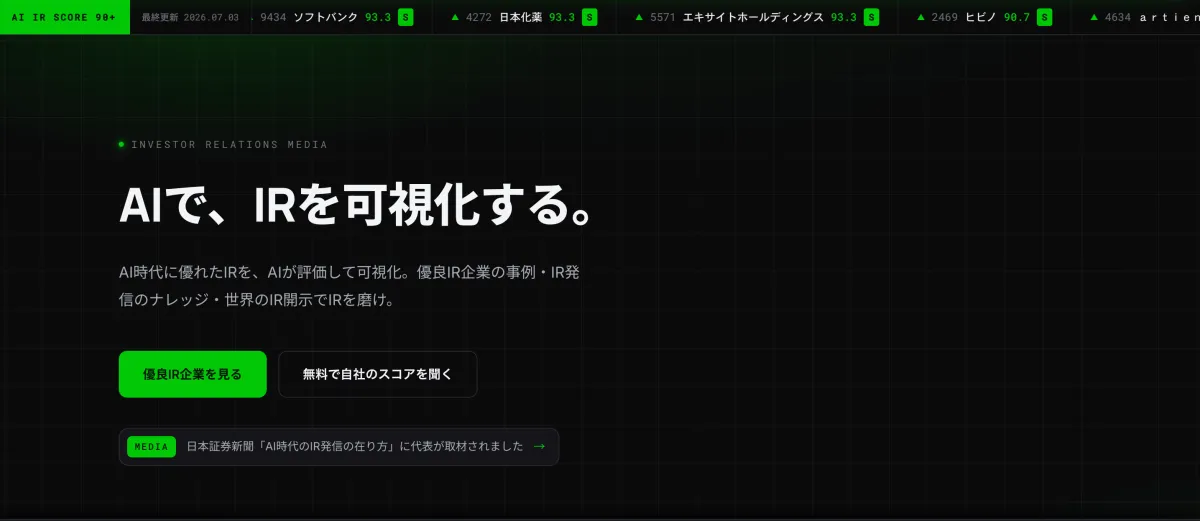
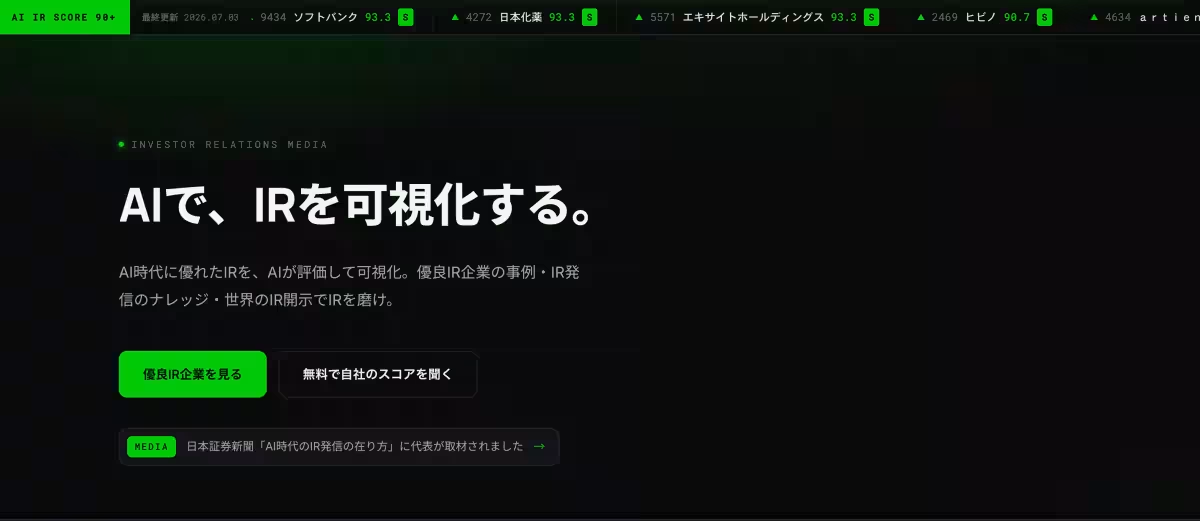
In a groundbreaking study by Steins, approximately 3,500 companies listed on the Tokyo Stock Exchange (TSE) were evaluated using a unique AI scoring system designed to measure the readability of their Investor Relations (IR) information. This assessment, termed the "AI IR Score," was the first comprehensive analysis of its kind in Japan, aiming to quantify how accessible IR content is for AI technologies, specifically for investment decision-making.
Key Findings Overview
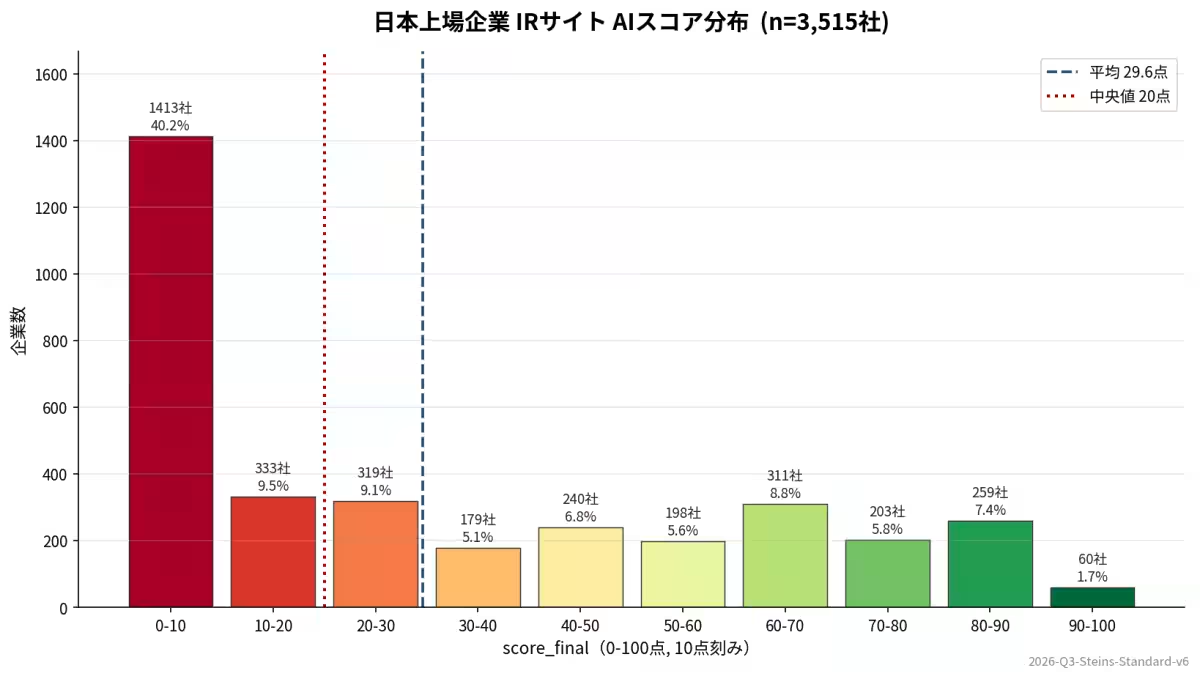
The results of this analysis are telling: the average AI IR Score across all companies surveyed was a mere 29.6 out of 100, with the median score standing at just 20. Alarmingly, over 70% (70.7%) of the analyzed companies received scores below 50. This disparity underscores a concerning trend in the readability of IR information, indicating that a significant portion of companies fails to meet the necessary standards for AI-driven analysis.
The study revealed that only 1.7% of the companies achieved an elite 'S' score, showcasing the stark contrast between those who excel and the majority that lag behind. Notably, many mid-sized firms outperformed their larger counterparts, challenging preconceived notions about the correlation between company size and IR effectiveness.
The Importance of Machine Readability
As the usage of AI technologies in investment processes escalates, the ability of these systems to understand and evaluate company information becomes critically important. Unfortunately, many IR websites still operate under outdated formats that hinder AI's ability to interpret key financial data. The study indicated that significant elements, such as performance metrics, were unreadable for AI in 53% of the cases analyzed, primarily due to data being locked within PDF files or complex JavaScript formats. In contrast, qualitative information, including management commentary, proved easier for AI systems to process.
The findings spotlight a pressing need for companies to enhance the structural integrity of their IR websites. As it stands, failing to adopt machine-readable formats risks being equated to a lack of information disclosure altogether, which could significantly impact a company's market perception and investment opportunities.
Analyzing the Disparities
The analysis not only provided a stark score breakdown but also highlighted underlying patterns within the data. It demonstrated that a substantial number of companies (approximately 40%) are heavily clustered at the lower scoring end (0-10 points), while a sizable 24% achieved scores above 60. This polarized distribution indicates a widening gap in the accessibility of IR content, further complicating the landscape for investors seeking dependable information.
Interestingly, the scoring was not merely a reflection of company size or market capitalization—small to mid-cap companies frequently surpassed larger entities, suggesting that effective IR strategies can transcend size and market influence.
Methodology of the AI Scoring
Steins utilized an innovative scoring engine to assess the IR websites of TSE listed companies systematically. The evaluation process involved employing automated crawlers to traverse IR sites, focusing on collecting data primarily from financial pages up to three levels deep.
Each site was then rigorously evaluated against a set of common criteria from an investor's perspective, with AI confirming accuracy by linking each score to specific URLs and cited content. This meticulous approach ensured that the assessments were both consistent and reliable.
Future Directions and Recommendations
Following the findings of this study, Steins aims to provide ongoing support to improve IR communication strategies for all companies, particularly those facing challenges in readability. The platform, IR BASE, offers free score checks for companies, enabling them to view their performance and pinpoint areas for improvement. Additionally, regular updates and case studies of high-performing IR initiatives will be released to foster better practices in the industry.
In conclusion, as AI technology continues to redefine normalcy in investment practices, companies must adapt their IR strategies to meet these evolving demands. The findings from the AI IR Score not only provide critical insights but also act as a call to action for companies to enhance their digital presence and foster greater transparency in their financial communications.
For further details, head to IR BASE and secure insights into your company's IR performance.
About Steins
Steins, based in Tokyo, is at the forefront of integrating AI capabilities into IR and financial analysis, aiming to elevate the standards of investor communication. For inquiries, please contact us at [email protected].
Topics Consumer Products & Retail)
【About Using Articles】
You can freely use the title and article content by linking to the page where the article is posted.
※ Images cannot be used.
【About Links】
Links are free to use.