



FANCL Unveils Varieties of Skin Firmness Perception Through Research
In a groundbreaking study, FANCL, a renowned skincare company, has delved into the often ambiguous term "skin firmness" used widely in cosmetic discussions. The term evokes different images for different individuals; while some envision a resilient texture, others may think of a dewy or plump appearance. This disparity led FANCL to investigate whether the interpretations of "firmness" could affect customer satisfaction and product utilization.
The research identified that the perception of "skin firmness" can be classified into at least five distinct categories, each linked to unique skin textures.
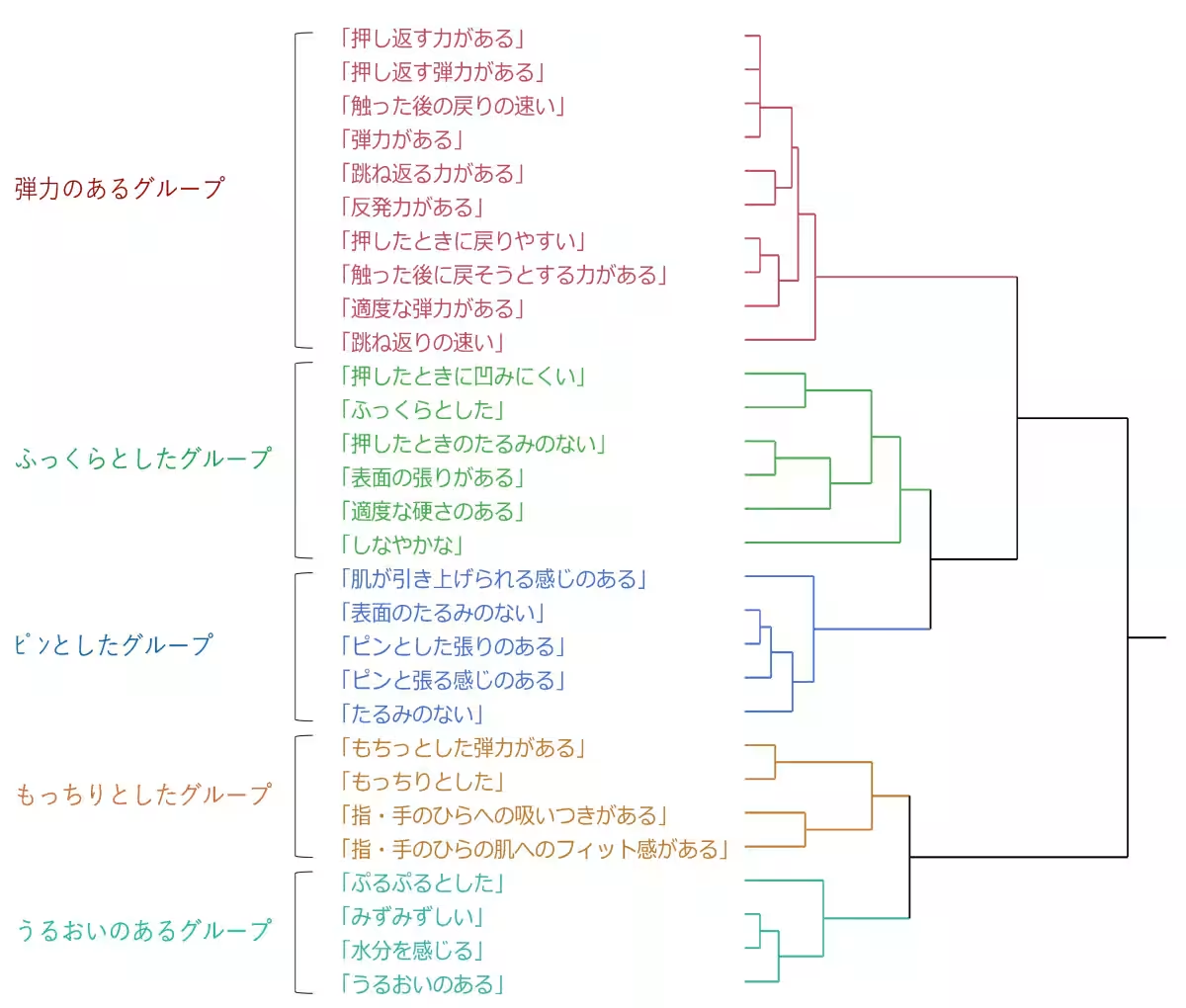
Initially, FANCL conducted surveys and interviews, collecting approximately 100 expressions that describe skin firmness. Out of these, 29 representative terms were selected based on their relevance to the sensations experienced after using cosmetics. Through hierarchical cluster analysis, the terms were grouped as follows:
1. Elasticity Group (e.g., "bouncy elasticity", "resilient firmness")
2. Plump Group (e.g., "plumpness", "moderate hardness")
3. Taut Group (e.g., "taut skin", "no sagging")
4. Moist Group (e.g., "moisturized", "freshness")
5. Bouncy Group (e.g., "springy texture", "soft bounce")
This classification demonstrated that "firmness" encompasses multiple interpretations regarding skin appearance, confirming the term's complexity.
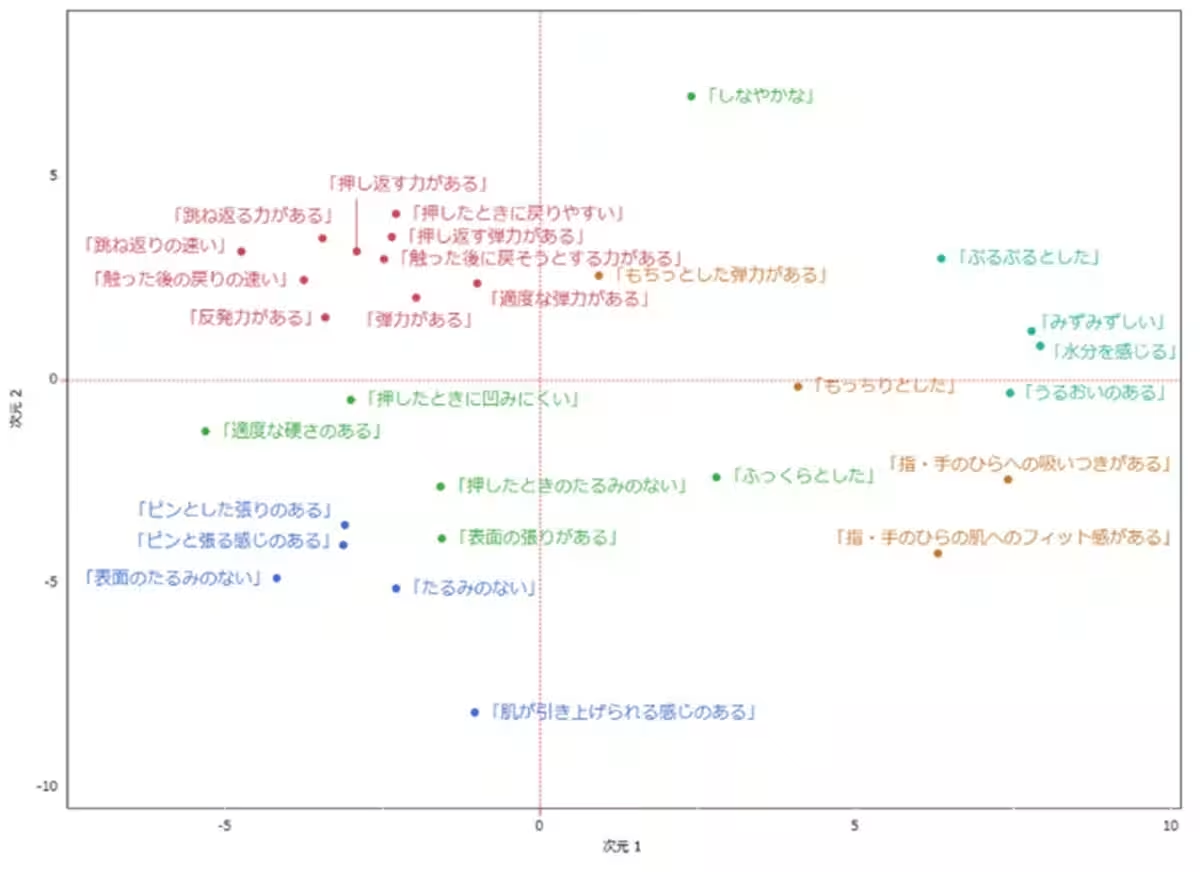
Next, the categorized terms were mapped in a two-dimensional space according to their semantic proximity using multidimensional scaling methods. This visualization clarified the proximity of the different groups and highlighted their relationships.
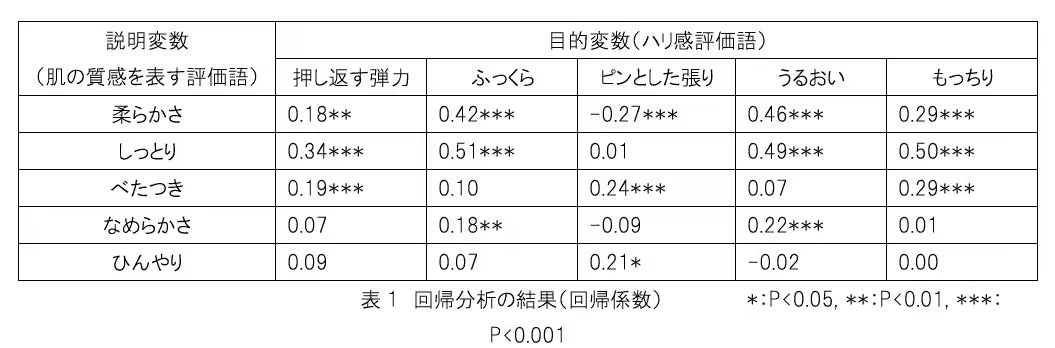
The final step involved examining the connection between varied perceptions of "firmness" and actual skin textures through sensory evaluation tests analyzed via regression analysis. Findings indicated that:
The term "firmness" is prevalent in cosmetics, yet its interpretation varies significantly among individuals. By elucidating these differences, FANCL aims to foster product development and communication strategies that resonate more accurately with customer desires in skin aesthetics.
This study organized and visualized the nuanced aspects of a sensory term like "firmness", allowing for better understanding of customer feedback and facilitating product design that aligns with ideal skin perceptions. By utilizing these insights, brands can tailor their messaging and offerings to enhance customer experience and satisfaction.
1. Hierarchical Cluster Analysis: A statistical method for grouping subjects based on similarity of data.
2. Multidimensional Scaling: A technique that expresses similarity relationships among subjects in a 2D or 3D space.
3. Regression Analysis: A statistical method predicting relationships between variables via mathematical models.
The research identified that the perception of "skin firmness" can be classified into at least five distinct categories, each linked to unique skin textures.
Research Summary
- - The study confirmed that the concept of "firmness" is not singular but can be segmented into five groups of expressions.
- - Each group is associated with varying textures of the skin.
- - Implications of this research include the development of skincare products that better align with consumer expectations and clearer expressions of product features based on these findings.
Research Details
STEP 1: Categorizing Expressions of Firmness
Initially, FANCL conducted surveys and interviews, collecting approximately 100 expressions that describe skin firmness. Out of these, 29 representative terms were selected based on their relevance to the sensations experienced after using cosmetics. Through hierarchical cluster analysis, the terms were grouped as follows:
1. Elasticity Group (e.g., "bouncy elasticity", "resilient firmness")
2. Plump Group (e.g., "plumpness", "moderate hardness")
3. Taut Group (e.g., "taut skin", "no sagging")
4. Moist Group (e.g., "moisturized", "freshness")
5. Bouncy Group (e.g., "springy texture", "soft bounce")
This classification demonstrated that "firmness" encompasses multiple interpretations regarding skin appearance, confirming the term's complexity.
STEP 2: Visualizing Relationships Between Terms
Next, the categorized terms were mapped in a two-dimensional space according to their semantic proximity using multidimensional scaling methods. This visualization clarified the proximity of the different groups and highlighted their relationships.
STEP 3: Evaluating Links Between Terms and Actual Skin Texture
The final step involved examining the connection between varied perceptions of "firmness" and actual skin textures through sensory evaluation tests analyzed via regression analysis. Findings indicated that:
- - "Plump" and "moist" are closely associated with softness.
- - "Bouncy" relates inversely to softness, suggesting different ideals of supple skin exist among individuals. This indicates that while one might associate ideal skin with softness and hydration, another may equate it with tightness and firmness.
Conclusion
The term "firmness" is prevalent in cosmetics, yet its interpretation varies significantly among individuals. By elucidating these differences, FANCL aims to foster product development and communication strategies that resonate more accurately with customer desires in skin aesthetics.
This study organized and visualized the nuanced aspects of a sensory term like "firmness", allowing for better understanding of customer feedback and facilitating product design that aligns with ideal skin perceptions. By utilizing these insights, brands can tailor their messaging and offerings to enhance customer experience and satisfaction.
Terminology
1. Hierarchical Cluster Analysis: A statistical method for grouping subjects based on similarity of data.
2. Multidimensional Scaling: A technique that expresses similarity relationships among subjects in a 2D or 3D space.
3. Regression Analysis: A statistical method predicting relationships between variables via mathematical models.
Topics Consumer Products & Retail)


【About Using Articles】
You can freely use the title and article content by linking to the page where the article is posted.
※ Images cannot be used.
【About Links】
Links are free to use.