



The Paradox of Office Work: 40% of Workers Still Fully On-Site Amid Remote Work Trends
The Paradox of Office Work: 40% of Workers Still Fully On-Site
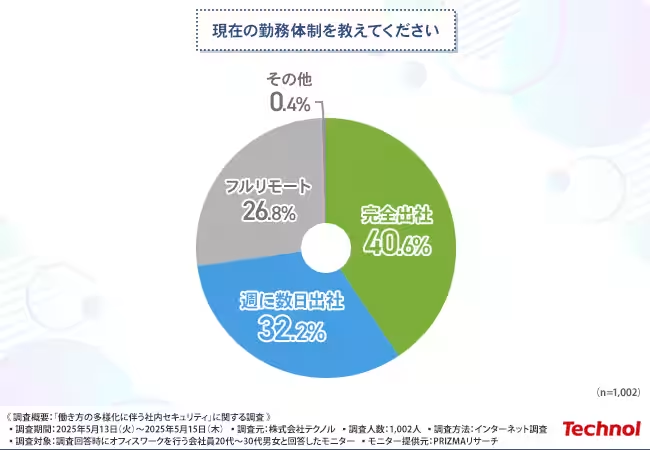
In an era where remote work is becoming commonplace, a surprising statistic has emerged: approximately 40% of office workers are still completely present in their workplaces. This finding comes from a study conducted by Technol, a security services company based in Aomori, Japan. The research targeted workers aged 20 to 30, focusing on the relationship between diverse work styles and corporate security.
A Shift in Work Styles
The work landscape has undergone a transformation fueled by initiatives aimed at improving work-life balance and the rise of digital collaboration tools. Many businesses have embraced remote work, challenging the traditional notion that being physically present in the office is essential. In fact, the study revealed that 59% of respondents have implemented some form of remote work. However, the prevalence of full-time office employees raises questions about the factors driving this choice.
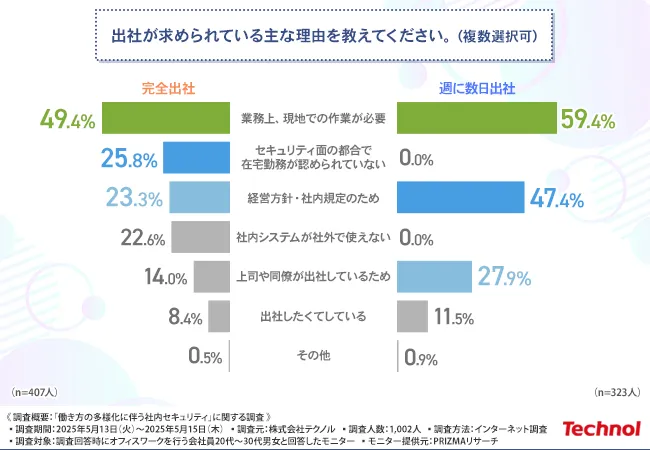
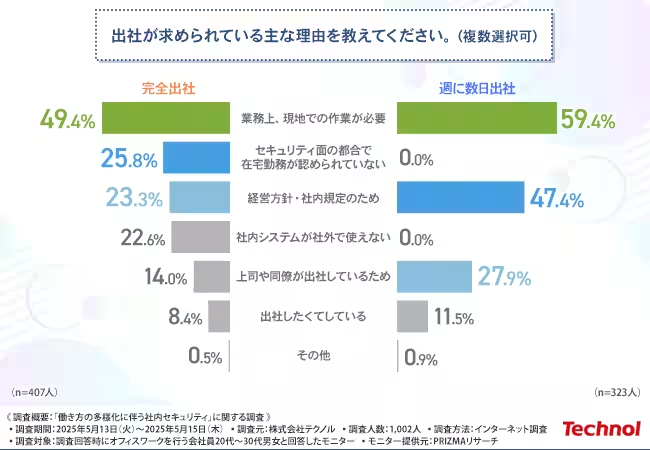
According to respondents who identified as being fully onsite, the primary reasons included:
- - Necessary On-Site Tasks (49.4%): Many professionals still have jobs that require them to be physically present.
- - Security Issues (25.8%): Some organizations do not permit remote work for security reasons, implying that data protection regulations might take precedence over flexibility.
- - Corporate Policy (23.3%): Company rules often dictate the necessity of on-site work.
The Barriers to Flexibility
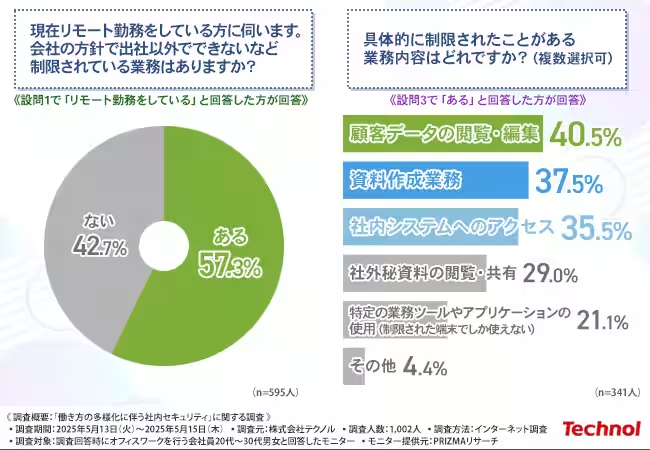
Further insights from the survey revealed that almost 60% of remote workers experience some form of restriction in their tasks. The most reported restricted activities include customer data access and internal systems duties, indicating that sectors dealing with sensitive information are strongly impacted by security protocols.
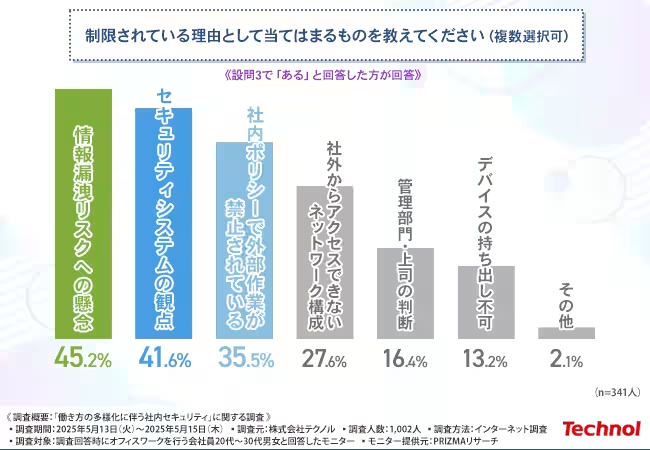
Concerns over information leaks were cited by 45.2% of respondents, highlighting an organizational apprehension that significantly restricts the ability of employees to work remotely. Additionally, over 40% of participants indicated restrictions stem from inadequate security infrastructure, which poses a significant barrier to fully supporting a flexible work environment.
The Desire for Flexibility
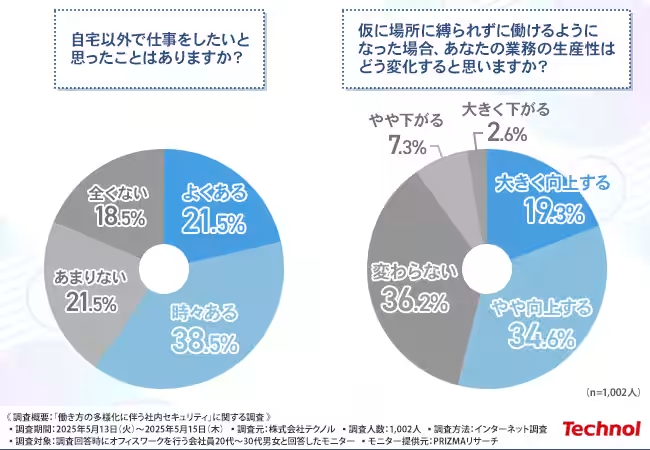
Despite these limitations, many employees are eager to explore flexible work options beyond their homes. The survey findings showed that approximately 60% of respondents have considered working from various locations like cafes or coworking spaces. If allowed to choose their working environment freely, many believe their productivity would significantly improve.
When asked about how increased location flexibility would impact their work, the results were telling:
- - Greatly Increase Productivity (19.3%)
- - Slightly Increase Productivity (34.6%)
- - No Change (36.2%)
- - Slightly Decrease (7.3%)
- - Greatly Decrease (2.6%)
Most respondents expressed optimism that a flexible working arrangement could lead to higher productivity, emphasizing benefits such as custom work environments and reduced commuting stress.
Impact on Job Satisfaction and Engagement
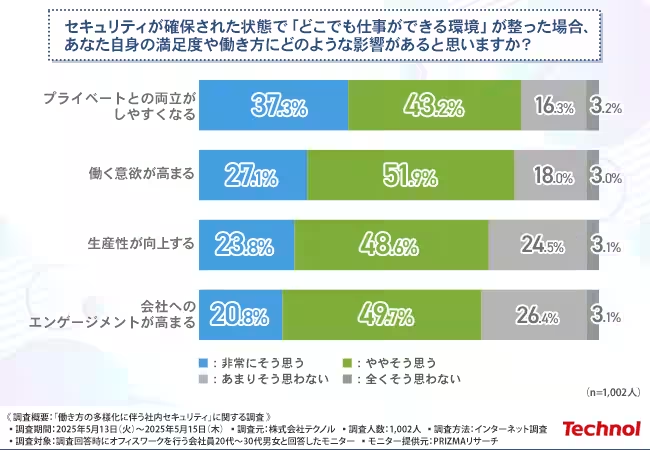
With security measures in place, 37.3% of workers strongly believe that having the option to work anywhere would enhance their work-life balance. Additionally, 27.1% noted that it could boost their motivation to work effectively.
Given this context, the role of workplace flexibility goes beyond employee efficiency; it contributes significantly to job satisfaction and overall engagement within organizations. The data suggests that implementing supportive work policies could enhance employee happiness just as much as productivity.
Exploring Remote Work Options in Job Searches
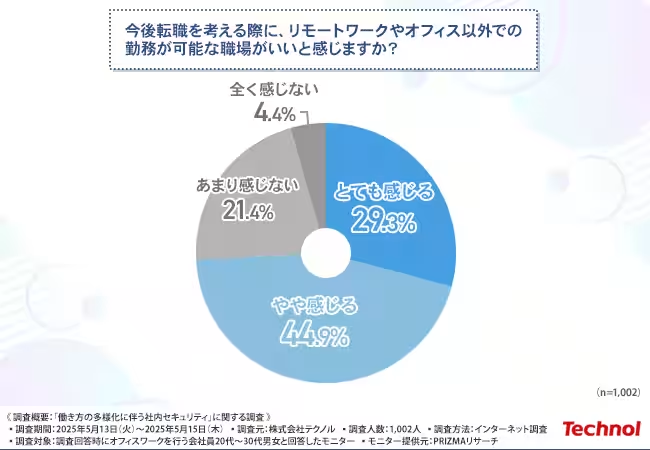
The importance of flexible work options is influencing job seekers. Around 74.2% of respondents indicated they prefer workplaces that allow for remote collaboration, viewing it as a critical factor in job decision-making. The flexibility reported helps them manage personal responsibilities alongside professional tasks, indicating that modern workers are not just interested in traditional benefits, but in a holistic approach to job satisfaction.
Conclusion
The ongoing analysis reveals not just a shifting work culture but also highlights the intricate web of responsibilities and challenges surrounding corporate security policies. While many companies cling to older management styles, the demands for flexibility and security from workers are reshaping the conversation around the workplace environment. Security concerns remain a prominent barrier, but with the right measures in place, a balance between flexibility and security could very well enhance employee satisfaction and retention.
In this context, Technol offers solutions that could help organizations navigate these challenges. By implementing advanced security protocols, businesses can create a work environment conducive to productivity and employee satisfaction. Discover how effective security strategies can revolutionize your company's approach to work flexibility today.



Topics People & Culture)
【About Using Articles】
You can freely use the title and article content by linking to the page where the article is posted.
※ Images cannot be used.
【About Links】
Links are free to use.