



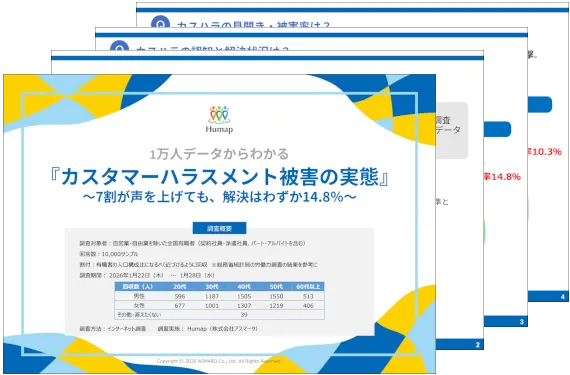
Understanding Customer Harassment: The Alarming Statistics from 10,000 Workers
The Reality of Customer Harassment Among Workers
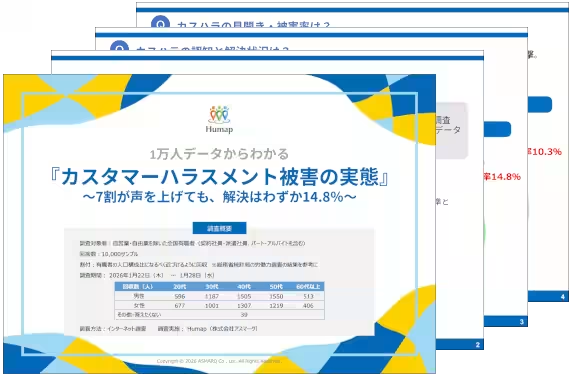
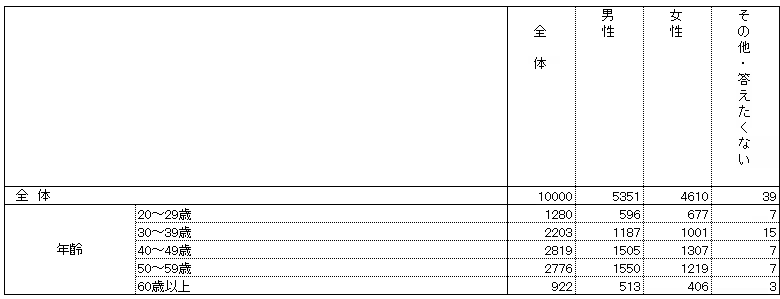
A recent study conducted by Asmarq, headquartered in Shibuya, Tokyo, has drawn attention to a pressing issue in modern workplaces: customer harassment. Using a sample of 10,000 employed individuals across Japan, the survey sheds light on the acknowledgment, experiences, and psychological effects of customer harassment, commonly referred to as 'kasu-hara' in Japan.
Key Findings
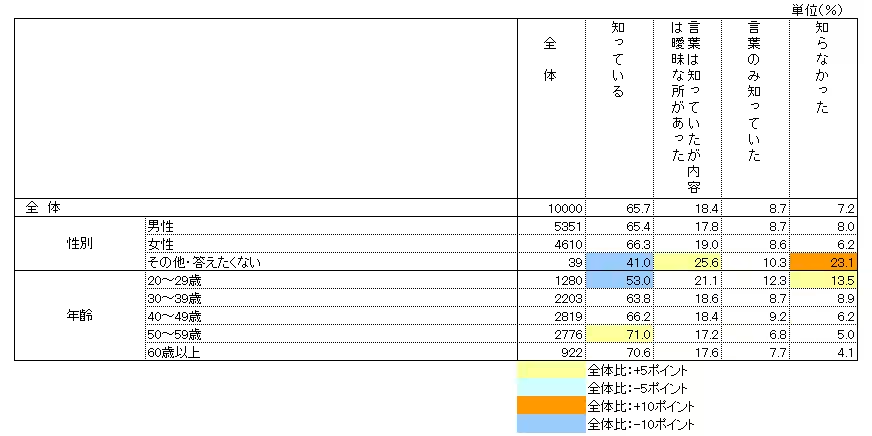
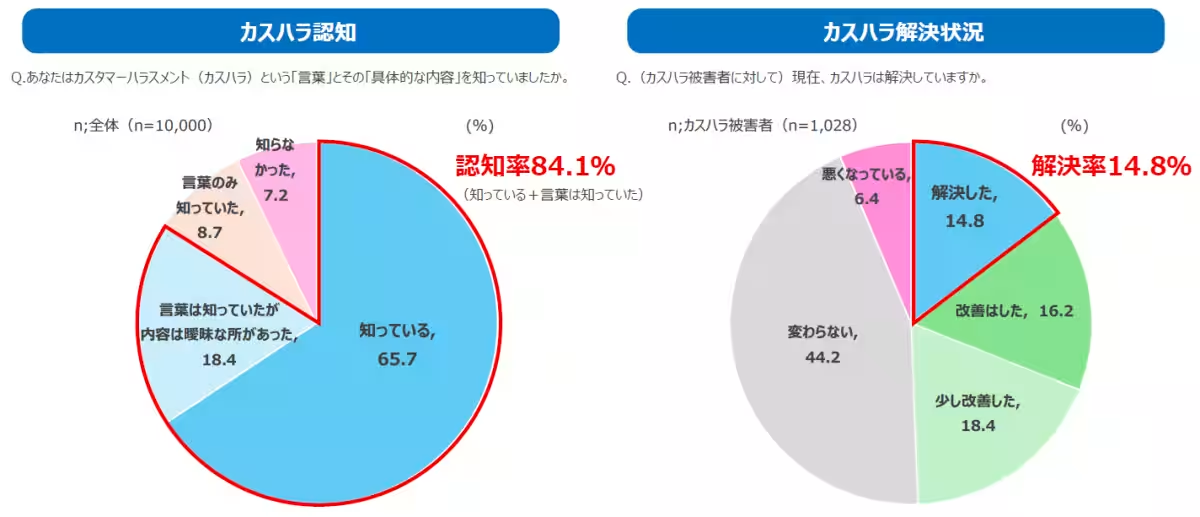
Released on April 10, 2026, the report reveals that while the acknowledgment of customer harassment reached an impressive 84.1%, the resolution of such cases remains bleak at only 14.8%. This discrepancy underscores a significant gap between awareness and actionable solutions in managing customer-related harassment incidents.
The survey also noted that approximately 70% of victims reported their experiences to their supervisors or sought help from workplace hotlines. This proactive approach to reporting is vital, but the low resolution rate raises concerns about the effectiveness of existing policies and support systems.
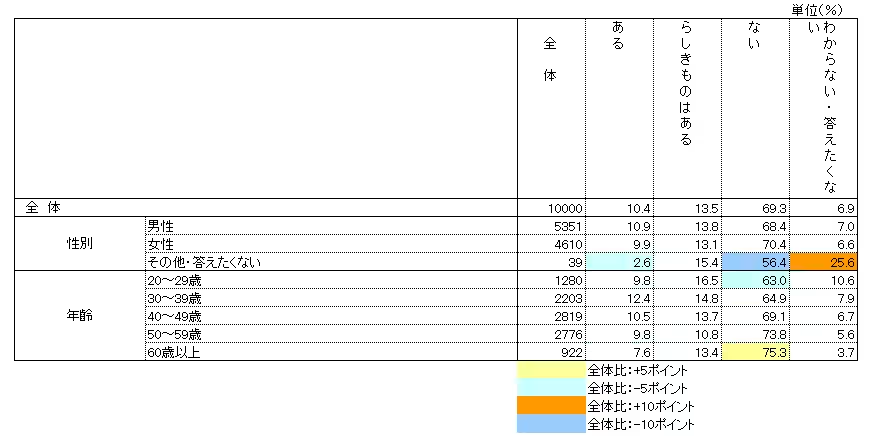
Moreover, one in four employees reported witnessing instances of customer harassment, indicating that the harassment rate is on par with incidents of workplace bullying, or power harassment, which also stands at 10.3%. This suggests that customer harassment is not only prevalent but poses a serious risk to employee wellbeing and workplace morale.
The Psychological Impact
Perhaps most alarming is the psychological toll this harassment takes on employees. Nearly 30% of those who experienced customer harassment expressed a desire to leave their jobs, highlighting the potential for severe employee attrition. Such a statistic poses serious risks for businesses, indicating that unresolved harassment issues could lead to significant workforce instability.
Trends Over Time
The evolution of societal perceptions regarding customer harassment has been noteworthy. The term and the realities attached to it have gained greater recognition over recent years, leading to increased awareness among employees. However, the survey suggests that simply knowing about customer harassment is not enough. The gap between awareness and action taken by workplace management is stark, revealing an urgent need for improved intervention strategies and organizational support for victims.
Conclusion
As organizations reflect on these findings, it becomes increasingly clear that much work remains in creating safe and supportive work environments. Employers must not only recognize customer harassment but also establish robust mechanisms for reporting, managing, and resolving such incidents. The health of an organization often correlates with employee satisfaction and security, making it imperative for businesses to tackle this issue head-on.
The full report can be accessed through the Humap website by Asmarq, offering further insights and analysis into the alarming trends of customer harassment in modern workplaces.

Topics People & Culture)


【About Using Articles】
You can freely use the title and article content by linking to the page where the article is posted.
※ Images cannot be used.
【About Links】
Links are free to use.