


Innovative Surface Control Technologies Unleash the Potential of Photocatalysts for Superior Hydrogen Production
Introduction
In a remarkable advancement in hydrogen production technology, a research team from the National Institute of Advanced Industrial Science and Technology (AIST) has developed a cutting-edge surface control technology that significantly enhances the performance of BiVO4 (Bismuth Vanadate) photocatalysts. This advancement paves the way for a better integration of photocatalysis and electrolysis for hydrogen production.
Research Findings
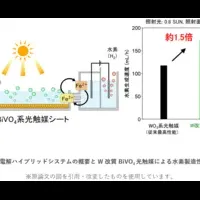
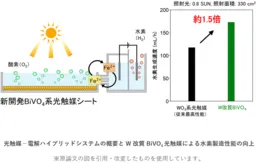
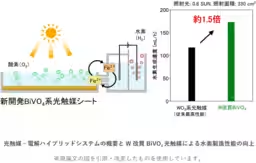
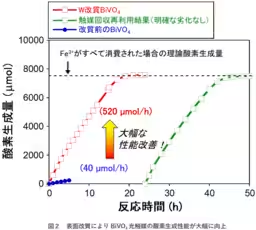
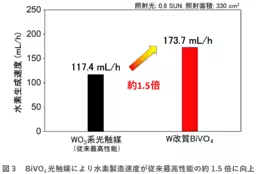
The team, led by Kenta Watanabe, Yugo Miseki, and Kazuhiro Sayama at AIST's Zero Emission International Collaborative Research Center, discovered that competing side reactions inhibit the efficiency of BiVO4 photocatalysts in acidic iron salt solutions. By modifying the surface of BiVO4 with a tungsten salt solution, they remarkably increased the oxygen generation rate by approximately 13 times compared to the unmodified photocatalyst. Following this, they applied this enhanced BiVO4 in a photocatalytic-electrolytic hybrid system, achieving a hydrogen production rate 1.5 times higher than that of traditional WO3 (Tungsten Trioxide) photocatalyst systems.
Significance of BiVO4
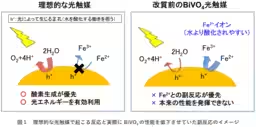
BiVO4 photocatalysts have gained attention due to their ability to utilize a broader spectrum of visible light, thus harnessing more solar energy compared to WO3-based systems. However, its potential was previously limited in processes using highly acidic iron salt solutions because the unwanted reaction between BiVO4 and accumulated iron ions (Fe2+) would adversely affect performance. The research team identified this issue and successfully implemented surface modifications that enabled the photocatalyst to prioritize water oxidation.
Research Development
Previously, AIST had made strides in enhancing the photocatalytic-electrolytic hybrid system's performance by optimizing the selectivity and durability of photocatalysts. The initial research began as early as 2010 and focused on controlling the surface of WO3 photocatalysts to ensure that the water oxidation reaction took precedence over other competing reactions in complex environments. This foundational work set the stage for exploring BiVO4 as an alternative material with superior properties.
Research continued as the challenges surrounding BiVO4's inadequate performance in hybrid systems came to light. The phenomenon of losing much absorbing light energy to the oxidation of Fe2+ instead of the intended water oxidation reaction became evident. This prompted the team to apply the established surface control methods developed for WO3 to BiVO4, aiming to suppress undesirable side reactions by optimizing surface properties.
Surface Control and Performance Boost
By subjecting BiVO4 to a tungsten salt treatment, the research team effectively minimized the unwanted reactions with Fe2+, enabling the photocatalyst to focus on producing oxygen from water efficiently. The unmodified BiVO4 displayed an oxygen generation rate of about 40 µmol/h, which soared to approximately 520 µmol/h after the modification—an increase of around 13 times. This enhancement maintained high oxygen generation even under increasing Fe2+ concentrations during reactions.
Achievement of Record Hydrogen Production
Subsequently, the newly modified BiVO4 photocatalyst was implemented into the photocatalytic-electrolytic hybrid system for hydrogen production evaluation. The resultant hydrogen production rate surpassed previously unachieved records, producing hydrogen at a rate 1.5 times greater than those recorded with WO3 systems. These findings demonstrate that improved photocatalytic performance directly translates to better hydrogen production outcomes.
Future Directions
Looking ahead, the research team aims to build on these findings by further refining the BiVO4 photocatalyst's performance and exploring the use of next-generation photocatalyst materials capable of harnessing an even wider spectrum of sunlight. Plans also include optimizing the hybrid system's performance and scalability through the insights gained from surface modification techniques.
Conclusion
This research significantly enhances our understanding of BiVO4 as a critical component in the hydrogen production landscape, contributing to the development of efficient technologies designed to harness solar energy for a sustainable future. The team's progress marks a step forward in realizing a decarbonized society through improved hydrogen production methods powered by renewable energy.
Published on: November 6, 2026, in ACS Catalysis.
References
- - Publication: ACS Catalysis
- - Institutional Update: AIST Press Release
Topics Energy)

【About Using Articles】
You can freely use the title and article content by linking to the page where the article is posted.
※ Images cannot be used.
【About Links】
Links are free to use.