



The Importance of English Skills for Salary Increases Among Japanese Workers
The Importance of English Skills for Salary Increases Among Japanese Workers
In today's globalized workplace, English proficiency has emerged as a crucial skill that can significantly impact salary and career advancement. A study conducted by e-LIFEWORK, targeting employees aged 20 to 40, reveals that nearly 60% consider English skills essential for increasing their annual income. This article delves into the findings of this survey, exploring the attitudes towards English learning among Japanese workers and the barriers they face in achieving proficiency.
Background
With globalization accelerating, the necessity for individuals to reskill and take control of their career paths has become increasingly evident. English skills are no longer just a nice-to-have; they are pivotal to enhancing one's market value in the business arena. Many workers seek to improve their language skills to advance their careers and boost their income. However, challenges like a lack of time due to busy work schedules and maintaining motivation have led to a significant gap between the desire for English proficiency and the reality of achieving it. These obstacles affect not only individual careers but also Japan's international competitiveness. Despite a general awareness of these challenges, detailed quantitative data on the specific barriers and instances of failure that modern business professionals face has been lacking. Therefore, the study conducted by e-LIFEWORK sought to illuminate these critical issues.
Survey Summary
The survey revealed several key insights:
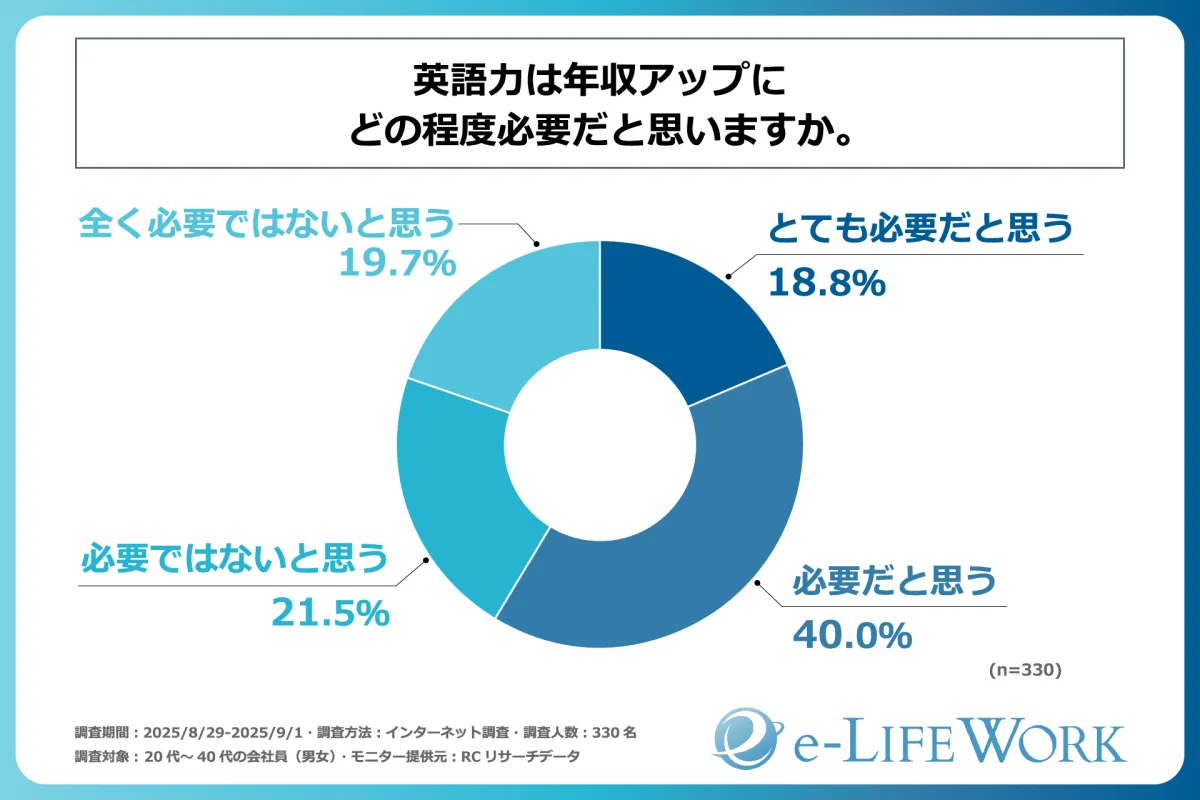
- - Approximately 60% of the respondents believe that English proficiency is necessary for salary increases.
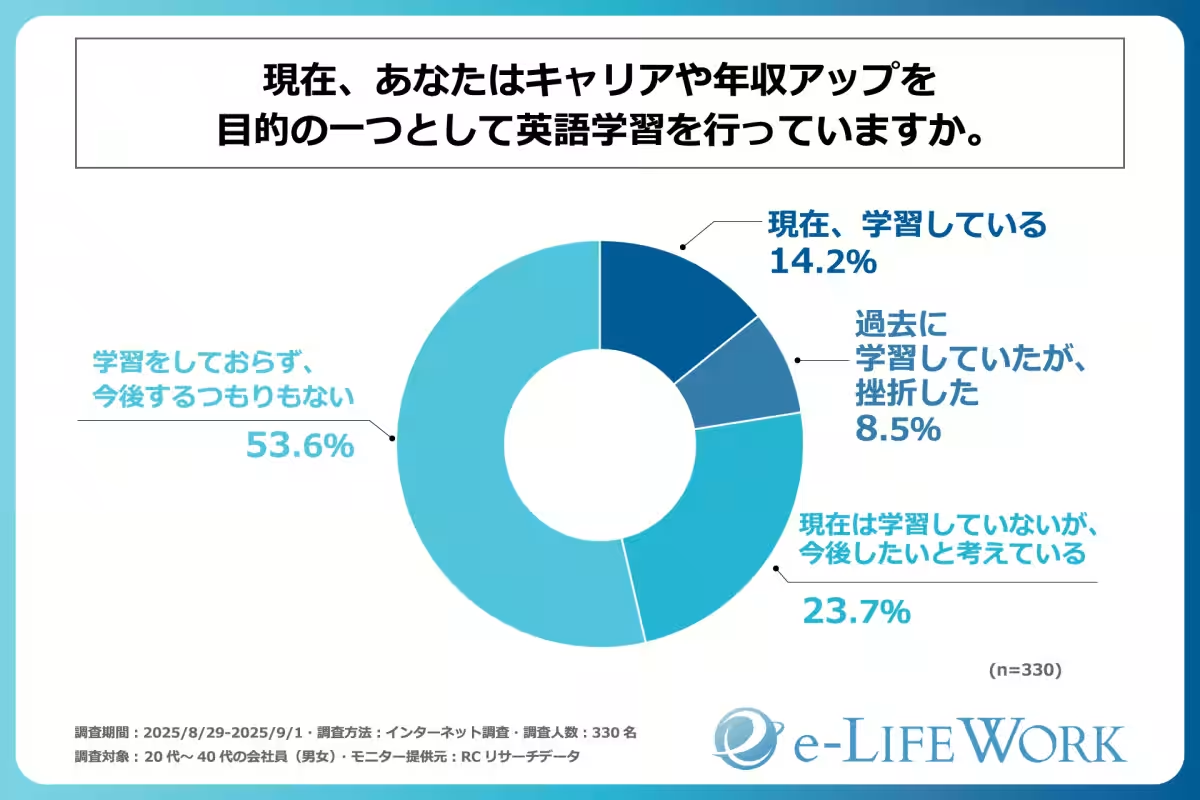
- - Less than 15% of respondents reported currently engaging in English study with the intention of career or salary advancement.
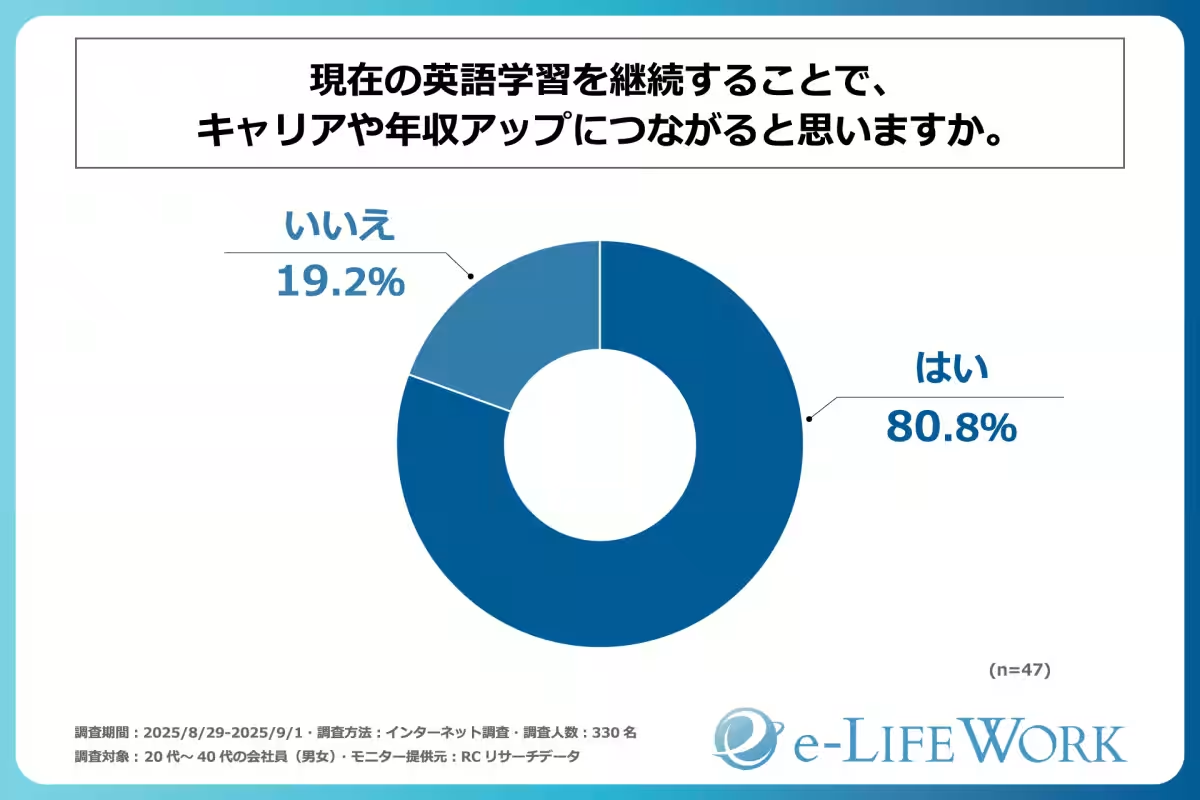
- - Over 80% of those currently studying English for these reasons believe that continuing their studies will lead to increased career opportunities.
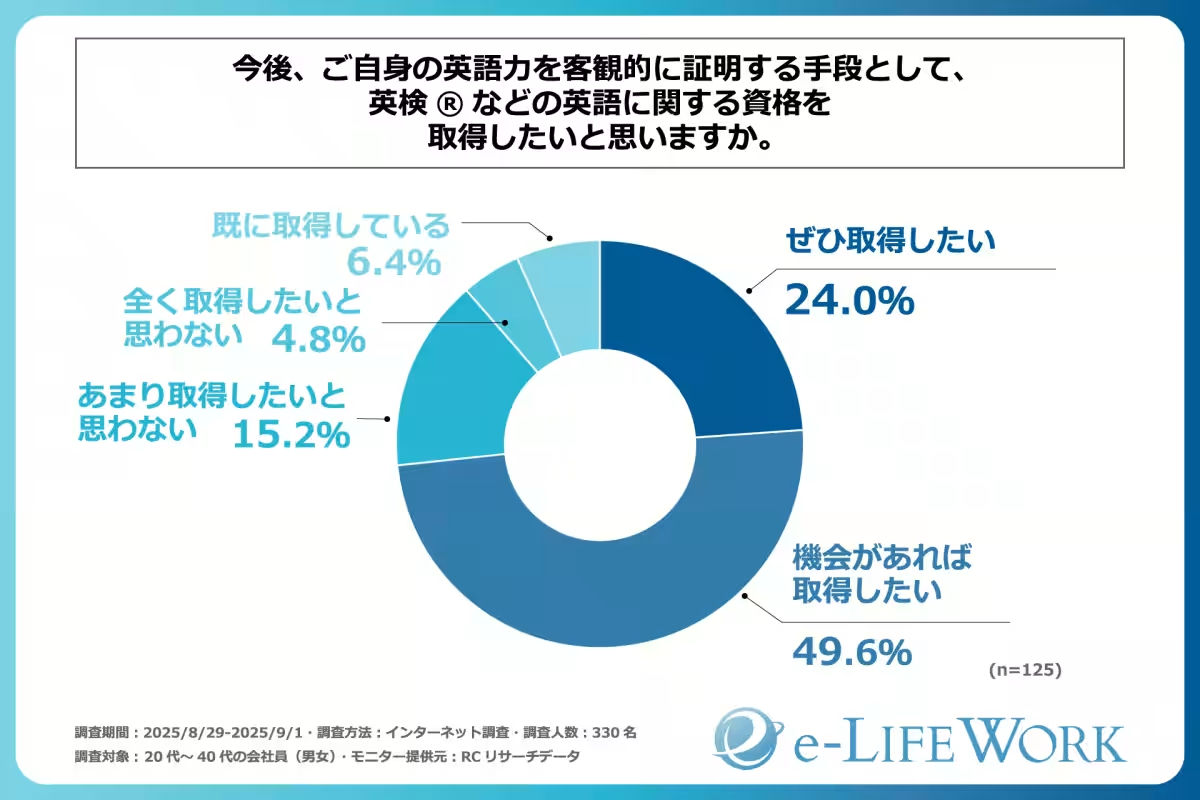
- - Among individuals currently studying English or planning to do so, more than 70% expressed a desire to obtain English qualifications such as the Eiken to validate their skills.
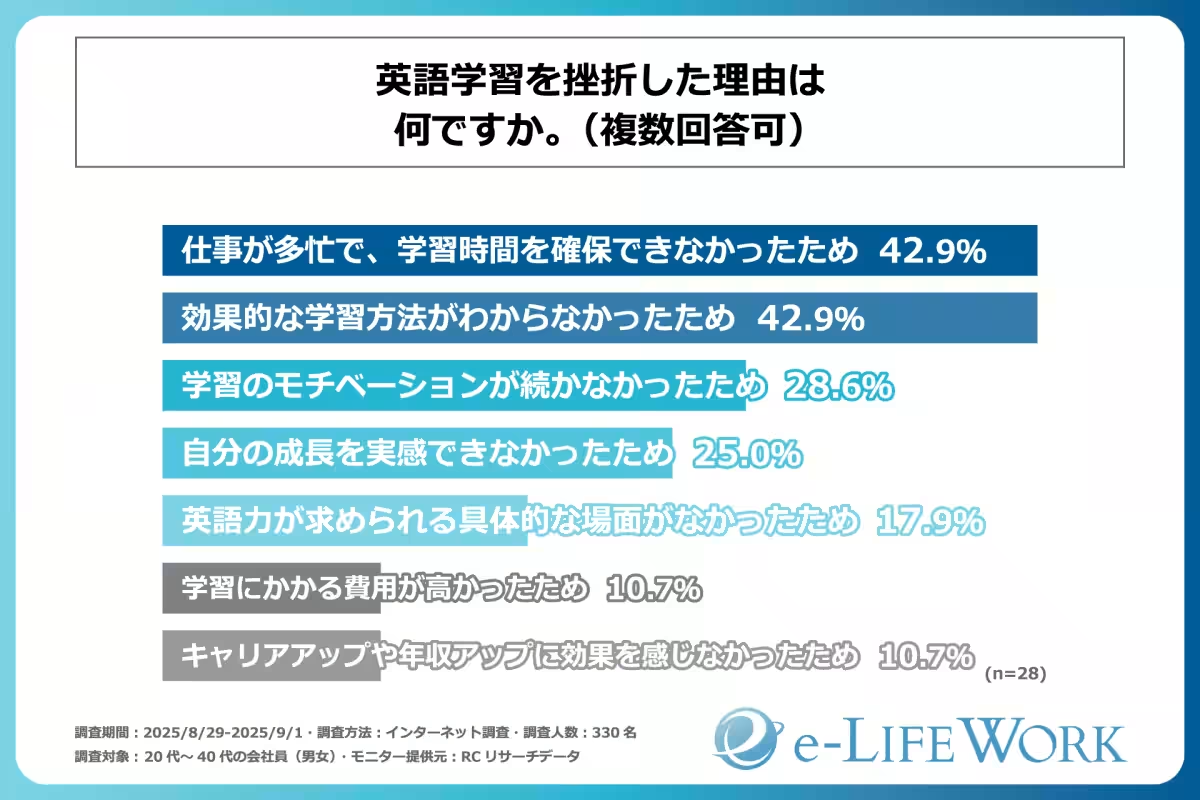
- - The primary reasons for past failures in English learning include a lack of time and not knowing effective study methods.
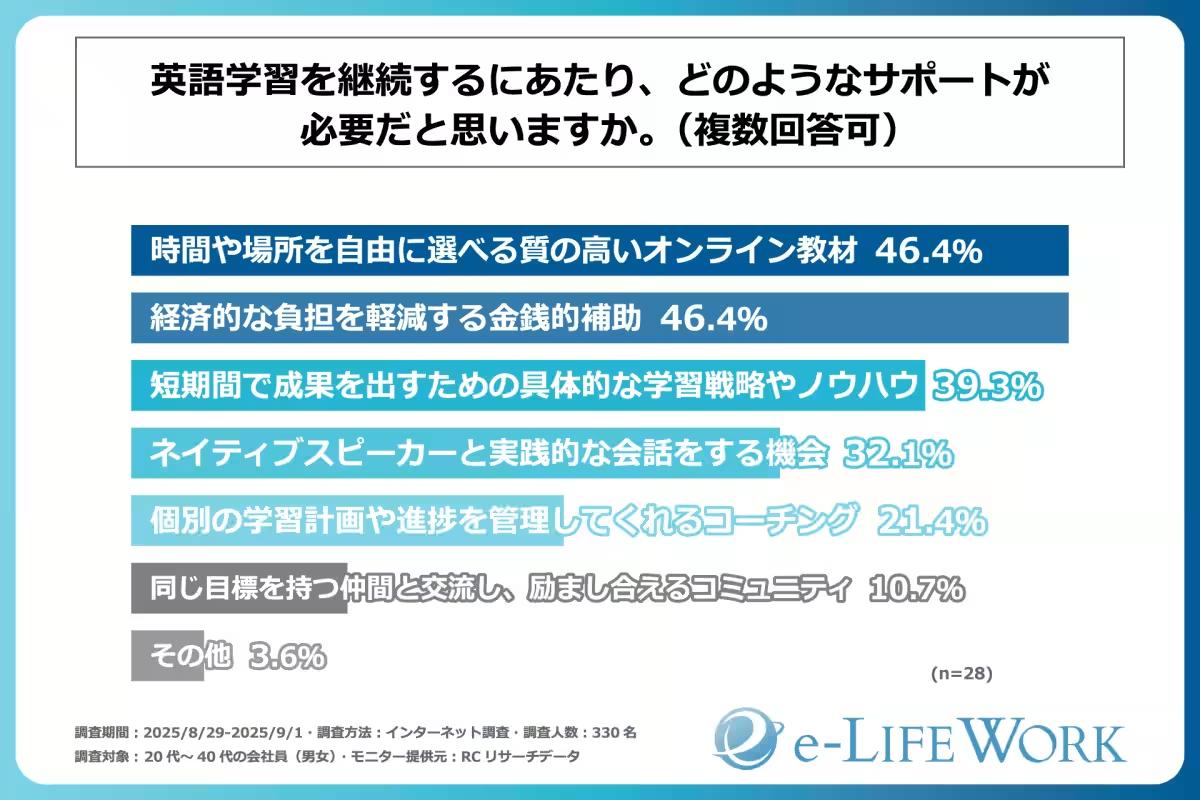
- - Those who have previously struggled with English learning feel that support in the form of high-quality online materials that allow flexibility in time and place, as well as financial support to ease the economic burden, is crucial for continuing their studies.
Insights into Employee Perceptions
The data from the survey painted a clear picture of the current perspectives among Japanese employees in their 20s to 40s regarding English proficiency:
1. Necessity of English Skills for Salary Increase: When asked how necessary English skills are for salary increases, 40% of respondents felt that English is indeed necessary, while another 18.8% rated it as very necessary. This aligns closely with the notion that around 60% consider English proficiency vital for their financial growth.
2. Current Engagement in English Learning: Surprisingly, while the perception of English's importance is high, less than 15% of the workforce is actively studying the language with an aim to elevate their career or salary prospects. This indicates a disconnect between awareness and action.
3. Continuation of Learning: Among those that are pursuing English studies with career advancement in mind, a significant percentage, over 80%, think that continuing to study English will indeed enhance their career prospects, further emphasizing its perceived value.
4. Desire for Qualifications: The survey also highlighted that more than 70% are keen to obtain certifications like Eiken to objectively demonstrate their English skills, indicating a strong interest in formal recognition of their proficiency.
Challenges Faced by Learners
The survey also shed light on challenges faced by those who have attempted to learn English in the past:
- - A staggering 42.9% cited their inability to secure time for study as a major reason for their failure. Similarly, another 42.9% reported that they were unaware of effective learning methods.
- - Motivation plays a critical role, with 28.6% admitting they struggled to keep up their motivation during studying.
Suggestions for Overcoming Barriers
When asked about the support they believe would help them continue learning, most indicated they need high-quality, flexible online materials. They also expressed a need for financial assistance to alleviate economic burdens associated with language study. These insights suggest that solutions must cater to the specific needs of learners, allowing for a balance between work and study.
Conclusion
The findings of this survey highlight a significant gap between the recognition of the importance of English skills for career advancement and the actual engagement in learning among Japanese workers. Efforts should be made to address the barriers they face, such as providing flexible and effective learning resources alongside financial support. e-LIFEWORK's program, **


Topics People & Culture)
【About Using Articles】
You can freely use the title and article content by linking to the page where the article is posted.
※ Images cannot be used.
【About Links】
Links are free to use.