



Global Fund ECW Makes Strides in Education for 14 Million Children in Crisis
Investing in Futures: Transformative Education Amid Crises
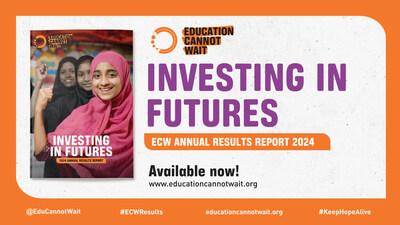
Education Cannot Wait (ECW), the pioneering global fund dedicated to education in emergencies and prolonged crises, unveiled its latest report on September 18, 2025. This comprehensive document highlights promising advancements in education quality for children facing emergencies across the globe. Encouragingly, it emphasizes that mid-way through its current strategic plan (2023-2026), ECW and its partners have successfully reached 14 million children since inception, with 8.3 million of these being impacted children and adolescents supported over the past two years.
Despite these positive strides, the report underscores a troubling reality: education remains one of the most severely underfunded areas within humanitarian responses. Alarmingly, in 2024, a mere 30% of the requested funding for educational initiatives was fulfilled amid growing crises, even though education constitutes just 5.4% of all global humanitarian needs.
Focus on Equity and Inclusion
With a solid commitment to equity, the new statistics reveal that 51% of beneficiaries are girls, while 43% are either refugees or internally displaced children. The report indicates ECW's initiatives are leading to measurable advancements; more children are enrolling, remaining in school, and developing both essential academic and social-emotional skills. ECW’s commitment has also notably influenced more equitable gender norms, enabling better access and participation among marginalized groups.
“The achievements mirror the unmatched strength of ECW’s strategic model and the unwavering dedication of our global coalition,” Sigrid Kaag, Chair of ECW’s High-Level Steering Group, stated. This coalition consists of over 100 partners, including local governments, UN agencies, civil society groups, philanthropic foundations, and businesses. This collaborative effort aims at providing educational resources in some of the most challenging environments.
Enhanced Partnerships and Funding Allocation
ECW’s approach involves a robust system connecting rapid response with long-term programming, fostering effective partnerships across humanitarian efforts while prioritizing local ownership. In 2024 alone, 39% of ECW’s total disbursements, which amounted to USD 202 million, were targeted at nations facing neglected crises such as Bangladesh, Burkina Faso, and Cameroon. This allocation underscores the Fund's commitment to offering education to the world’s most vulnerable children.
Moreover, the report highlights an essential focus on the intersection of the education crisis and climate change, with nearly 41% of children reached in 2023-2024 participating in programs designed for climate adaptability. Altogether, the report reflects ECW’s commitment to addressing these intertwined global challenges.
The Funding Gap
Despite laudable accomplishments, the report raises alarms about increasing funding shortages. By the end of 2024, ECW successfully raised USD 934 million towards its strategic funding goal, but this is still two-thirds of the proposed target. Furthermore, USD 113 million in pledged funds remains unpaid, adding to the funding woes faced by many educational initiatives.
The urgent need for educational support has escalated due to conflicts, displacement, and climate-related disasters, with estimates suggesting there are 234 million children requiring immediate educational assistance—a staggering 18% rise since three years ago. Unfortunately, as ECW highlights, education remains woefully insufficiently funded in humanitarian situations.
“Education is our best—and often only—hope for children enduring these crises,” Kaag explains. To continue the essential work of supporting education in these regions, ECW seeks renewed financial contributions from both public and private partners while also exploring innovative collaborations to bolster their efforts.
To meet its ambitious resource mobilization target of USD 1.5 billion by the end of 2026, ECW needs an additional USD 567 million in contributions. Such support would empower ECW and its partners to extend quality education to 20 million children in greatest need who are currently at risk of being overlooked, not for lack of solutions, but due to persistent underfunding.
Key Results Highlights
1. 14 million children reached since inception of ECW, including 8.3 million supported in 2023-2024.
2. 51% of the children reached are girls; over 40% are refugees or internally displaced, marking the highest proportion since ECW began.
3. 96% of participating programs reported increased educational participation, with 74% showing improved gender equity in 2023-2024.
4. Among long-term programs with measurable outcomes, 88% noted improvements in literacy and numeracy, while 78% achieved advancements in social-emotional learning.
5. In 2023-2024, over 155,000 children with disabilities were reached.
6. Notably, 29% of newly approved funding is planned to support local and national partners in 2024.
7. Climate-responsive programs reached 41% of children, providing essential support for climate change adaptation.
- --> For more information, access the Full Report and Executive Summary, and explore visual impact stories and photographs documenting these critical efforts.
Download Full Report
Topics Policy & Public Interest)
【About Using Articles】
You can freely use the title and article content by linking to the page where the article is posted.
※ Images cannot be used.
【About Links】
Links are free to use.