



Transforming School Meal Financing: A Digital Leap for Local Governments
Transforming School Meal Financing: A Digital Leap for Local Governments
In recent years, many municipalities across Japan have undertaken the initiative of public accounting for school meal expenses, aiming to increase transparency and efficiency in financial processes. The incorporation of school meal expenses into the public accounting system has emerged as a vital reform, especially as regions such as Tokyo’s Kita Ward prepare for implementation. As of April 2026, Kita Ward plans to transition to this system, which has prompted local governments to examine their existing accounting practices to address the pressing challenges that arise during this shift.
Understanding the Challenges of Public Accounting Adoption
The public accounting of school meal expenses entails that municipal bodies assume the responsibility for the collection and management of these funds. While this reform aims to alleviate the administrative workload for teaching staff, it also introduces significant hurdles, particularly in payment processing, data management, and maintaining an efficient workflow. With the impending transition, many municipal offices are recognizing common issues that require attention:
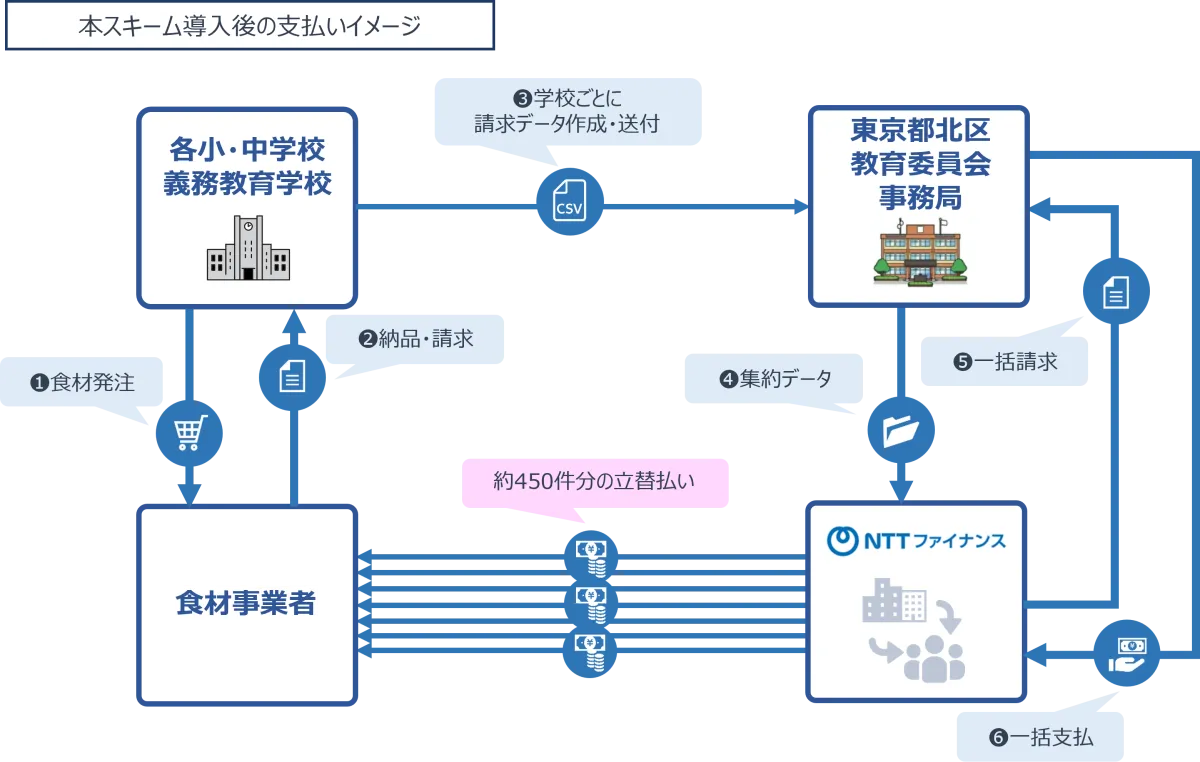
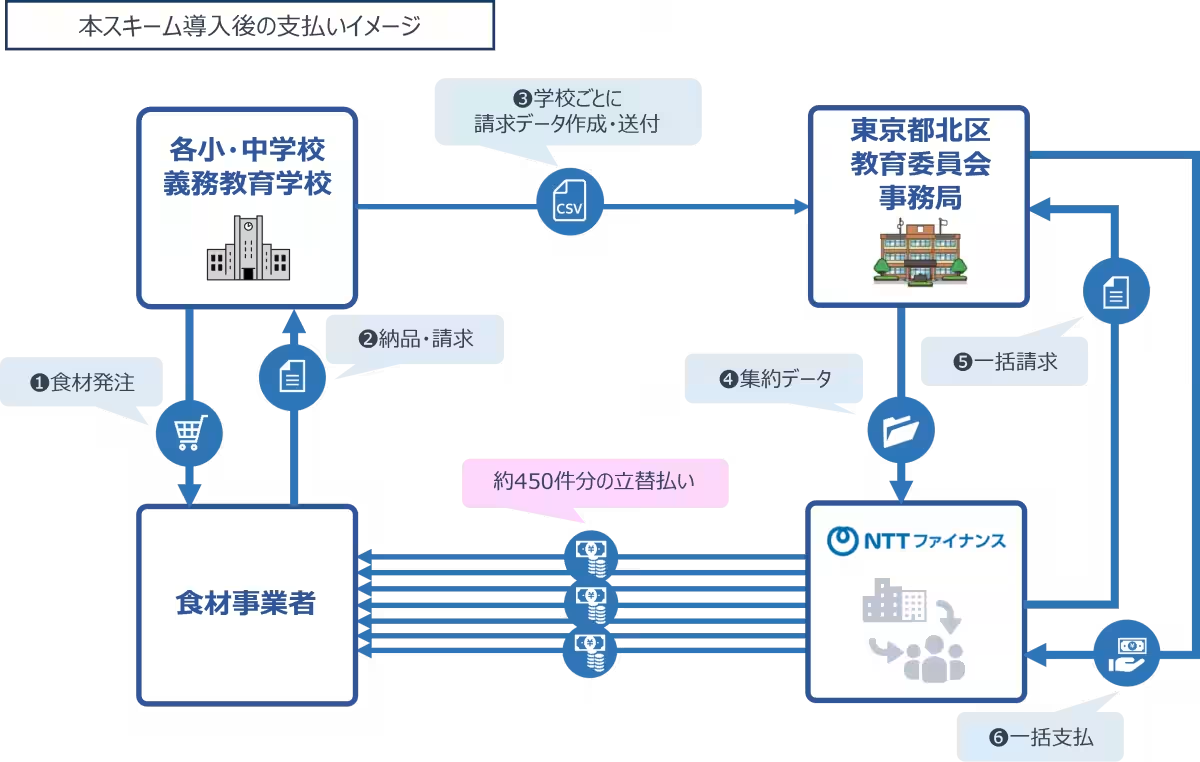
1. Increased Volume of Invoices: The need to manage a substantial number of invoices for payment processing has surfaced as a critical concern, especially with the anticipated monthly volume reaching around 450 invoices for 44 schools in Kita Ward.
2. Limited Personnel Resources: Local authorities face the challenge of maintaining stable operations while working with a restricted number of staff, highlighting the need for strategic planning in workload distribution.
3. Standardization of Procedures: Ensuring that payment processes are uniform and devoid of personalized handling is essential for maintaining quality and efficiency within the system.
Given these challenges, an effective strategy to handle the transition to public accounting for school meal expenses is imperative.
Kita Ward's Strategic Approach: Partnership with NTT Finance
To address these needs, the Tokyo Kita Ward has opted for a partnership with NTT Finance, a company well-regarded for its financial solutions. This partnership involves implementing a service called “Food Supply Payment Management Scheme,” which is set to launch on May 1, 2026, alongside the public accounting move. The decision stemmed from a need to establish stable operations despite limited resources, ensuring that financial practices are both efficient and precise.
Key Features of the Payment Management Scheme
- - Efficient Payment Processing: By consolidating payment tasks, NTT Finance will manage the payments to food suppliers, thereby allowing the educational administrative body to complete expenditure processing in a single monthly undertaking. This strategy not only spreads out the workload but also reduces the chances of operational bottlenecks during peak times.
- - Standardization of Data Management: The scheme also emphasizes the importance of accurate data handling. NTT Finance will assist in organizing invoicing data and providing comprehensive documentation formats, enhancing the overall quality and reliability of the accounting processes.
- - Alignment with Public Accounting Practices: The operational design is tailored to meet public accounting requirements, ensuring seamless data aggregation and management while promoting standardized verification processes.
Anticipated Outcomes from the Initiative
Through the implementation of this new scheme, Kita Ward aims to achieve significant improvements across various dimensions:
- - Reduction in Administrative Burden: Efforts to streamline data entry and invoice verification processes will significantly lessen the workload for both school staff and the educational committee.
- - Enhanced Accuracy and Stability of Financial Transactions: By standardizing crucial procedures, the reliability and quality of financial processing are expected to improve markedly.
- - Optimization of Accounting Data Utilization: Monthly data aggregation will facilitate better access to financial reports, statistical analyses, and inquiry management.
- - Mitigation of Transition Risks: The strategies adopted are set to minimize common issues like staff dependency and processing oversights during the transitional phase, leading to smoother operational capabilities under the public accounting framework.
Future Commitment to Sustainable Practices
As municipalities continue to navigate the intricacies of public accounting for school meal expenses, NTT Finance is dedicated to supporting operational frameworks that accommodate realistic workloads. The goal is to cultivate an environment that allows educators to focus on their primary responsibilities—educating students—while also establishing sustainable financial management systems within local governments.
For further inquiries, please reach out to our dedicated support team, who are available to assist with any questions or require clarification regarding this upcoming initiative. Your input is welcome as we embark on this transformative journey together.
Topics Consumer Products & Retail)




【About Using Articles】
You can freely use the title and article content by linking to the page where the article is posted.
※ Images cannot be used.
【About Links】
Links are free to use.