



Uttar Pradesh's Chief Minister Presents a Book on Ancient North Indian Coinage
Presentation of the Book
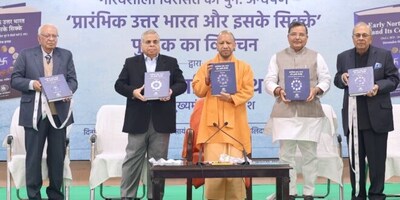
On January 17, 2026, a significant event took place in India when Uttar Pradesh Chief Minister, Shri Yogi Adityanath, unveiled a remarkable publication titled 'Early North India and Its Coinage'. This book, released by the Hinduja Foundation, serves as an invaluable contribution to the understanding of India's historical monetary systems.
An Inside Look at the Book's Content
Written by historian Devendra Handa, this meticulously researched volume explores over 850 ancient North Indian coins that date back to a period spanning from 300 BC to 300 AD. It is hailed as the first illustrated study of its kind in India, providing insight into the socio-economic and cultural dynamics of the time. The book delves into post-Mauryan coins from key centers like Mathura, Kannauj, Panchal, and Kaushambi, covering parts of the Ganga-Yamuna Doab as well as regions of Uttarakhand, Punjab, Haryana, Himachal Pradesh, and Rajasthan.
The publication does not merely catalog these coins but offers a lens through which readers can understand the broader implications of coinage in reflecting the economical and political fabric of early North India. Interestingly, the numismatic artifacts also highlight trade, power structures, and religious practices from that era, showcasing representations of deities such as Kārttikeya, Śiva, and Lakṣmī.
Importance of Preservation
In his remarks during the unveiling, Chief Minister Yogi Adityanath emphasized the importance of understanding and preserving the history of our civilization. He stated, "Preserving history is a national responsibility, and initiatives like these underscore our commitment to cultural heritage." His acknowledgment of the book reflects a broader awareness of the significance of documenting India's rich past for future generations.
Hinduja Foundation's Role
Ashok P. Hinduja, chairman of the Hinduja Foundation, expressed his gratitude to Chief Minister Adityanath for supporting the release of this significant tome and the public display of these coins at the museum in Lucknow. In his statement, he noted that historical disturbances have led to the loss of invaluable artifacts, and it is the responsibility of organizations like the Hinduja Group, with its long-standing commitment to India, to act as custodians of the nation's cultural legacy.
With a lineage rooted in India for over a century, the foundation is dedicated to preserving not just numismatic artifacts but also the broader cultural and civilizational heritage through works like this book.
Conclusion
In conclusion, 'Early North India and Its Coinage' serves as an essential resource for historians, numismatists, and anyone interested in the rich past of India. It not only sheds light on the evolution of coinage but also strengthens our understanding of how these ancient artifacts hold the key to unraveling the complex tapestry of India's historical narratives. This book stands as a proud testament to the contributions of Indian civilization to the world, ensuring the wisdom of the past continues to enlighten the future.
Topics People & Culture)



【About Using Articles】
You can freely use the title and article content by linking to the page where the article is posted.
※ Images cannot be used.
【About Links】
Links are free to use.