



Japan's Airports to Launch Level 4 Autonomous Driving in 2025
Introduction to Autonomous Driving in Airports
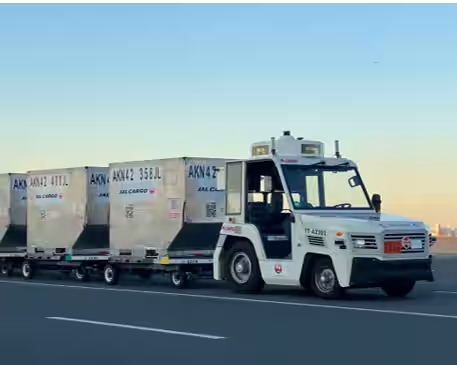
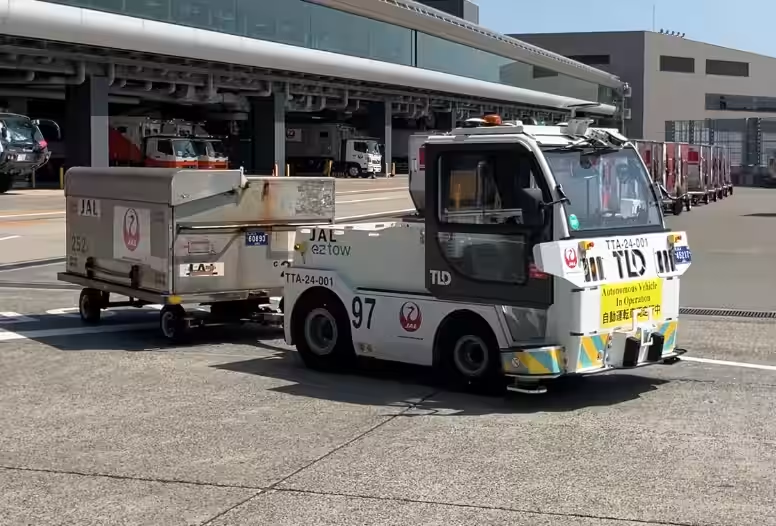
Starting on December 15, 2025, Japan Airlines (JAL) will implement Level 4 autonomous driving technology, marking the first instance in Japan where two major airports—Tokyo's Haneda and Narita—will operate simultaneously with this advanced capability. This system, featuring fully autonomous towing tractors, aims to revolutionize airport operations by transporting luggage and cargo without human intervention.
The Importance of This Initiative
As the aviation industry grapples with significant labor shortages, particularly as the working-age population continues to decline, the launch of Level 4 autonomous vehicles is crucial. The reliance on these unmanned systems not only addresses the immediate need for more efficient ground handling but also aligns with broader goals of sustainability and environmental responsibility. By utilizing electric vehicles (EVs), airlines aim to reduce carbon emissions, further aiding in the fight against climate change.
Background on Automation Efforts
JAL has actively worked on incorporating cutting-edge technologies since 2018, as part of the Ministry of Land, Infrastructure, Transport and Tourism's “Aviation Innovation” initiative. The company has undertaken several pilot projects focused on ensuring safe operations in busy airport environments known as ramp areas, where multiple aircraft, specialized vehicles, and ground crews operate closely together.
With the transition from Level 3 autonomous operations—where human operators monitored the vehicles to manage risks—to full Level 4 capability, safety is significantly enhanced. The decision to increase the autonomy of towing tractors during operations will gradually lead to a systematic expansion of the program, with plans to roll out at other airports across Japan in the future.
Overview of the Autonomous Systems
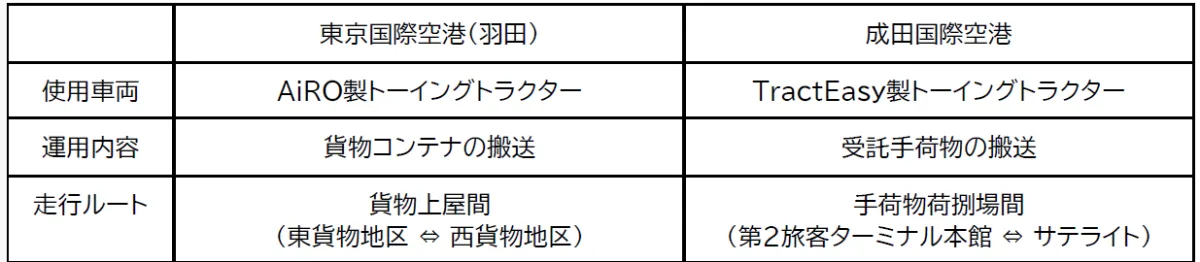
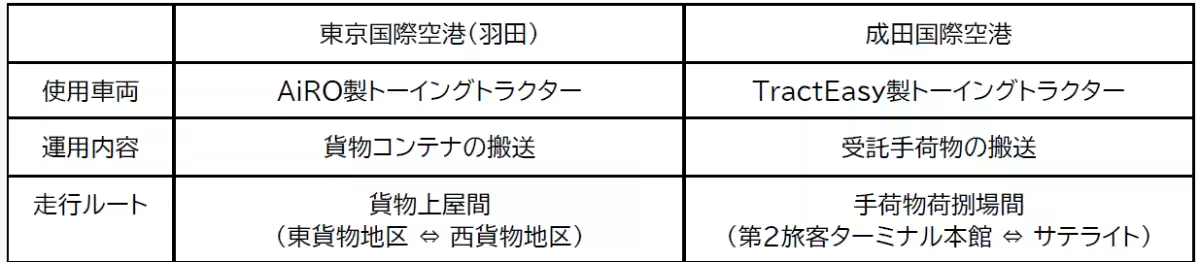
Each airport has specific characteristics that will inform the choice of vehicles and operational routes. At Haneda and Narita, different types of towing tractors will be deployed based on their respective environments:
- - AiRO Tractors at Haneda: Known for their efficient design, these tractors will navigate through the bustling airport seamlessly, ensuring timely movement of baggage.
- - TractEasy Tractors at Narita: Designed for extensive operational areas, these tractors will focus on maximizing efficiency in cargo handling.
The introduction of these vehicles is just the start. JAL is committed to continually enhancing its airport operational efficiency by integrating remote-controlled aircraft tugs, automated aircraft cleaners, and single-operator snow removal vehicles. By employing various technologies together, JAL aims to create a safer and higher-quality operational environment that benefits the workforce while improving overall airport services.
Future Steps and Broader Impact
Looking ahead, JAL's goal is to increase the number of autonomous vehicles in service and expand the operational routes at both Haneda and Narita airports. This progressive step not only aims to streamline operations but also represents a significant shift toward a more sustainable aviation framework that other countries may look to emulate.
The launch of Level 4 autonomous vehicles signifies a new era for airport ground handling in Japan, contributing to a future where technology and efficiency go hand in hand.
Conclusion
As we approach December 2025, all eyes will be on Haneda and Narita airports as they embark on this historic journey. The implications of this innovation may extend far beyond Japan, setting benchmarks in automation and sustainable aviation practices for the global aviation community.
Topics Consumer Products & Retail)
【About Using Articles】
You can freely use the title and article content by linking to the page where the article is posted.
※ Images cannot be used.
【About Links】
Links are free to use.