



The Discovery of Symbiotic Structures in a Unique Insect Species and Their Evolutionary Implications
A Fascinating Discovery in Entomological Research
Recent discoveries by researchers at the National Institute of Advanced Industrial Science and Technology (AIST) have brought surprising insight into the biological functions performed by the sawtooth bug, known scientifically as Megymenum gracilicorne. This insect was previously thought to possess tympanic organs, or 'ears', on their hind legs, but it has now been established that these structures are actually symbiotic organs, specifically designed to cultivate fungi. This finding not only reshapes the existing understanding of this insect but also offers significant implications for the study of symbiosis in nature.
Key Discoveries
1. Symbiotic Organ Identification: Initially thought to be auditory organs, the structures found on the hind legs of female sawtooth bugs are revealed to be specialized areas for cultivating fungi. This conclusion stems from thorough investigations conducted by a collaborative team consisting of researchers from AIST and other partner institutions, including the University of Tsukuba and the Forestry and Forest Products Research Institute.
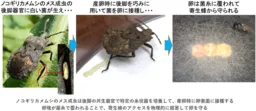
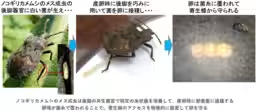
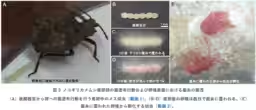
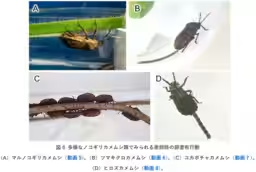
2. Fungal Cultivation and Egg Protection: The discovered symbiotic organs allow female sawtooth bugs to selectively cultivate low-pathogenic fungi during oviposition. The female uses her hind legs to delicately apply this fungi to her eggs, effectively covering them with a protective fungal layer that safeguards against parasitic wasps.
3. Evolutionary Insights: This study exposes a new form of defense symbiosis that was previously unknown, showcasing the intricate relationships between insects and microorganisms. The emergence of this defense mechanism presents intriguing questions regarding the origins and evolution of symbiosis in various ecosystems.
Research Background
The understanding of complex biological functions exhibited by diverse species is essential not only for the advancement of fundamental science but also for the development of applied biological technologies. Insects and microorganisms are at the core of biological diversity; many insects thrive through intricate symbiotic relationships with specific microorganisms. These relationships enable insects to exploit ecological niches and resources that would otherwise be inaccessible.
Given this context, research on the symbiotic microorganisms associated with various pest species is intensifying, ranging from basic functional elucidation to applied pest control strategies. More studies delve into the interfaces of insect behavior, physiology, and the hidden worlds of microorganisms.
The Study Journey
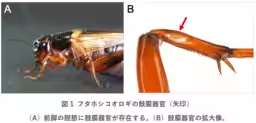
From the auditory organs found in crickets and cicadas to the specialized sound-sensing organs in grasshoppers, hearing adaptations in insects exhibit considerable diversity, often evolving independently across taxa. This research began with an analysis of these structures in the sawtooth bug, known for its distinctive feeding apparatus and ecological roles as a sap-sucking pest.
Historically, the thoracic regions or legs of many insects are home to auditory organs. The sawtooth bug, however, presents a peculiar case due to its classification as a plant sap-sucker, which incited curiosity about its sensory perception capabilities. Previous assumptions that its hind legs contain tympanic organs were challenged as sustained observation revealed the true function of the structures as symbiotic organ systems.
Detailed Research Findings
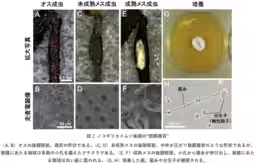
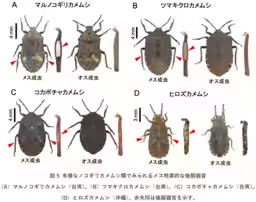
A thorough examination of the hind leg structures indicated conspicuous morphological adaptations. In females, this region exhibits a bulging, oval shape adorned with multiple small pores, a stark contrast to the slender form seen in males and larvae. The presence of about 2000 small openings suggests specialized functions for fungal cultivation. By using the hind legs during oviposition, females delicately transfer fungal spores to eggs, enabling the growth of mycelium that envelops the eggs.
Genetic analyses of fungal communities from these organs versus the egg surface corroborated that the fungi on the eggs closely mirror those cultivated in the hind leg structures. The dominant fungal species identified belonged to Ophiocordyceps relatives, which are low-pathogenic fungi. This indicates a sophisticated mechanism through which these insects can counteract parasitic threats.
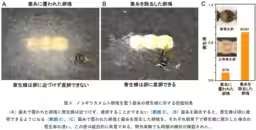
Observations further revealed that the covering of fungal mycelium provides a substantial defensive layer that prevents parasitic wasps, critical threats to the sawtooth bug's reproductive success, from accessing the eggs. Experimental variations in fungal coverage highlighted the significance of this protective strategy, showcasing its evolutionary advantage in natural settings.
Implications for Future Research
This groundbreaking research identifies how the sawtooth bug utilizes a symbiotic relationship to strengthen its defense mechanisms, while opening new avenues for exploring microbial symbiosis across various species. The selective cultivation of fungi in response to ecological pressures poses intriguing questions for applied microbiology—including potential pest management strategies that leverage these fungal defense systems. Future investigations into the biochemical processes underpinning this sophisticated cultivation within the hind leg structures might offer invaluable insights into sustainable agricultural practices.
The findings will be published in the widely respected journal Science, underscoring the importance and relevance of this research. Further studies aim to unravel the complexities of microbial interactions within insect ecosystems and their ecological significance.

Topics People & Culture)



【About Using Articles】
You can freely use the title and article content by linking to the page where the article is posted.
※ Images cannot be used.
【About Links】
Links are free to use.