



Tokyo's 'Sukuwaku Program' Launches First 'Navigator Parks' to Foster Collaborative Learning
Introduction
Tokyo is embracing a transformative approach to early childhood education through its innovative 'Sukuwaku Program'. Developed in collaboration with CEDEP, an educational research institution at the University of Tokyo, this program seeks to break down traditional boundaries between kindergartens and childcare facilities. Set to be implemented across the city beginning in March 2024, it aims to support the growth and development of infants and toddlers. The program's reach is expansive, with initial plans to engage over 2,750 facilities, helping to enrich the educational landscape of Tokyo.
Objectives of the Sukuwaku Program
The Sukuwaku Program is not just another initiative but a comprehensive effort aimed at enhancing early childhood education quality through collaboration. Beginning with its first rollout in the 2024 fiscal year, the program has already seen participation from 1,591 facilities. This year marks an ambitious expansion, targeting over 2,750 locations.
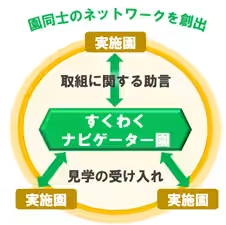
To ensure the quality of the activities within the program is continually improved, Tokyo has introduced the concept of 'Navigator Parks'. These designated centers aim to be the heart of collaboration and learning among participating facilities. Starting from October 10, 2024, applications for these parks were opened, leading to the selection of 35 pioneering facilities as the first cohort of Navigator Parks, signifying a promising start for the program's collaborative efforts.
Activities and Structure of the Navigator Parks
The Navigator Parks are expected to play a pivotal role in creating a network of learning among participating facilities. Here are the primary objectives of these Navigator Parks:
1. Core Network: Establish themselves as central hubs for collaboration among implementation facilities.
2. Quality Improvement: Enhance the quality of initiatives through shared learning and best practices.
Voices from Educators
The feedback from educators working at facilities implementing the Sukuwaku Program has been overwhelmingly positive. Many have expressed a strong desire to share experiences and learn from the innovative practices of others. Some highlighted needs include:
- - Access to examples of inquiry-based activities from other institutions.
- - Opportunities to consult with peers and receive advice on common challenges encountered in early childhood education.
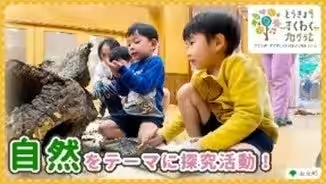
Navigator Parks Activities
Navigator Parks will engage in several activities designed to foster collaboration and knowledge exchange:
- - Welcoming visits from other implementation facilities.
- - Providing introductions to various practices and offering advice to peers.
List of Selected Navigator Parks
The following is a list of the 35 selected Navigator Parks:
1. Shirokanedai Kindergarten (Minato Ward)
2. Azabu Juban Chitose Nursery (Minato Ward)
3. Oruto Nursery (Shinjuku Ward)
4. Shinei Nursery (Shinjuku Ward)
5. Nishi-Toyama Kindergarten (Shinjuku Ward)
6. Yutaka Nursery (Shinagawa Ward)
7. Nishigotanda No. 2 Nursery (Shinagawa Ward)
8. Higashi-Hinomoto Nursery (Shinagawa Ward)
9. Ikehama Nursery (Ota Ward)
10. Sakura Shinmachi Nursery (Setagaya Ward)
... (and others)
For details about each Navigator Park, interested parties can visit the designated website (URL: https://www.sukuwaku.metro.tokyo.lg.jp/navigator/). This initiative aligns with the '2050 Tokyo Strategy', which emphasizes child-centric policymaking necessary for a nurturing educational environment.
In conclusion, the Sukuwaku Program and its initiative to establish Navigator Parks mark a significant step forward in Tokyo's educational landscape, striving to create a robust network focused on memory, community values, and collaborative learning environments for the next generation.






Topics People & Culture)

【About Using Articles】
You can freely use the title and article content by linking to the page where the article is posted.
※ Images cannot be used.
【About Links】
Links are free to use.