



Analyzing TNFD Early Adopters: No Significant Link to Corporate Value
Analyzing TNFD Early Adopters: Insights from Fukuda Research Institute
On September 1, 2026, Fukuda Research Institute, located in Chuo, Tokyo, released a report examining the implications of companies adhering to the TNFD (Taskforce on Nature-related Financial Disclosures) and its impact on corporate value. The report titled "Does Adhering to TNFD Enhance Corporate Value? Insights from Analysis of 100 Japanese Companies" investigates early adopters of TNFD among Japanese firms.
Key Findings from the Report
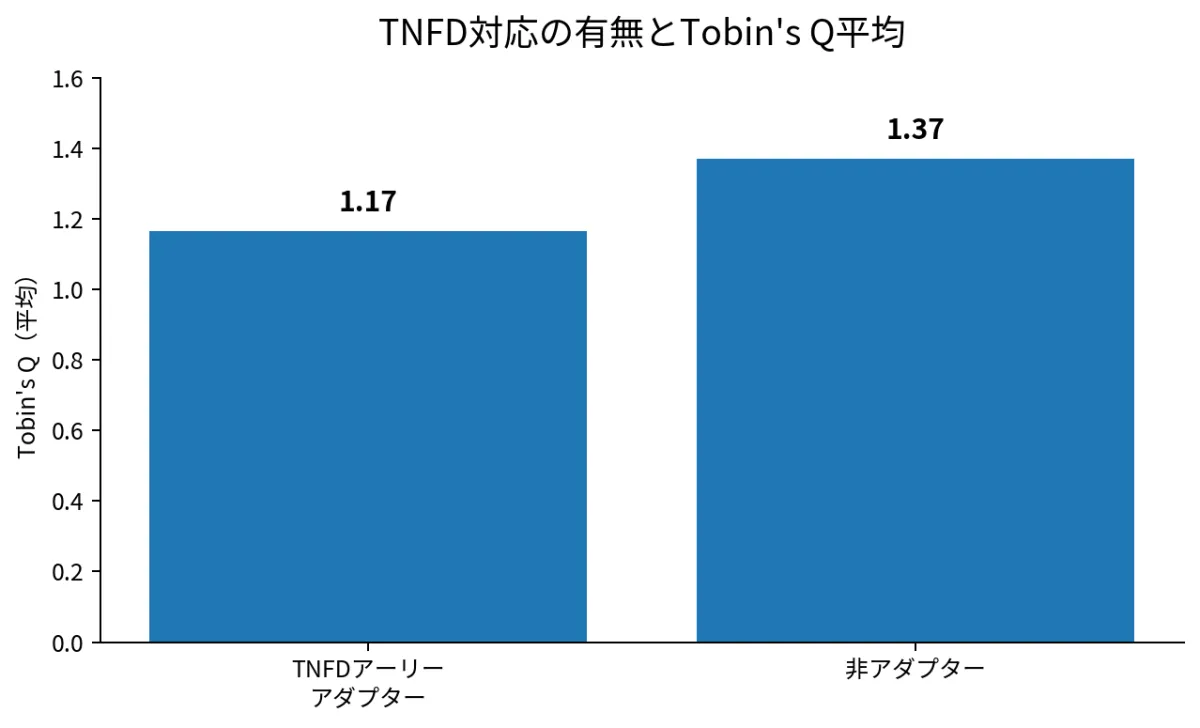
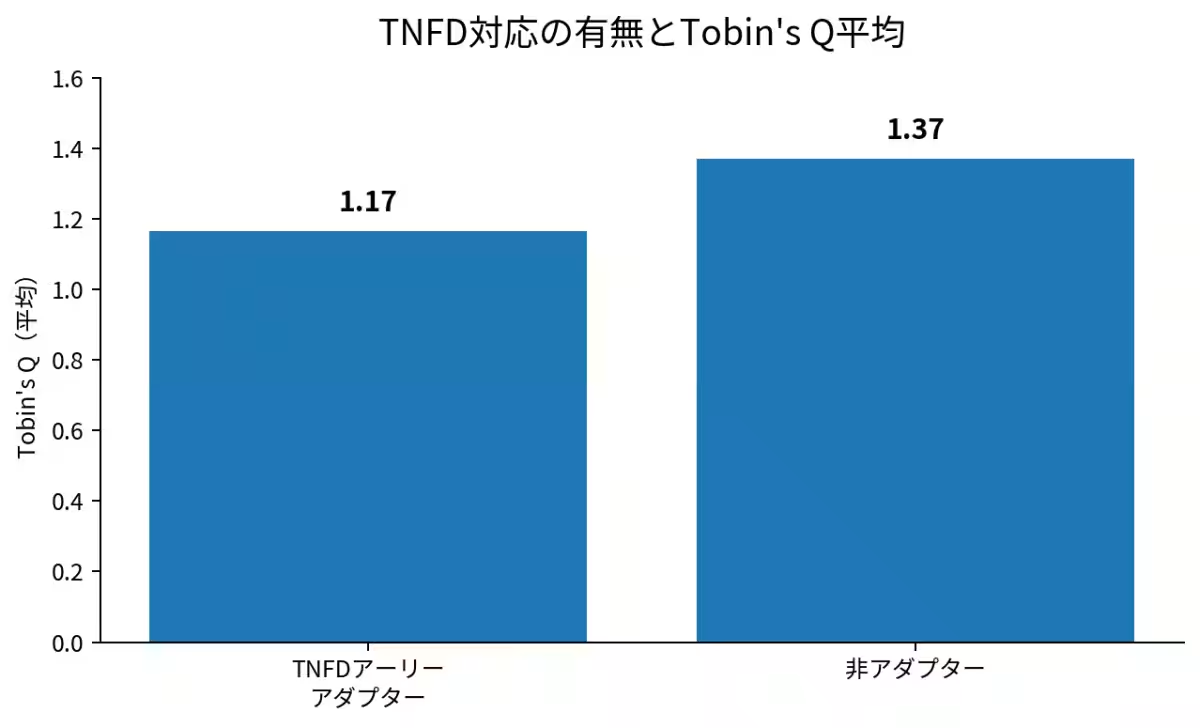
The analysis scrutinized 100 companies—50 that are TNFD early adopters and 50 non-adopters of similar industry and size. Using Tobin's Q as a proxy indicator of corporate value, the results showed that there was no statistically significant relationship between being an early adopter of TNFD and corporate value. In fact, the average Tobin's Q for early adopters was recorded at 1.17, while that of non-adopters stood higher at 1.37.
Insights on Variability in Market Evaluation
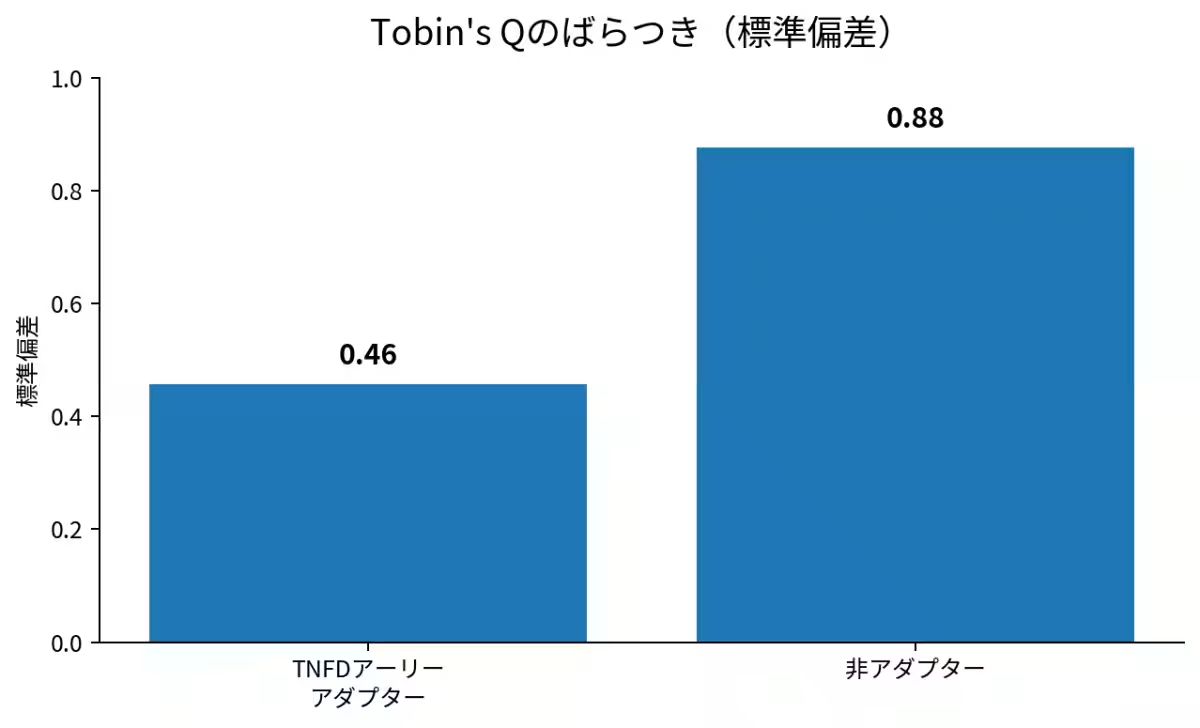
Interestingly, the variability in Tobin's Q for early adopters was lower, with a standard deviation of 0.46 compared to 0.88 for non-adopters. This suggests that market valuations for early adopter firms were more tightly clustered, indicating reduced disparities in how these companies are assessed in the market. The report theorizes that early adopters may be providing more robust disclosures around their dependencies on natural capital and related risks, leading to a more uniform market perception.
The Shift from Formal Compliance to Substantive Action
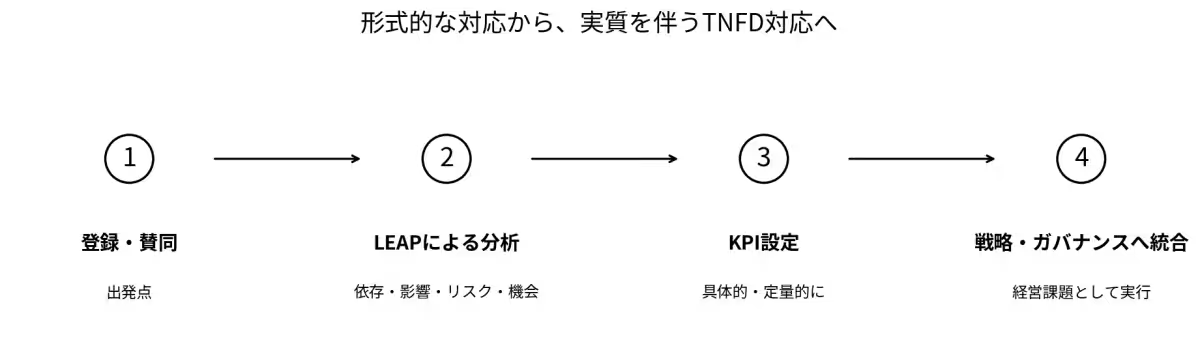
Fukuda's report emphasizes the crucial shift that companies must make: transitioning from merely registering or acknowledging TNFD to actively implementing measures that integrate nature-related insights into their risk management and business strategies. The LEAP approach advocated by TNFD outlines steps that include:
- - Locate: Identify relationships with nature
- - Evaluate: Assess dependencies on and impacts to nature
- - Assess: Identify risks and opportunities related to nature
- - Prepare: Develop and disclose response strategies
Companies must not only recognize their connection to natural resources but proactively manage risks while capitalizing on opportunities through innovation and strategic adjustments.
Recommendations for Corporate Engagement
Based on the findings, Fukuda Research Institute proposes five actionable recommendations for companies:
1. Move Beyond Formal Registration: Viewing registration as the final goal limits potential benefits; real action is necessary post-registration.
2. Understand Natural Dependencies: Companies should analyze how their operations impact and depend on natural resources throughout their supply chain.
3. Evaluate Both Risks and Opportunities: Addressing nature-related risks is vital, but firms should also explore prospects for innovation in sustainable products and services.
4. Set Quantifiable KPIs: Developing measurable key performance indicators allows firms to track and disclose progress transparently.
5. Integrate Natural Capital into Governance: It's essential that managing natural resources are not seen only as an environmental issue but as part of overarching governance and strategic planning.
Beyond Just Increasing Corporate Value
The discourse surrounding corporate disclosures often centers on how such practices can elevate stock prices and overall corporate value. However, in areas characterized by significant uncertainties, such as natural capital, measuring the value of disclosures extends beyond immediate financial outcomes. Firms must articulate their dependencies on natural resources, acknowledge associated risks, and outline their strategies for mitigating these risks. Therefore, there's merit in viewing TNFD compliance not only as a means to enhance corporate value but also as a critical approach to safeguarding it.
Conclusion
The insights from Fukuda Research Institute serve as a call to action for businesses, advocating that TNFD compliance alone is insufficient. The emphasis should be on how companies can substantively act on their commitments to nature and communicate these actions effectively to reduce uncertainties in investor assessments. As the discussion around corporate nature-related disclosures evolves, so too must the understanding of their implications on both enhancing and preserving corporate value.
Commentary from the President
Toru Fukuda, President of Fukuda Research Institute, pointed out the significance of the lack of a significant relationship between being an early TNFD adopter and corporate value. He emphasized that while increasing TNFD compliance is important, companies should focus on what actions are being implemented and what information is being disclosed. This evolution in perspective is essential for nurturing sustainable business practices that benefit not only companies but the environment as well.
For more insights from the study, readers can access the complete research report titled, "Does Adhering to TNFD Enhance Corporate Value? Insights from Analysis of 100 Japanese Companies" published on September 1, 2026, at the Fukuda Research Institute's website.
Topics Business Technology)
【About Using Articles】
You can freely use the title and article content by linking to the page where the article is posted.
※ Images cannot be used.
【About Links】
Links are free to use.