



Innovative Laparoscopic Surgery for Cesarean Scar Disorder Unveiled at St. Luke's International Hospital
Innovative Laparoscopic Surgery for Cesarean Scar Disorder
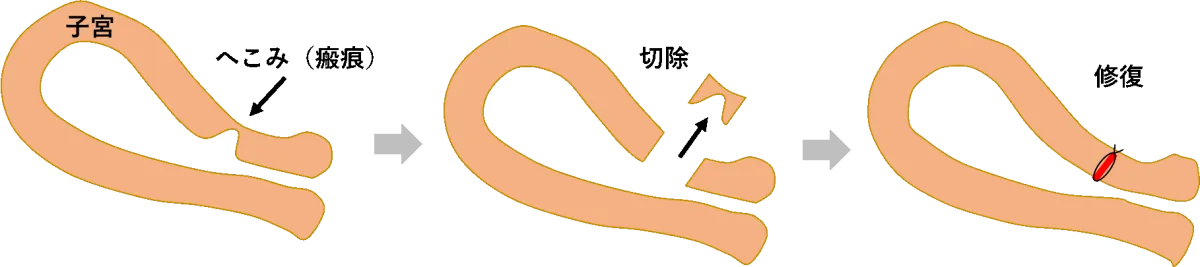
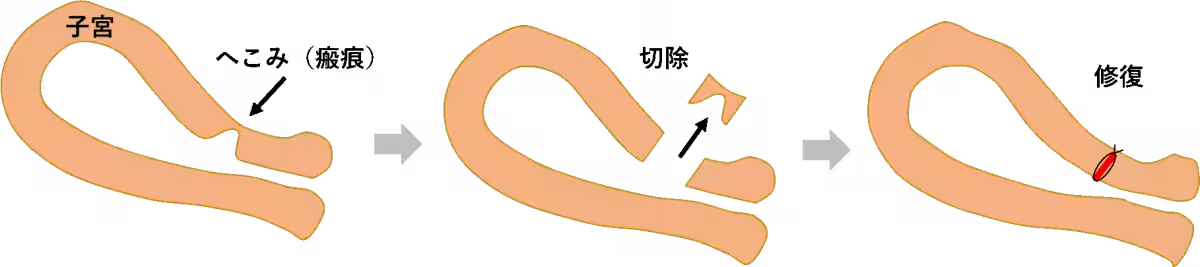
At St. Luke's International Hospital in Tokyo, Japan, a novel laparoscopic procedure has been developed to address Cesarean Scar Disorder (CSDi). This condition, which can occur post-Caesarean delivery, leads to complications such as infertility and menstrual issues due to the formation of depressions at the site of the surgical scar. The surgical procedure introduced is known as the “Taurus T method,” which aims to precisely remove these internal abnormalities where visibility is often limited.
The Challenge of CSDi
Cesarean deliveries have become increasingly common, accounting for 20-30% of births in Japan alone. However, after such a surgery, some individuals may develop internal depressions (or defects) at the scar site, potentially leading to complications like retained menstrual blood or mucus. This accumulation can result in a condition referred to as Cesarean Scar Disorder, which is characterized by symptoms such as irregular bleeding, severe dysmenorrhea (menstrual pain), and infertility.
The Taurus T Method
The recently published paper in “Fertility and Sterility,” a journal of the American Society for Reproductive Medicine, outlines the “Taurus T method.” The surgical technique has three primary steps designed to enhance precision in addressing the underlying issues:
1. Visualization and Marking: The first step involves using a hysteroscope to observe the internal defect within the uterus, marking the upper and lower ends of the scar line with a needle from the laparoscopic side.
2. Creating the Taurus Sign: Following the marking process, the uterus is maneuvered to elevate the scar, causing the marking needle to spread open, forming what is known as the “Taurus sign.” This visual cue is essential for the next step.
3. T-Shaped Excision: Guided by the needle markings, the surgeon can perform a precise T-shaped excision of the defect via laparoscopy. This method allows for direct visualization of the problematic area, ensuring that the abnormal tissue is accurately removed without over-excision.
Anticipated Improvements
One of the remarkable advantages of the Taurus T method is its potential to minimize the rates of symptom recurrence, as well as reduce associated perinatal risks like miscarriage and premature birth caused by excessive tissue removal. By precisely targeting the defect, the likelihood of these serious complications could decrease significantly.
Conclusion
As a significant advancement in the treatment of Cesarean Scar Disorder, the Taurus T method not only promises to alleviate persistent symptoms but also offers hope to many experiencing infertility or menstrual difficulties due to previous cesarean deliveries. The ongoing research and articles published surrounding this technique underscore its importance in contemporary gynecological surgery.
For more information on this novel procedure, please refer to the published paper: A Novel Approach for Cesarean Scar Defect Repair00207-9/fulltext).
Contact Information
For inquiries about the study and its implications, please contact St. Luke's International University Corporate Communications Office at: 3-6226-6366.

Topics Health)
【About Using Articles】
You can freely use the title and article content by linking to the page where the article is posted.
※ Images cannot be used.
【About Links】
Links are free to use.