



Understanding the Impact of Information Accessibility on Clinic Selection Among Patients
Understanding the Impact of Information Accessibility on Clinic Selection Among Patients
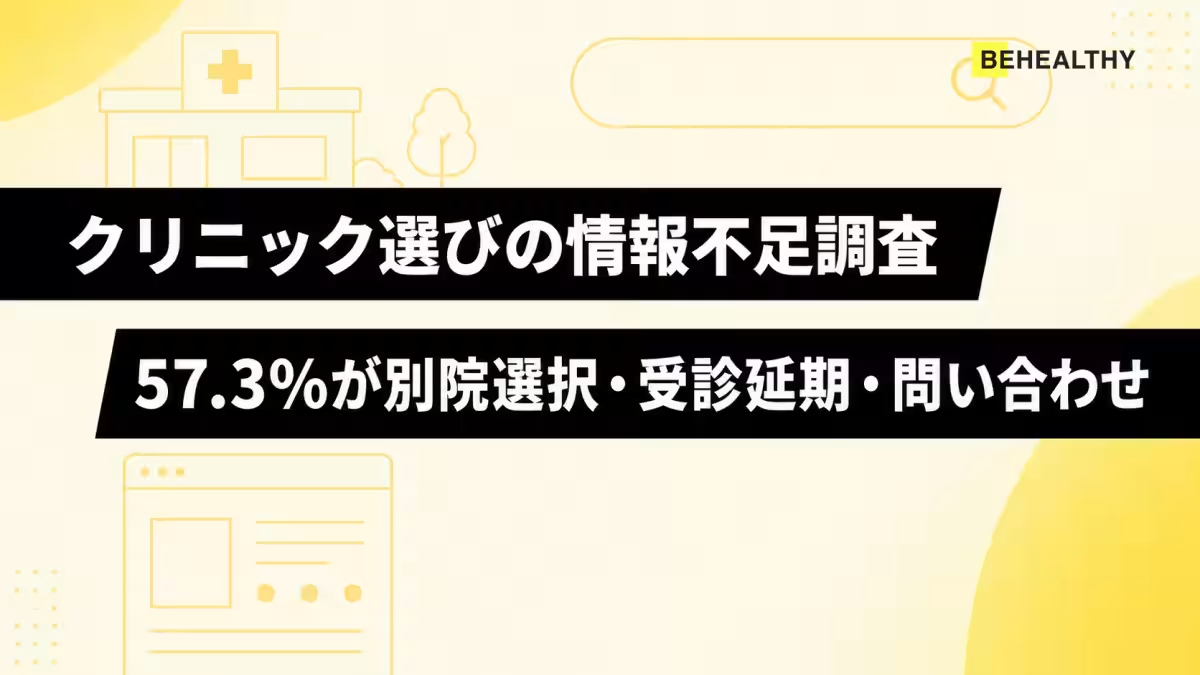
In today's digital age, having access to the right information can significantly influence healthcare decisions. A recent survey conducted by Be Healthy Co., Ltd., based in Minato, Tokyo, highlights the importance of accessible and reliable information during the clinic selection process. The study surveyed 300 individuals aged 20 to 69 who recently searched for a clinic for themselves or their family and found that 57.3% of respondents had to change their plans or choose a different clinic due to insufficient information.
The Influence of Information Deficiency
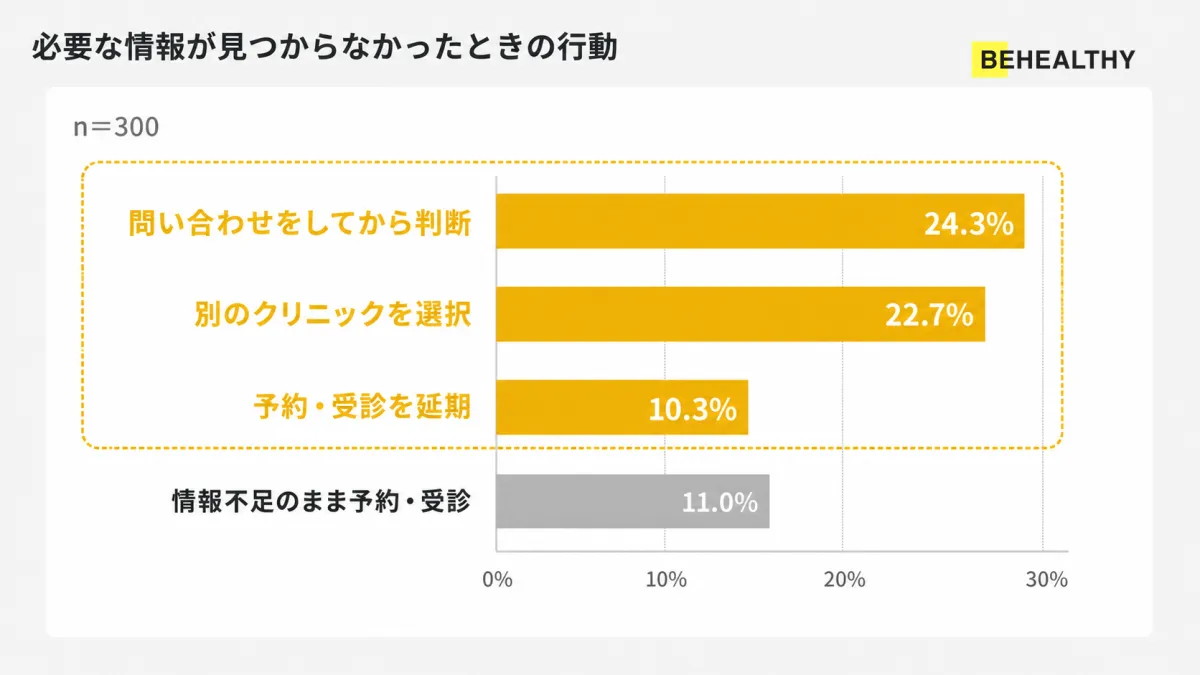
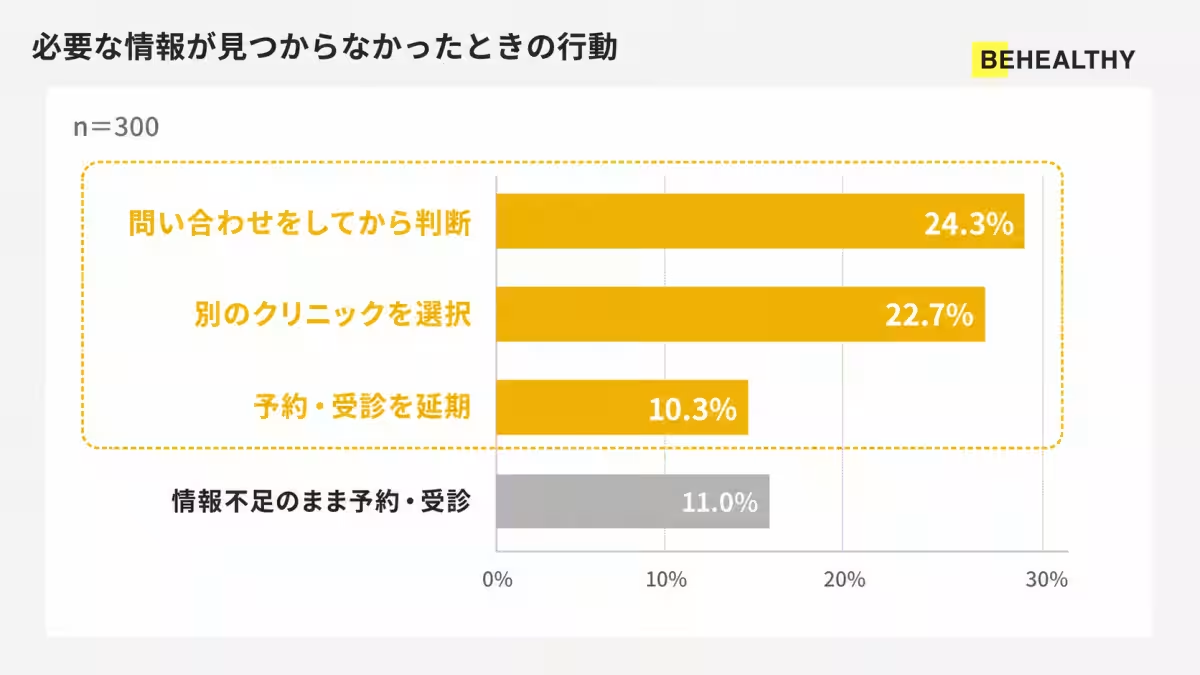
The survey's results revealed alarming behaviors linked to information deficiency. Specifically, when faced with a lack of necessary details, the respondents reported actions such as:
- - Opting for a different clinic: 22.7%
- - Postponing their appointment: 10.3%
- - Seeking further information before deciding: 24.3%
- - Choosing to proceed with the appointment despite the lack of information: 11.0%
- - Successfully acquiring the information they needed: 19.7%
- - Uncertainty regarding their experience: 12.0%
Combining the percentages of those who chose an alternative clinic, delayed their visit, or sought additional information indicated that a significant 57.3% were affected by their inability to find needed information, thus impacting their decision-making process.
Key Information Needs
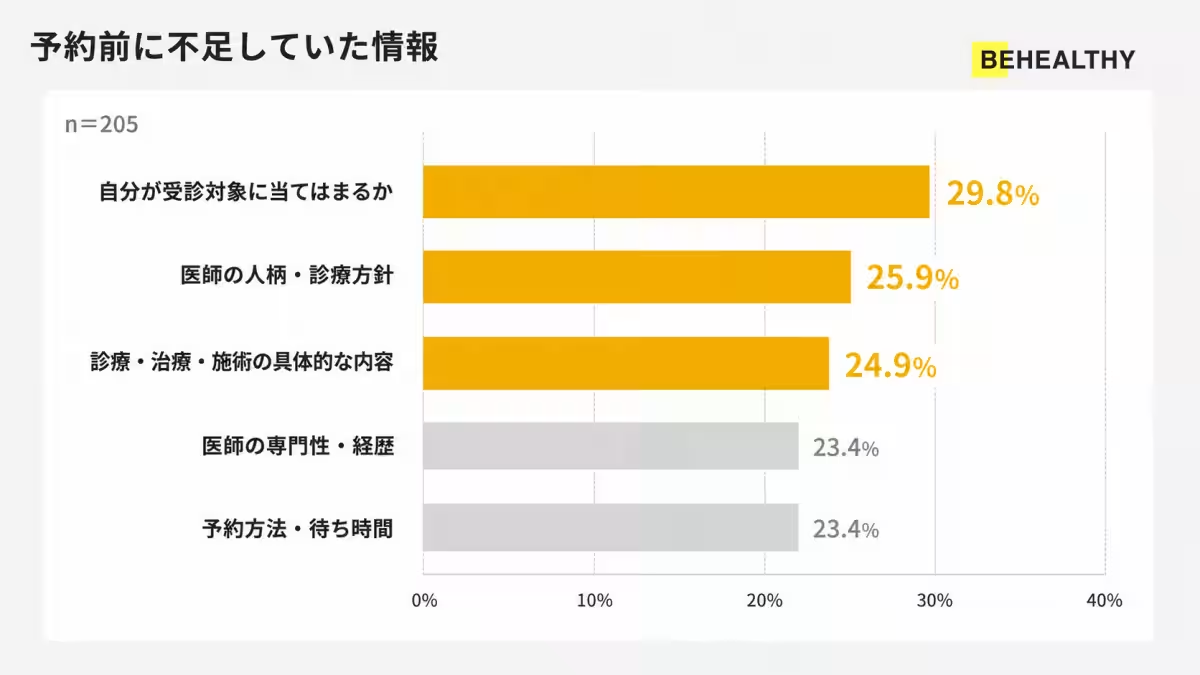
Among the respondents who reported information shortages, the foremost concern was whether they met the criteria to be treated, with 29.8% expressing this need. Other significant informational gaps included:
- - Physician's personality and treatment philosophy: 25.9%
- - Specifics on procedures and treatments: 24.9%
- - Background and expertise of the physician: 23.4%
- - Appointment methods and wait times: 23.4%
- - Cost, insurance coverage, and potential additional fees: 22.0%
This data illustrates that patients seek clarity not only about the treatments available but also about their eligibility, the provider's approach, and a cost estimate before making a decision.
Preferred Video Content for Pre-Appointment Insights
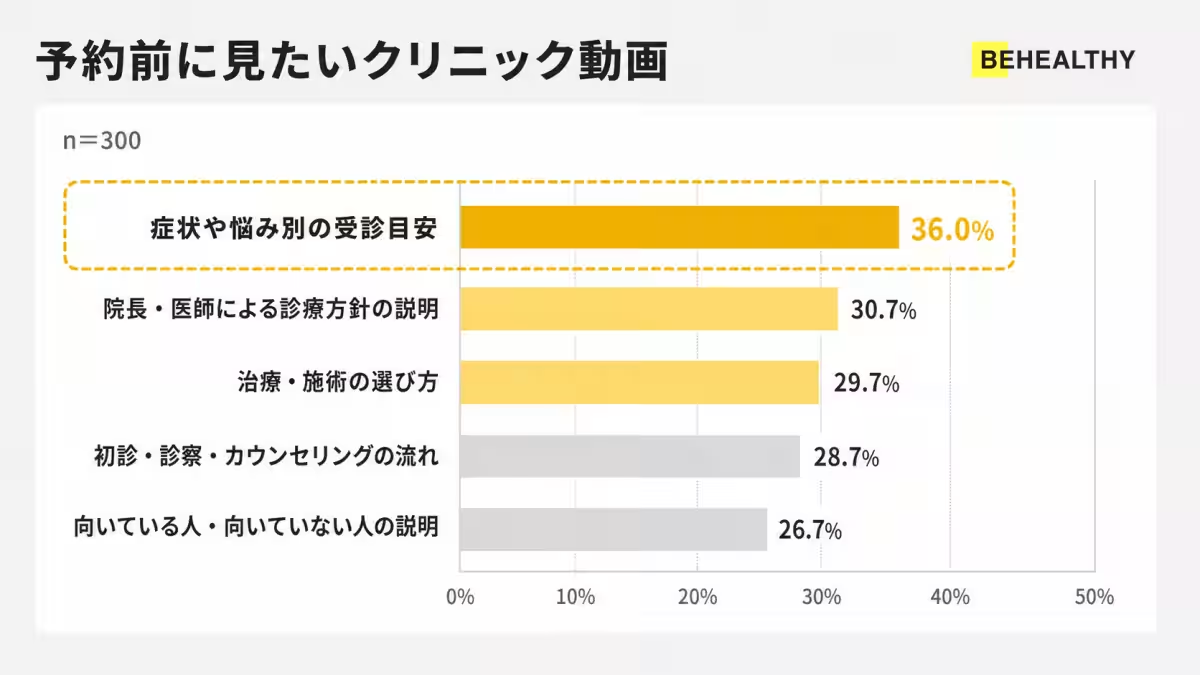
The survey also explored what kind of video content patients desire to see before visiting a clinic. The most requested content was guidelines based on symptoms or concerns, with 36.0% favoring this type of information. Other popular video topics included:
- - Explanation of the doctor's treatment philosophy by the head physician: 30.7%
- - How to select treatments and procedures: 29.7%
- - An outline of the flow for first consultations and counseling sessions: 28.7%
- - Clarification on who should or shouldn't seek treatment: 26.7%
- - Discussions about risks, side effects, and precautions: 24.7%
Such insights reflect patients' desire to personalize their healthcare choices based on their circumstances and concerns.
The Need for Concise and Accessible Content
When asked about the format of clinic information they find most user-friendly, respondents overwhelmingly preferred short explanatory videos ranging from three to five minutes, at 34.0%. Other preferred formats included:
- - Official website content primarily composed of text: 27.3%
- - Vertical videos shorter than one minute: 24.7%
- - Image-based social media posts: 19.7%
- - FAQ pages: 18.0%
- - Detailed videos longer than ten minutes: 16.7%
While the preference for brief explanatory videos stood out, the interest in diverse formats such as traditional web content, short-form videos, and social media postings hints at a broader need for accessible information.
Building Trust Through Social Media and Official Content
The survey highlighted that 53.7% of respondents experienced an increased sense of reassurance and trust after viewing official clinic videos or social media posts. The results were as follows:
- - Significant increase: 17.0%
- - Moderate increase: 36.7%
- - No change: 27.7%
- - Increased anxiety: 2.7%
- - No exposure to official content: 11.0%
This illustrates the critical role social media and official content play in shaping patients' perceptions of potential caregivers.
The Role of Social Media in Decision Making
Furthermore, 38 respondents confirmed that their clinic search involved checking YouTube, Instagram, TikTok, or other social media platforms. When asked about the impact on their decision-making, 86.8% indicated that social media influenced their clinic choice in various ways:
- - Made an appointment or visited based on the content: 26.3%
- - Helped narrow down their options: 34.2%
- - Served as valuable additional information: 26.3%
- - No significant influence: 10.5%
- - Led them to disregard certain clinics: 2.6%
Conclusion and Recommendations
The survey revealed that the lack of accessible information hampers patients during their clinic selection process, leading to unfulfilled care needs. Therefore, clinics must deliver consistent, clear answers to patients' pre-appointment inquiries via diverse channels such as their official website, YouTube, and social media. While video content cannot substitute medical diagnosis or judgment, it is vital to provide accurate, updated, and comprehensive information, including potential risks and limitations, which leads patients to appropriate points of contact for more in-depth discussions.
Be Healthy offers comprehensive support for clinic management of YouTube and social media operations, from strategic planning to content creation and performance analysis, ensuring compliance with medical guidelines and advertising standards. Moving forward, they plan to continue researching patients' pre-appointment uncertainties and information needs to enhance content delivery strategies.
Topics Health)
【About Using Articles】
You can freely use the title and article content by linking to the page where the article is posted.
※ Images cannot be used.
【About Links】
Links are free to use.