



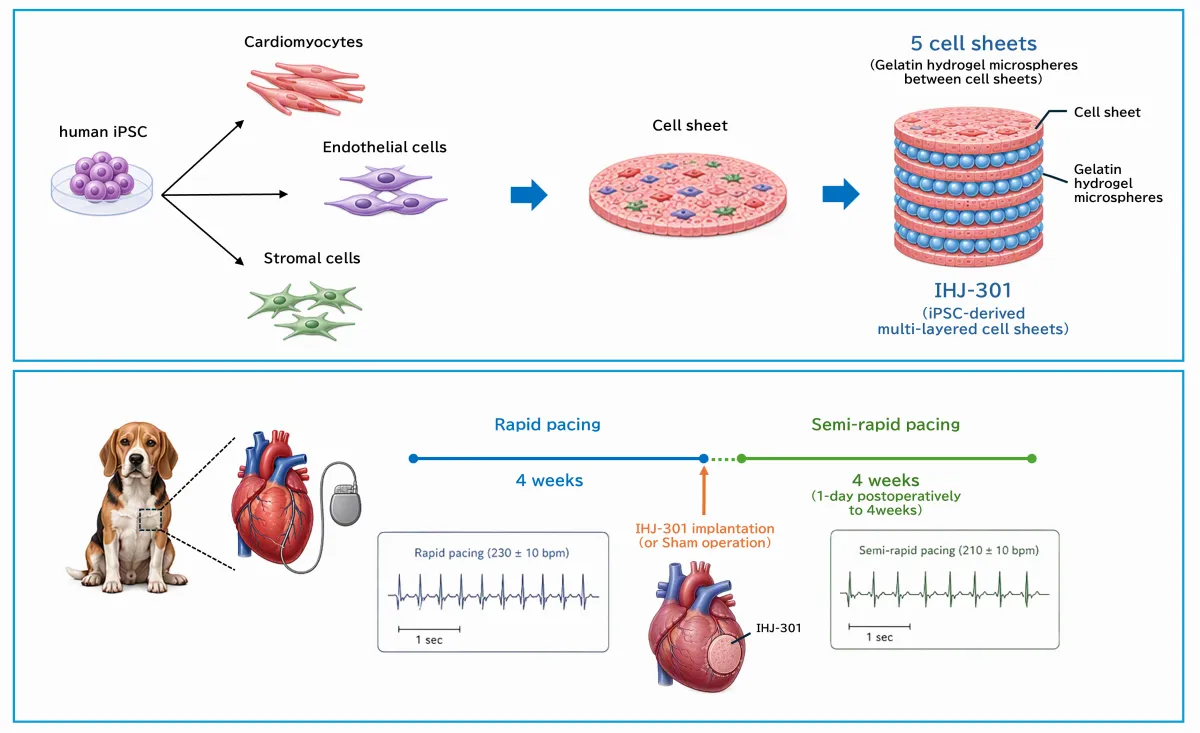
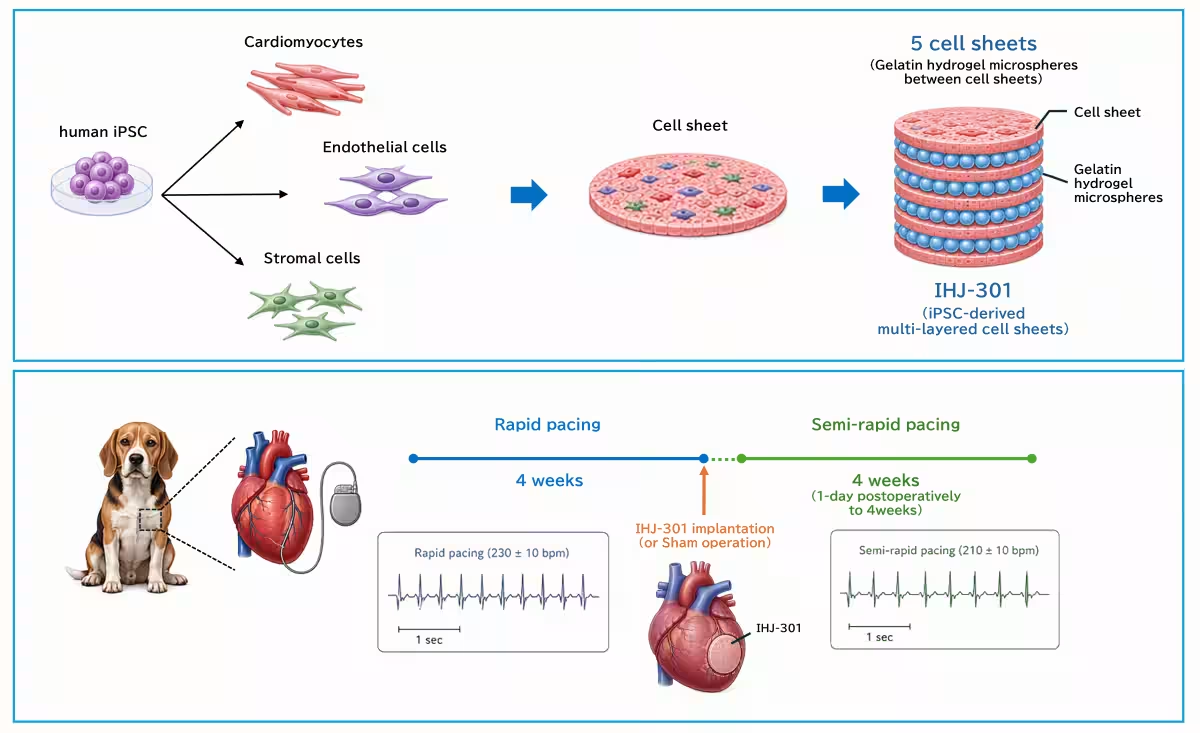
Evaluation of Efficacy of Canine Model for Dilated Cardiomyopathy Using IHJ-301
Breakthrough in Cardiovascular Regenerative Medicine
iHeart Japan, a Kyoto-based company, announced the publication of its research on the efficacy of
IHJ-301, a multi-layered product derived from human iPS cells, in treating a canine model of dilated cardiomyopathy (DCM). This significant advancement aims to transform regenerative medicine from a niche solution to a standard practice in healthcare.
The paper titled "Efficacy of multi-layered human iPS cell-derived cardiovascular cell sheets in a pacing-induced canine dilated cardiomyopathy model" was recently published in the journal Stem Cell Research & Therapy. The authors include Yu Shimoyama, Kenji Kakuta, and several others, encapsulating a collaborative effort in innovative medical research.
Research Significance
Dilated cardiomyopathy is a condition characterized by a weakening of the heart muscle, resulting in the heart being unable to pump blood effectively. In Japan alone, an estimated 130,000 individuals are affected, while globally, that number reaches approximately 65 million. The disease can arise from various factors, including genetic mutations and viral infections. However, in many cases, the exact cause remains unknown, leading to a lack of definitive treatment options aside from heart transplantation.
According to Japan's Ministry of Health, Labor and Welfare, cardiovascular diseases are the second leading cause of death in the nation, calling for urgent innovation in treatment methodologies.
Methodology and Findings
The research focused on overcoming a significant challenge in existing DCM models: traditional high-rate pacing can lead to fatal outcomes in animal subjects. The team developed a novel technique that maintained the pathological state without risking animal life.
By applying IHJ-301, which consists of cardiac and vascular cells derived from healthy donors, the team successfully demonstrated a meaningful improvement in left ventricular ejection fraction (LVEF) and other cardiac function indicators in the animal model. This was achieved without the constraints that typically hinder research in this field, such as severe mortality rates or loss of disease conditions post-intervention.
Clinical Trials and Future Prospects
Encouraged by these positive findings, iHeart Japan is currently conducting clinical trials targeting human subjects with dilated cardiomyopathy. The trials, categorized as Phase I/II, are anticipated to recruit a total of 10 participants diagnosed with the condition. All participants will receive treatment with IHJ-301 under a single-group, open-label, uncontrolled study design.
Surgical procedures involve incisions between the ribs to apply IHJ-301 onto the outer membrane of the left ventricle. Immunosuppressive drugs will be used initially to enhance cell survival, followed by monitoring for natural immune responses that may lead to the eventual improvement of heart function through cellular regeneration.
In Conclusion
The groundbreaking work by iHeart Japan offers hope for countless individuals battling this challenging condition. By leveraging regenerative medicine, they strive to create solutions that enable healthier hearts without the need for transplants. Established in 2013, iHeart Japan's vision remains focused on alleviating the burden of end-stage heart diseases.
For further information about ongoing projects or to support this initiative, please contact iHeart Japan at [email protected]. For more details on their developments, visit their official website.
Topics Health)
【About Using Articles】
You can freely use the title and article content by linking to the page where the article is posted.
※ Images cannot be used.
【About Links】
Links are free to use.