



Japanese High School Students Shine at Regeneron ISEF 2025 with Outstanding Awards
Japanese High School Students Shine at Regeneron ISEF 2025
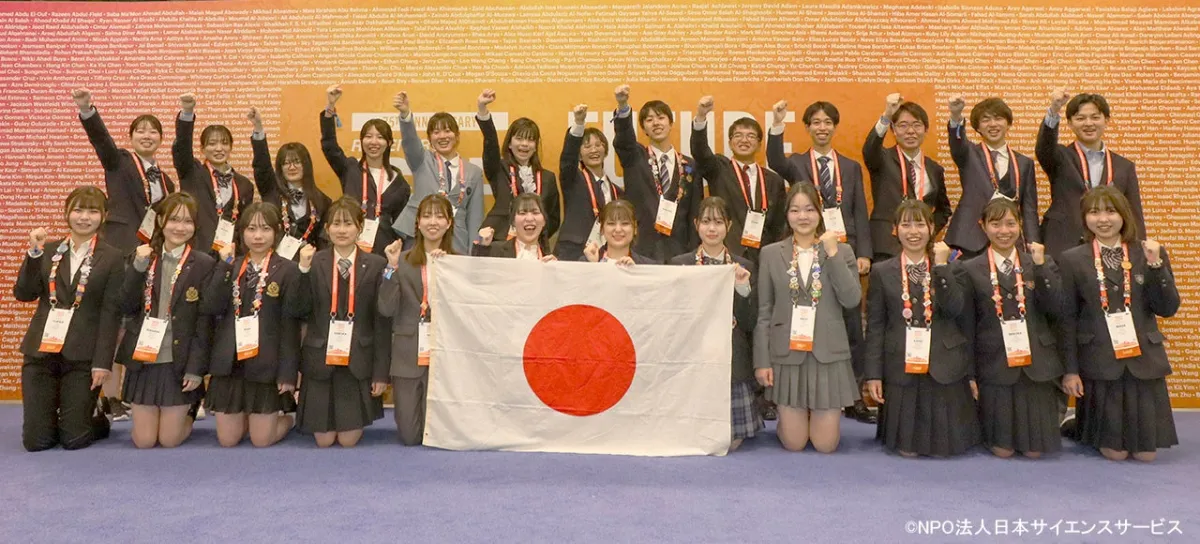
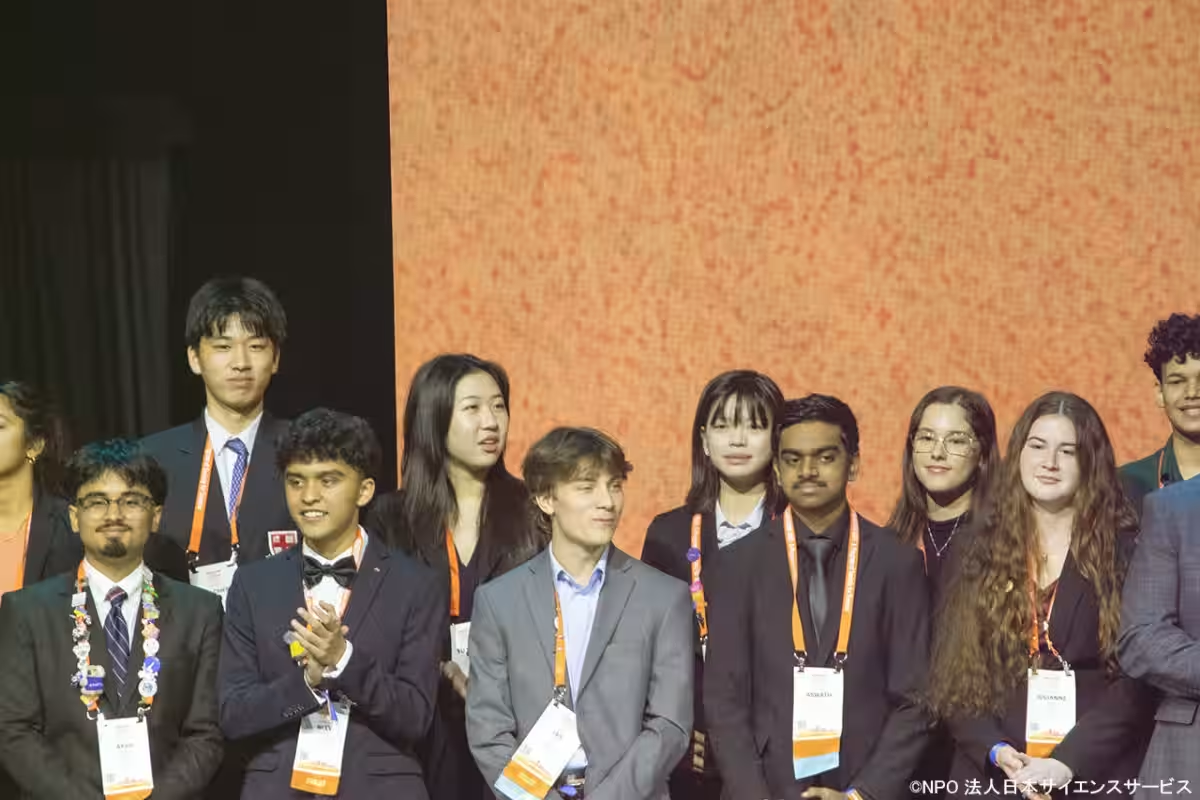
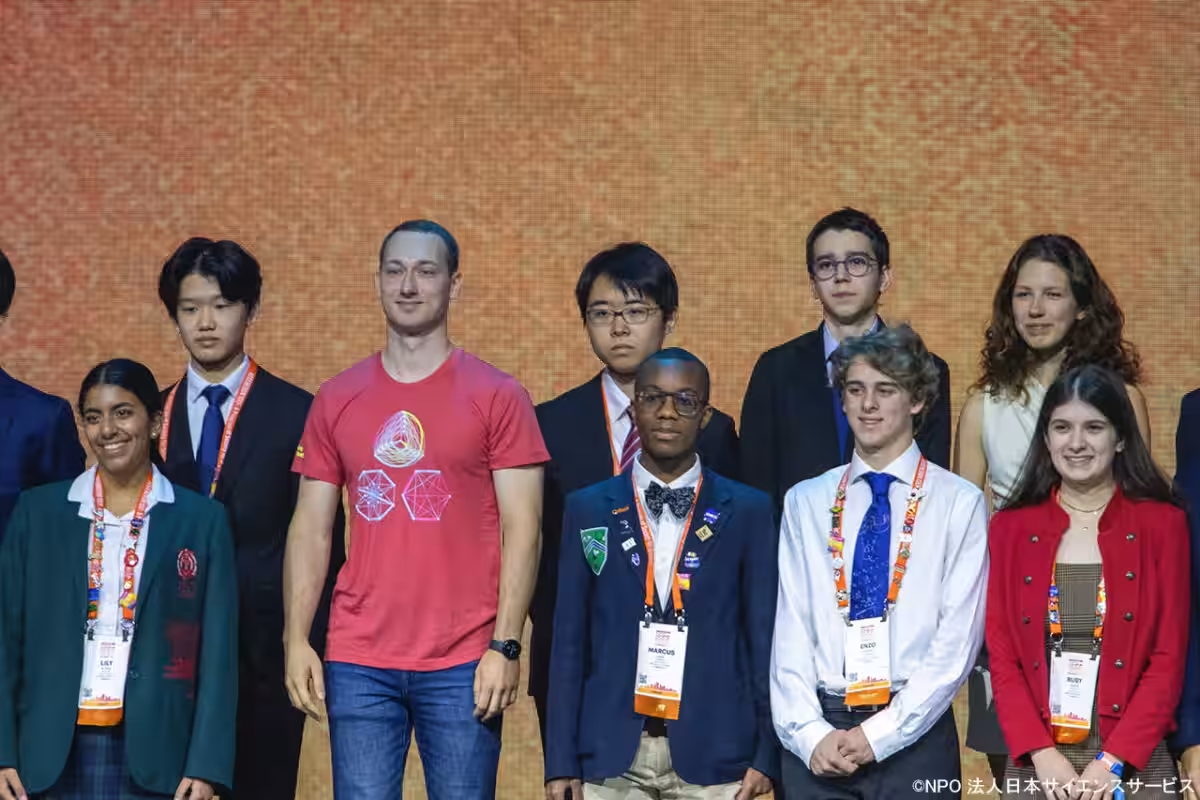
The Regeneron International Science and Engineering Fair (ISEF) 2025 took place from May 10th to 16th in Columbus, Ohio, marking its 75th anniversary with an impressive attendance of 1,657 finalists from 63 countries and regions. Participants showcased their research in poster format, with over $9 million in prizes and scholarships, equivalent to about 1.3 billion yen, awarded to various projects.
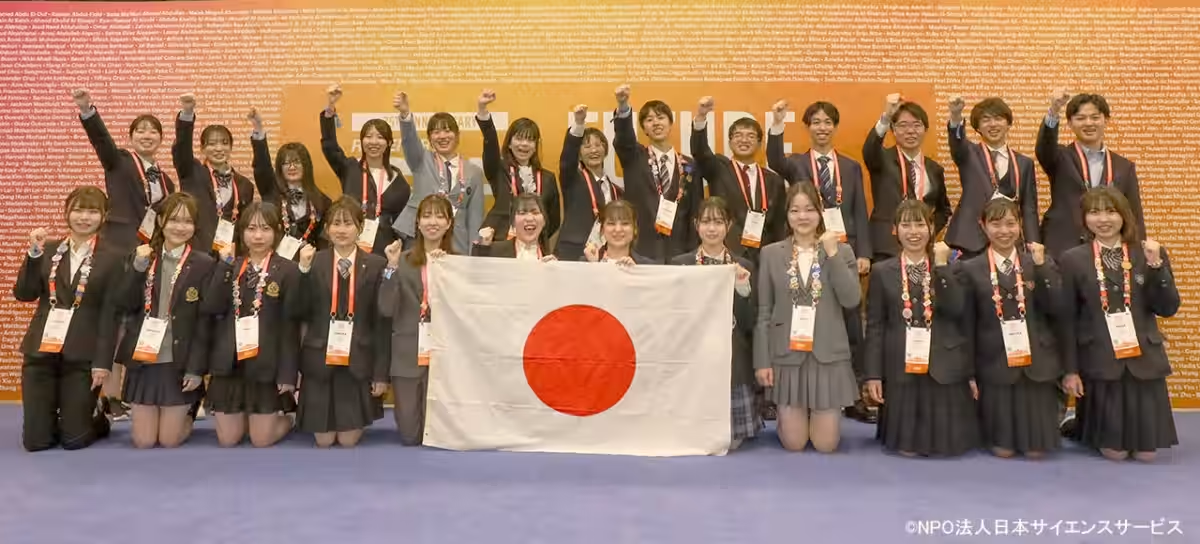
This year, Japan sent 25 students with 17 research projects, resulting in 2 top awards in their respective categories. The ISEF is a prestigious competition where finalists are selected from numerous affiliated contests held in about 400 areas worldwide. In Japan, representation comes from winning projects in contests such as the Japan Science and Engineering Challenge (JSEC) hosted by Asahi Shimbun and TV Asahi, and the Japan Student Science Award organized by Yomiuri Shimbun. Participants undergo rigorous training and English presentation preparation organized by the NPO Japan Science Service (NSS), an organization primarily consisting of ISEF alumni, ahead of their participation.
The ISEF evaluates submissions across 22 fields, ranging from foundational sciences like physics, chemistry, and biology to engineering and social sciences. Judging is conducted by experienced researchers holding PhDs, and awards for outstanding projects in the top 25% are given across categories.
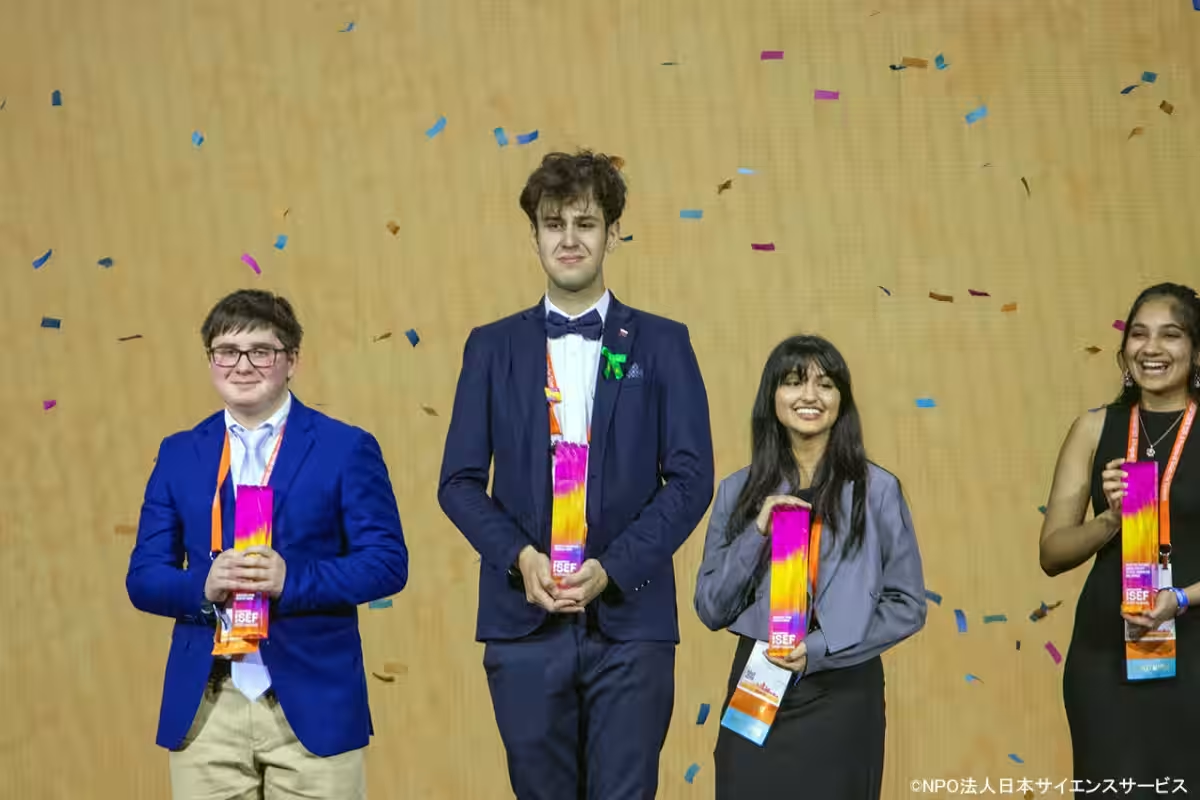
This year's notable winners from Japan included Yuimina Nishida from Minami High School in Yokohama and Yoshihiro Tanaka from Tsukuba University High School, both achieving high honors in their respective categories. The coveted George D. Yancopoulos Award, awarded to the overall top project, went to Adam Kovalcik from Slovakia, who received a prize of $100,000 for his work on antiviral compounds.
Award Recipients from Japan
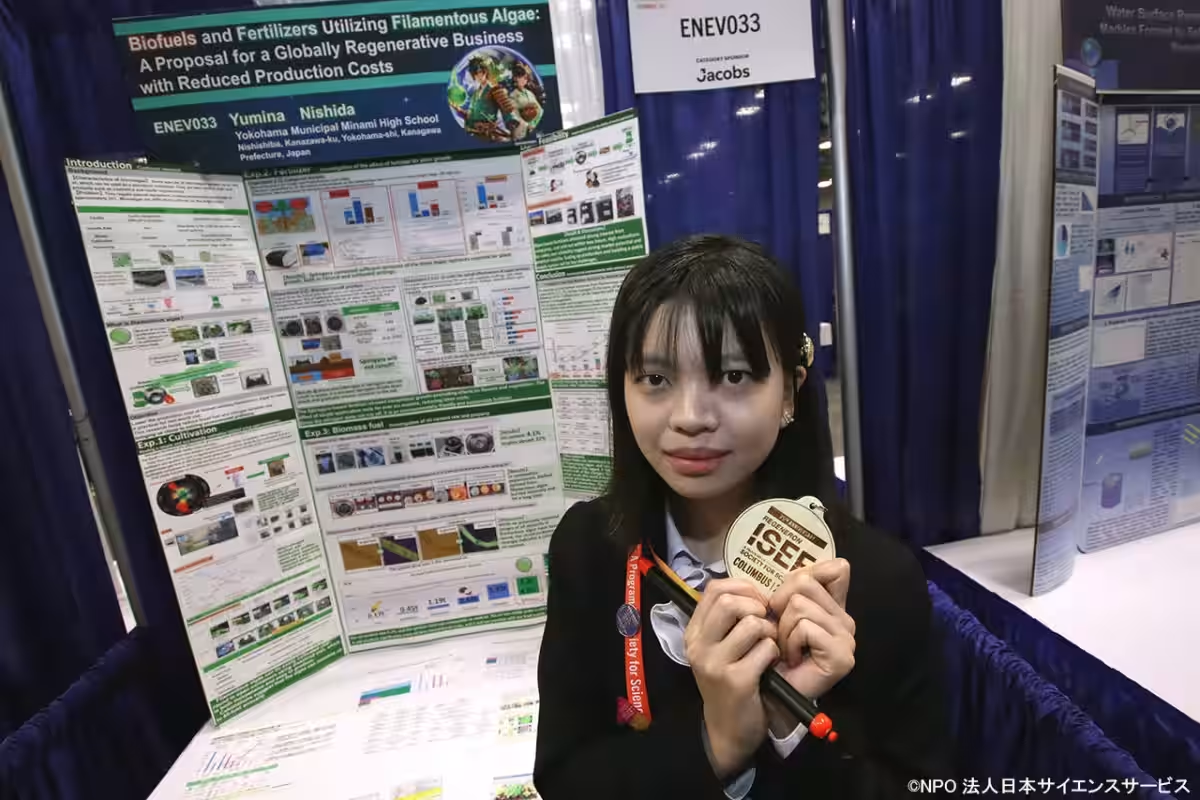
Environmental Engineering – 3rd Place
- - Recipient: Yuimina Nishida (Minami High School, Yokohama)
- - Research Title: Biofuels and Fertilizers Utilizing Filamentous Algae: A Proposal for a Globally Regenerative Business with Reduced Production Costs
- - Prize: $1,200
Nishida's research focused on the cultivation of filamentous algae, which are resistant to contamination by other organisms and can grow using only sunlight and water. Her findings suggest that these algae can be used for cost-effective biofuel production, with the leftover biomass serving as a nutrient-rich fertilizer.
Research Presentation
Physics and Astronomy – 4th Place
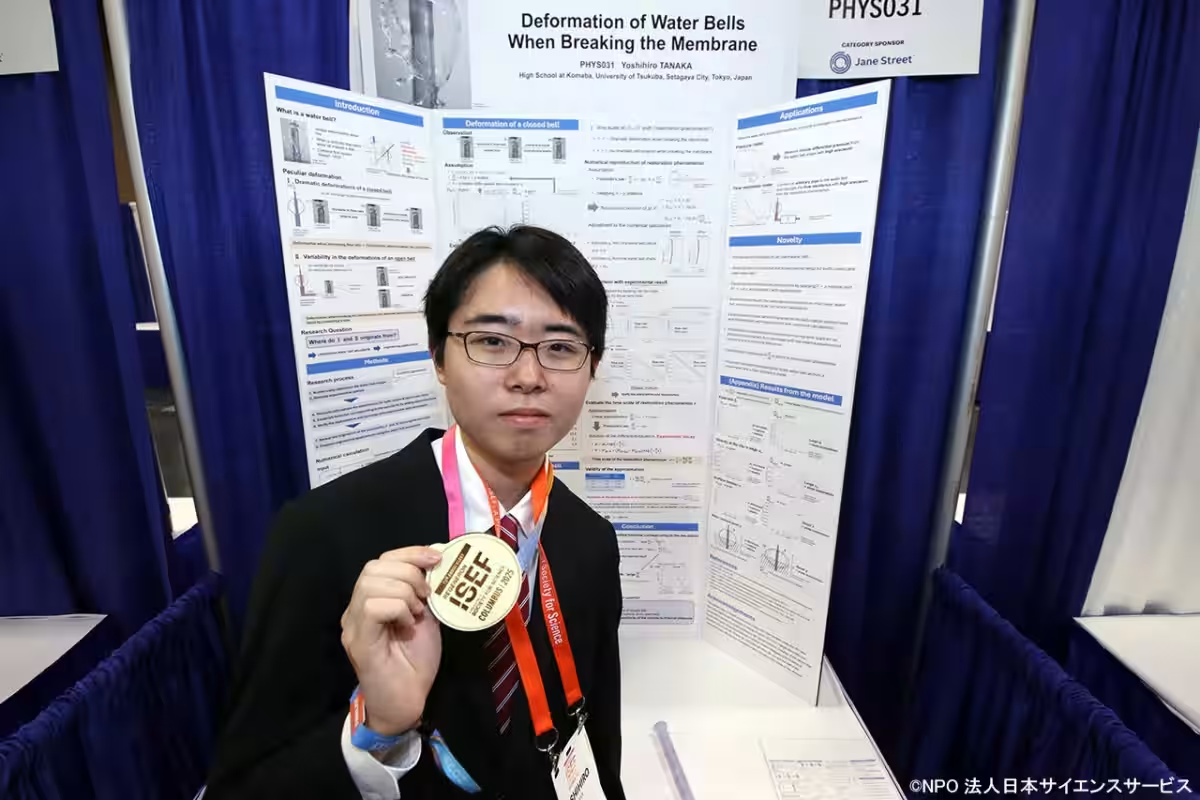
- - Recipient: Yoshihiro Tanaka (Tsukuba University High School)
- - Research Title: Deformation of Water Bells When Breaking the Membrane
- - Prize: $600
Tanaka's study explored the phenomenon of 'water bells,' the smooth water membranes formed in specific conditions, analyzing their deformation under various circumstances. Through quantitative methods, he developed theoretical models that align well with experimental outcomes, enriching our understanding of this captivating phenomenon.
Research Presentation
Additional Recognized Participants
Students from diverse schools showcased their innovative research in fields ranging from animal sciences to environmental studies. Significant contributions came from:
- - Ami Okubo (Yamawaki Gakuen High School) on Japanese newts' reproductive strategies.
- - Riko Fukuda (Kanagawa Prefectural Kawakazu High School) on equine-assisted activities.
The recognition of these brilliant young scholars not only highlights their efforts but also represents the future of scientific inquiry in Japan and beyond.
For further insights into the accomplishments of these bright minds, check out their presentations and the ongoing support from organizations like NSS, dedicated to fostering the next generation of researchers.
Conclusion
The impressive achievements of Japanese students at the Regeneron ISEF 2025 demonstrate the significant potential of young researchers in driving innovation and scientific discovery on a global stage.
Topics Entertainment & Media)
【About Using Articles】
You can freely use the title and article content by linking to the page where the article is posted.
※ Images cannot be used.
【About Links】
Links are free to use.