



Survey Reveals Family Communication Challenges During Holidays
Understanding Family Communication During Year-End Gatherings
As families gather to celebrate the year-end holidays, a recent survey by LIVENT has revealed interesting dynamics in how families communicate about important yet sensitive topics. With 73% of respondents planning to spend the holidays with family, discussions often revolve around everyday themes such as health and daily life. However, a significant 60% of participants admitted to avoiding 'what-if' conversations, which include topics related to funerals, inheritance, and caregiving.
Importance of the Study
LIVENT, a company dedicated to creating meaningful connections and discussions around significant life events, conducted this survey to explore the types of conversations families engage in during this critical time. The survey sheds light particularly on the difficulty surrounding 'what-if' conversations, which are vital for preparing family members for the future.
Survey Findings
1. Family Conversations Focus on Everyday Life
Most families tend to focus on topics such as health (63%), work and daily life (62%), and children or grandchildren (50%). These everyday discussions are common across various age groups, reinforcing the idea that families prefer to share lighter stories over heavier subjects.
2. Reluctance to Address Sensitive Topics
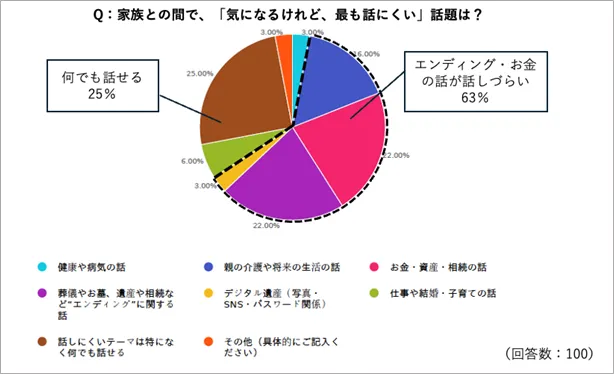
When it comes to more serious matters, 44% of respondents found that discussions around endings and finances were particularly challenging. Moreover, 16% indicated the topic of caregiving was also hard to address, showing that sensitive subjects are often left untouched, even among family members who have shared more profound discussions.
3. Communication Barriers
Interestingly, while over 80% of people reported having discussed potential future scenarios with family, many conversations remain superficial. Only about 39% had engaged in specific discussions, with 42% having touched upon them vaguely. Barriers to discussing these sensitive topics include uncertainty about how to bring them up (36.8%) and concerns about timing or causing discomfort (31.6%).
4. Digital Heritage Awareness
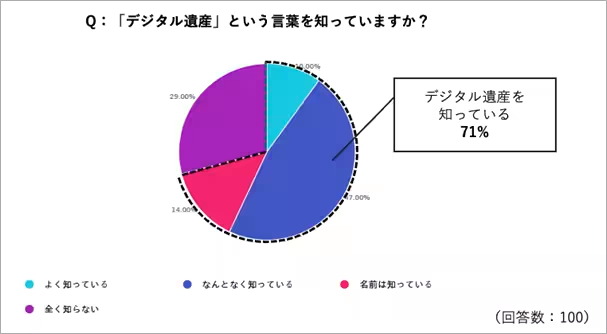
The survey also explored attitudes towards ‘digital legacies,’ which include information stored in digital formats like online bank accounts and personal memories. A mere 10% of respondents claimed to have a good understanding of digital legacies, highlighting a gap in awareness despite a strong desire to preserve crucial digital information for future generations.
Shifts in Values Towards Heritage
Respondents expressed a desire to leave behind not only digital assets like passwords and online accounts but also personal notes and letters. Approximately 65% wanted to ensure critical contact information was preserved, indicating that emotional connections remain significant alongside digital legacies.
5. Low Awareness of Digital Legacies
While a majority have heard of digital legacies, only a small fraction understand them deeply. Eighty percent know the term vaguely, but there is a serious lack of comprehensive understanding, suggesting that as our lives become increasingly digital, the need for awareness about digital legacies is more pressing than ever.
Reflections on the Future
LIVENT aims to bridge the communication gap by encouraging families to engage in discussions that may seem daunting but are essential for future preparedness. As the company continues to support families in navigating difficult conversations, especially during significant gatherings like year-end holidays, it hopes to foster deeper connections and facilitate vital discussions about legacies, both digital and personal.
LIVENT's initiatives encourage not only the sharing of crucial information but also the nurturing of emotional legacies, emphasizing that it is possible to blend digital and sentimental values within our heritages. The ongoing challenge is to cultivate an environment where these conversations can take place openly and without stigmas, allowing for a more secure and fulfilling familial bond.
In conclusion, the survey by LIVENT reveals a pressing need for families to breakdown walls around difficult conversations. The journey towards a brighter future rests in the ability of families to engage in open dialogue about what truly matters in life and legacy.
Topics People & Culture)




【About Using Articles】
You can freely use the title and article content by linking to the page where the article is posted.
※ Images cannot be used.
【About Links】
Links are free to use.