



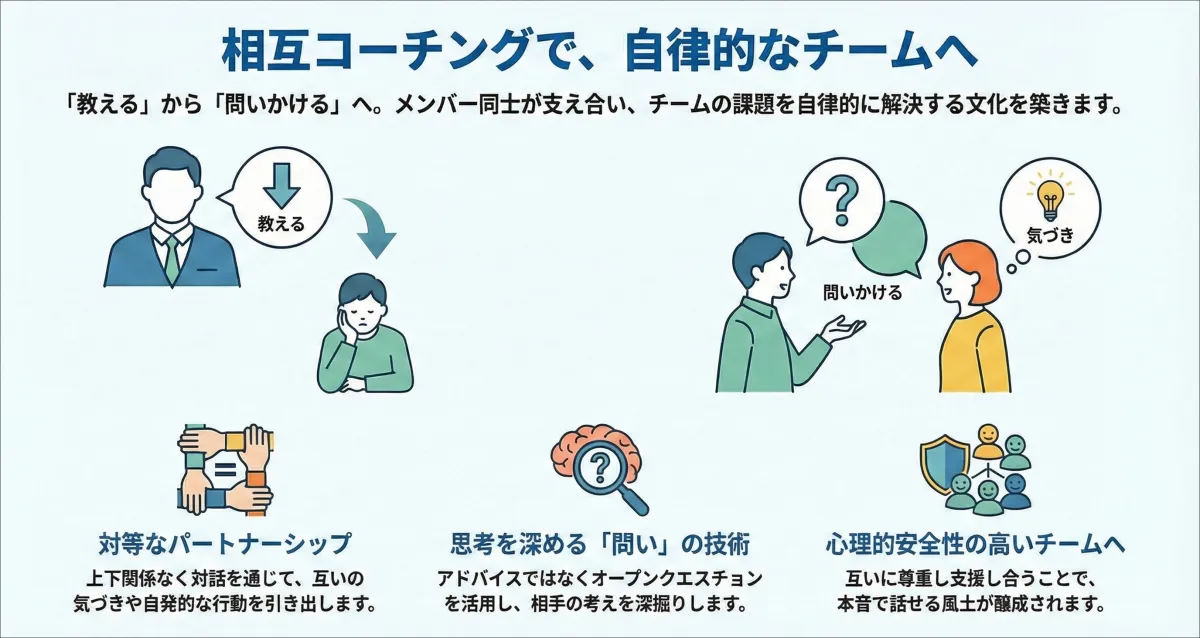
Interactive Coaching Training Released to Boost Team Collaboration and Combat Dependency in Work Environments
Introduction of Interactive Coaching Training
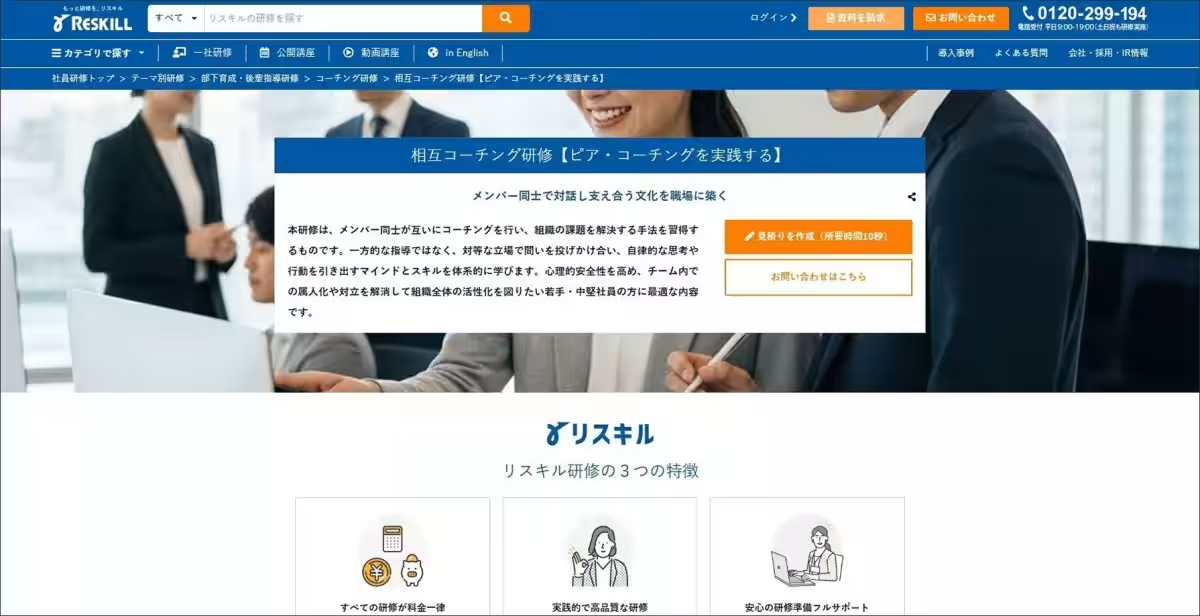
RISKILL, a company committed to enhancing workplace dynamics, has launched a new training program designed to cultivate a culture of peer support and interaction among employees. The Interactive Coaching Training is a systematic approach that empowers team members to engage in mutual coaching, effectively tackling organizational challenges through collective effort.
The Importance of Dialogue in Modern Workplaces
In today's business environment, dependencies on specific individuals and stagnation within teams are growing concerns. Traditional directive approaches often fall short in addressing various challenges arising in the workplace. The essence of establishing a thriving organization lies in nurturing a culture where members respect each other and can engage in candid discussions.
The Demand for Self-Directed Team Management
There is an increasing need for a system where team members can proactively support one another without solely relying on experts or superiors. Implementing peer coaching techniques fosters psychological safety within teams, making it an effective strategy for contemporary business needs. RISKILL has thus developed a framework for Interactive Coaching that can be seamlessly integrated into daily operations.
Overview of the Interactive Coaching Training
Training Target
- - Young professionals and mid-career employees
Skills Acquired
- - Establishing habits for self-directed problem-solving among team members.
- - Enhancing thought processes and behaviors through deep questioning techniques.
- - Strengthening psychological safety within teams through mutual respect and support.
Key Features of the Program
1. Understanding Peer Coaching: Participants will gain insights into mutual coaching practices, distinguishing it from traditional hierarchical training approaches. Instead of one-sided teaching, the focus is on mutual growth and shared learning.
2. Implementation of Questioning Techniques: Attendees will learn specific questioning patterns that address facts, interpretations, and emotions. By minimizing reliance on advice, participants will leverage open questions to effectively encourage spontaneous transformations.
3. Understanding Sustainable Practices: The training emphasizes utilizing even brief moments, like 10-minute sessions, to achieve impactful outcomes. Strategies are provided for maintaining these practices post-training while avoiding common pitfalls.
Selected Curriculum Outline
1. Team Challenges and Peer Coaching:
- Understanding common team challenges (stagnation, dependency, conflicts).
- Exploring foundational concepts and execution methods of peer coaching.
- Comprehending the coaching mindset, which emphasizes neutrality, respect, and self-agency.
2. Techniques for Encouraging Problem-Solving:
- Analyzing the structure of questions that deepen thought (open questions).
- Formulating questions that clarify situations (facts, interpretations, emotions).
- Expanding perspectives, envisioning futures, and prompting actions through effective questioning.
3. Practical Application:
- Learning the basic structure of 10-minute coaching and how to integrate it into daily routines.
- Identifying key points to prevent the stagnation of peer coaching practices.
- Reviewing common failure patterns within teams and addressing them proactively.
About RISKILL
RISKILL operates under the slogan “More Training!” providing a diverse array of training programs, including the Interactive Coaching Training. Known for its transparent pricing model, RISKILL offers business training sessions at a flat rate, supplemented by comprehensive support from the planning stage through to training execution. The firm ensures a high-quality experience by alleviating the workload for corporate staff through logistical support such as mailing materials and equipment.
In conclusion, the Interactive Coaching Training represents a significant advancement for organizations seeking to enhance collaboration and efficiency. As businesses continue to evolve, this training will serve as a vital tool for maintaining a dynamic and engaged workforce.
Topics People & Culture)


【About Using Articles】
You can freely use the title and article content by linking to the page where the article is posted.
※ Images cannot be used.
【About Links】
Links are free to use.