



Addressing the Impact of Childhood Abuse: Advocacy for ACE Survivors
Overview of the ACE Survivor Advocacy Event
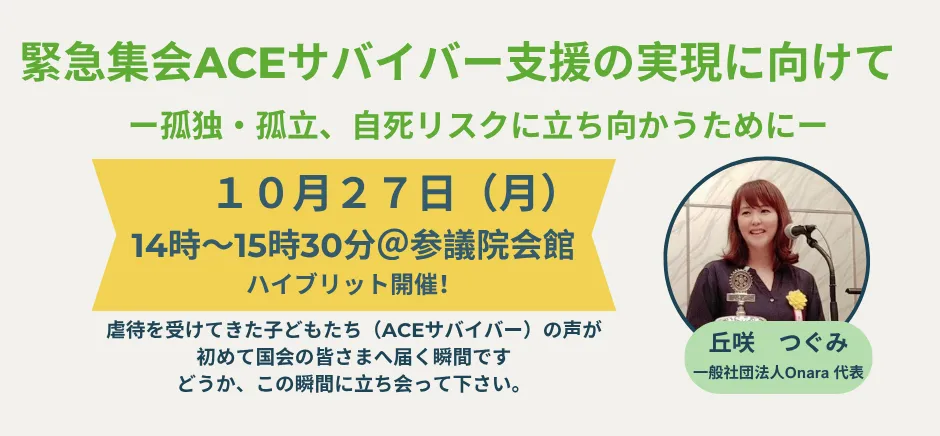
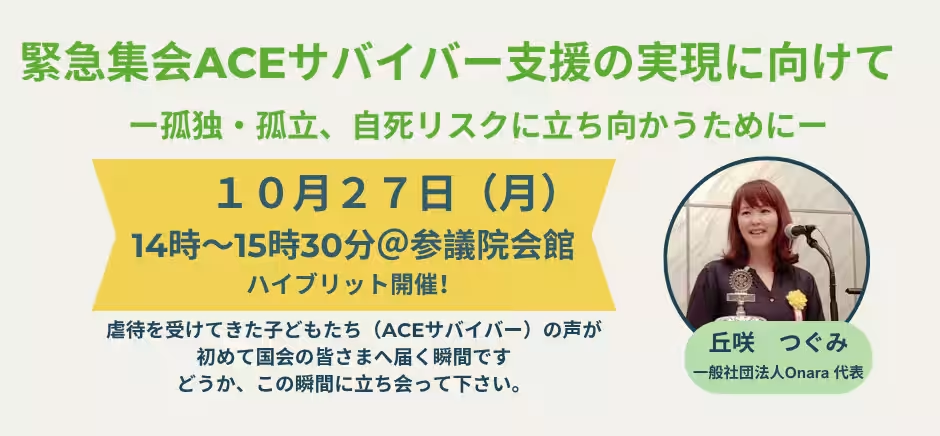
On October 27, 2025, a pivotal event will take place at the Japanese House of Councillors, focusing on the severe implications of Adverse Childhood Experiences (ACE). This event, organized by the general incorporated association Onara, will aim to raise awareness and seek legislative support for survivors of childhood abuse. The representative of Onara, Ms. Tsugumi Okuzaki, will lead the initiative, bringing to light the pressing needs of ACE survivors who continue to suffer long-term effects from their traumatic experiences.
The upcoming gathering is open to the general public and aims to engage both lawmakers from various political affiliations and experts in the field to discuss the current challenges faced by ACE survivors. In a society where various forms of abuse often go unnoticed, it's essential to shed light on the invisible wounds inflicted during childhood.
The Significance of the Event
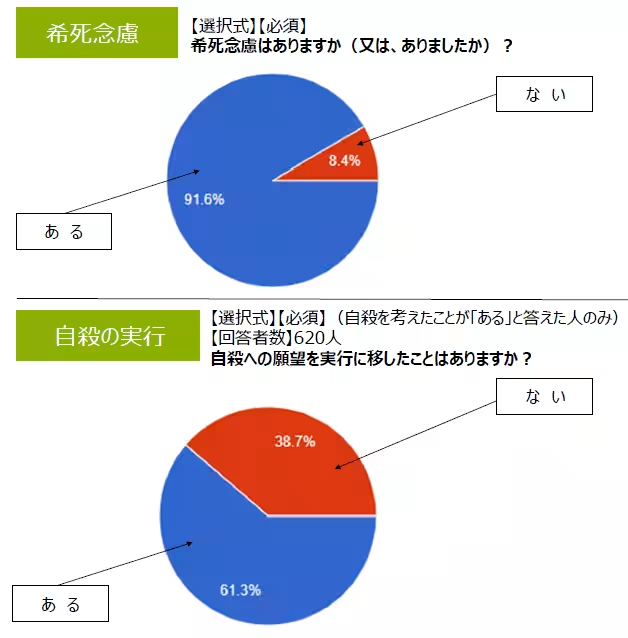
Recent statistics indicate that many individuals suffering from the repercussions of childhood abuse continue to exist in social isolation, facing a frighteningly high risk of suicide. According to a survey conducted by Onara in 2023, a staggering 91.1% of respondents reported suicidal thoughts stemming from their adverse childhood experiences. This alarming figure underscores the urgency for advocacy and support systems specifically designed for ACE survivors.
The forthcoming event will feature expert presentations addressing the psychosocial impacts of ACE, alongside testimonials from survivors themselves. Through these discussions, the aim is to deepen the understanding among policymakers and stakeholders about the importance of creating a supportive environment for those affected.
Understanding Adverse Childhood Experiences (ACE)
ACE refers to any traumatic experiences that occur to individuals during childhood, encompassing abuse and neglect. The experiences can be categorized as follows:
1. Physical Abuse: Acts of violence such as hitting or shouting.
2. Psychological Abuse: Emotional abuse like insults or threats.
3. Sexual Abuse: Any form of non-consensual contact.
4. Physical Neglect: Failing to provide adequate basic needs like food and shelter.
5. Emotional Neglect: Ignoring a child's emotional needs.
6. Exposure to Domestic Violence: Witnessing violence within the home.
7. Mental Health Issues in Family: Struggles with mental illness or suicide attempts.
8. Substance Abuse in Family: Drug or alcohol dependency.
9. Criminal History: Family members with incarceration records.
10. Parental Divorce or Separation: The impact of a family breaking apart.
Data collected in 2022 by Haruyo Mitani from Ryukoku University supports the assertion that ACE significantly increases the likelihood of suicidal ideation among adults who faced such adversities as children.
A Call to Action
This advocacy event aims to create a dialogue not only about the traumas suffered by many but also about potential policy changes that could provide better support systems. By bringing together lawmakers, mental health experts, and ACE survivors, the goal is to foster a rich exchange of ideas and formulate actionable steps toward improving the lives of those who have suffered.
The meeting will include a structured program with expert presentations, survivor testimonials, and opportunities for attendees to engage in discussions. Among the presenters are noted experts such as Dr. Haruyo Mitani, who will elucidate the health risks associated with ACE, and Dr. Toshio Maihara, who will share insights on trauma-informed care for affected individuals.
Participating and Raising Awareness
In recent years, advocacy groups have increasingly recognized the severity of childhood abuse issues. Onara has been particularly proactive, gathering both qualitative and quantitative data on the subject. The statistics reveal that 84.3% of participants in their surveys have a history of psychiatric care, and a substantial proportion live below the poverty line, further complicating their recovery.
Attendance is open to the public, with a nominal participation fee. Onara aims for approximately 100 attendees, including government officials and interested citizens, to join the discussion on implementing support measures for ACE survivors.
This event represents not only an opportunity to vocalize the struggles of many but also to envision a future where every ACE survivor can heal and thrive. As Ms. Okuzaki eloquently puts it, the dream is to cultivate a society where all children, despite their past, can feel that they have lived a life worth living.
For more details about registration and participation, please visit Onara's official page or their event link on Peatix.
Conclusion
As we stand on the precipice of change, the ACE survivor advocacy event is a stepping stone towards effective policymaking and societal healing. It is a call to action for everyone, stating that we are only as strong as the most vulnerable among us, and it is our duty to advocate for a supportive future for all survivors of childhood abuse.





Topics People & Culture)



【About Using Articles】
You can freely use the title and article content by linking to the page where the article is posted.
※ Images cannot be used.
【About Links】
Links are free to use.