



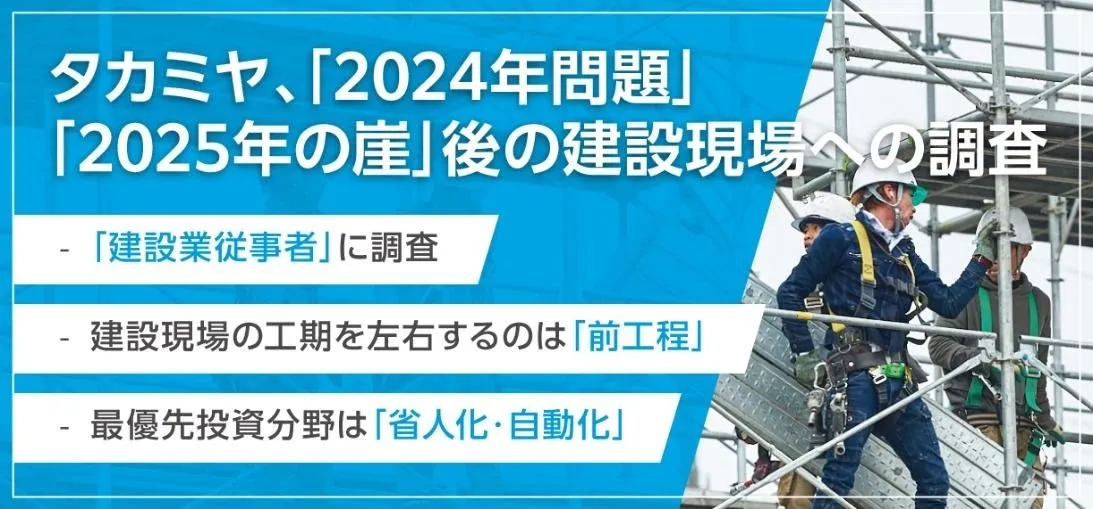
Impact of the 2024 Construction Problem on Modern Construction Sites
Understanding the Current Challenges on Construction Sites
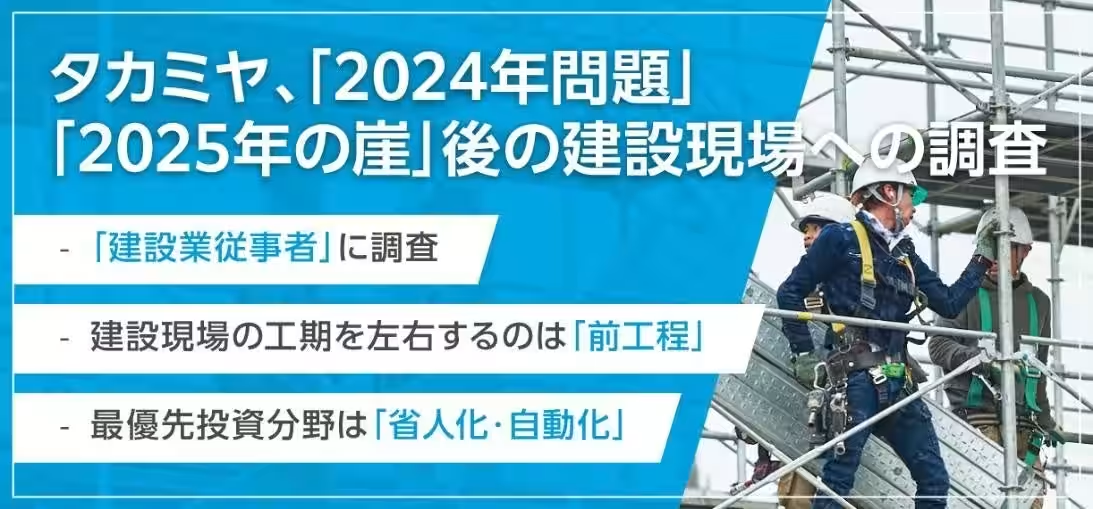
In recent years, the construction industry in Japan has been facing tremendous challenges, particularly due to the looming 2024 Problem and the anticipated 2025 Cliff. These concerns were thoroughly analyzed in a recent survey conducted by Takamiya Co., Ltd., a pioneer in construction platform solutions, targeting 500 construction professionals aged 20 to 70.
Effects of the 2024 Problem and 2025 Cliff
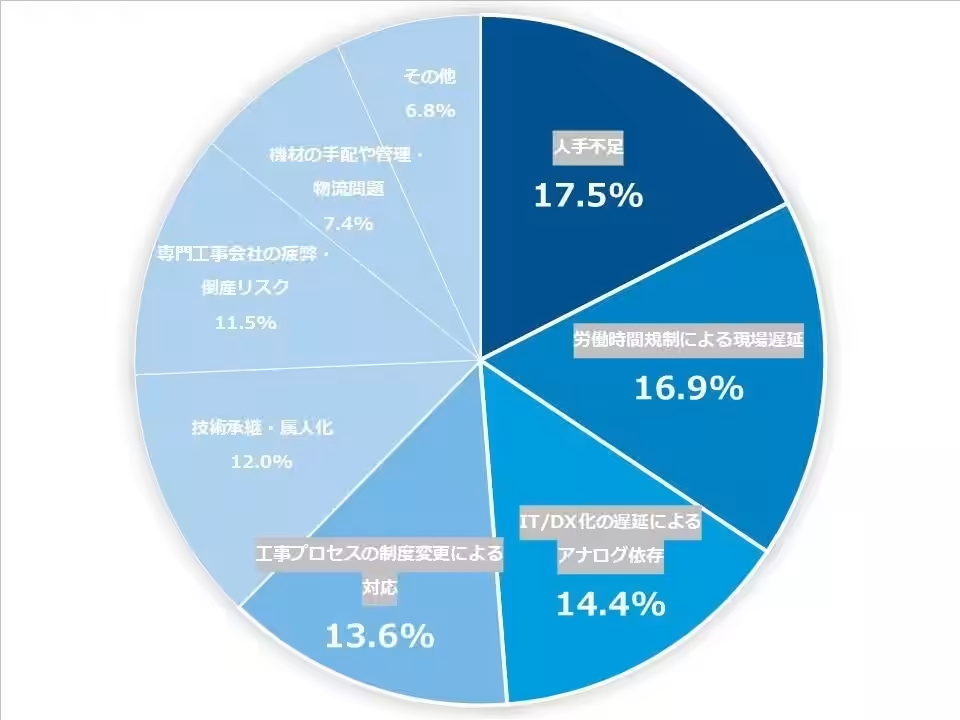
Takamiya’s survey highlighted that the most significant concern regarding the 2024 Problem, which entails strict regulations on overtime work, is labor shortages and aging workforce, as cited by 17.5% of respondents. Following this, non-compliance with labor hour regulations (16.9%), delays in IT and digitalization (14.4%), and limitations of traditional processes (13.6%) also emerged as critical issues. These multifaceted challenges illustrate a widespread crisis in the sector.
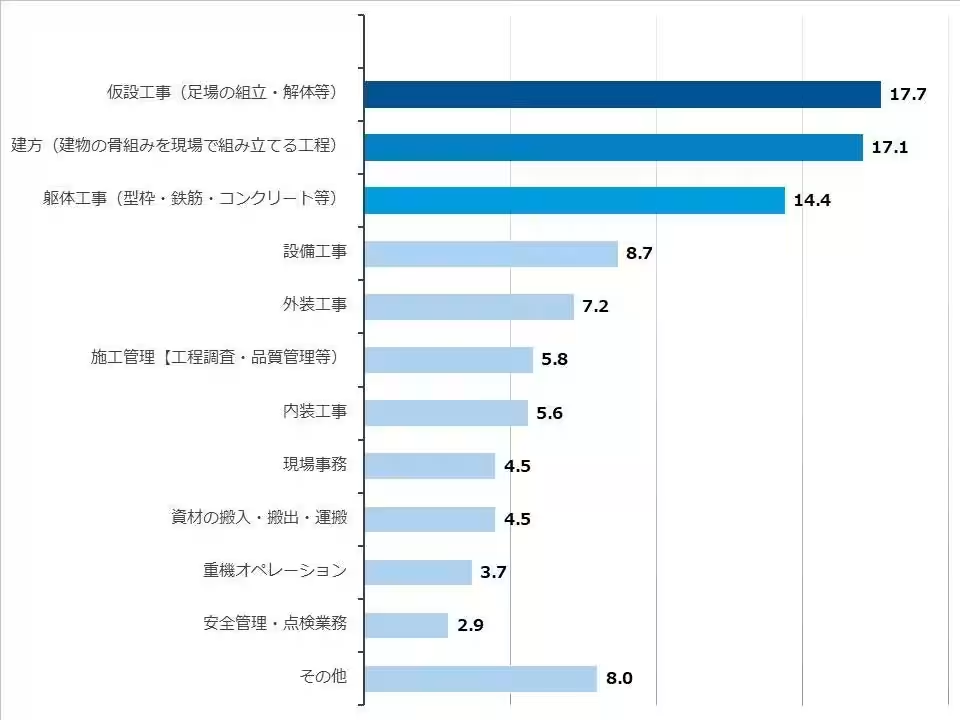
Interestingly, professionals indicated that sectors experiencing the most acute shortages are typically involved in the early stages of construction. Specifically, the temporary works (scaffolding assembly and dismantling) rated highest at 17.7%, followed by building construction at 17.1% and structural works at 14.4%. This pattern emphasizes that the initial stages are crucial for timely project deliveries.
The Consequences of Scaffold Delays
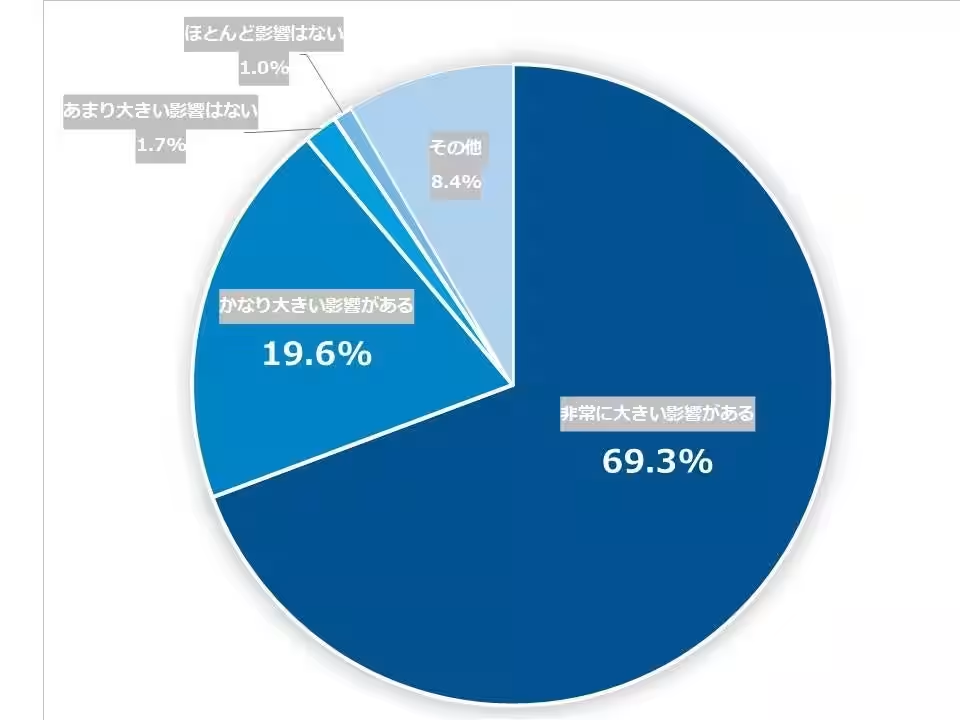
A staggering 88.9% of respondents expressed that delays in scaffolding significantly impact project timelines and budgets. About 69.3% specifically felt that these delays would have a very serious impact on construction schedules, costs, and safety measures. This response underscores the urgency for industry stakeholders to address these issues comprehensively.
Future Investments: Automation and Digitalization
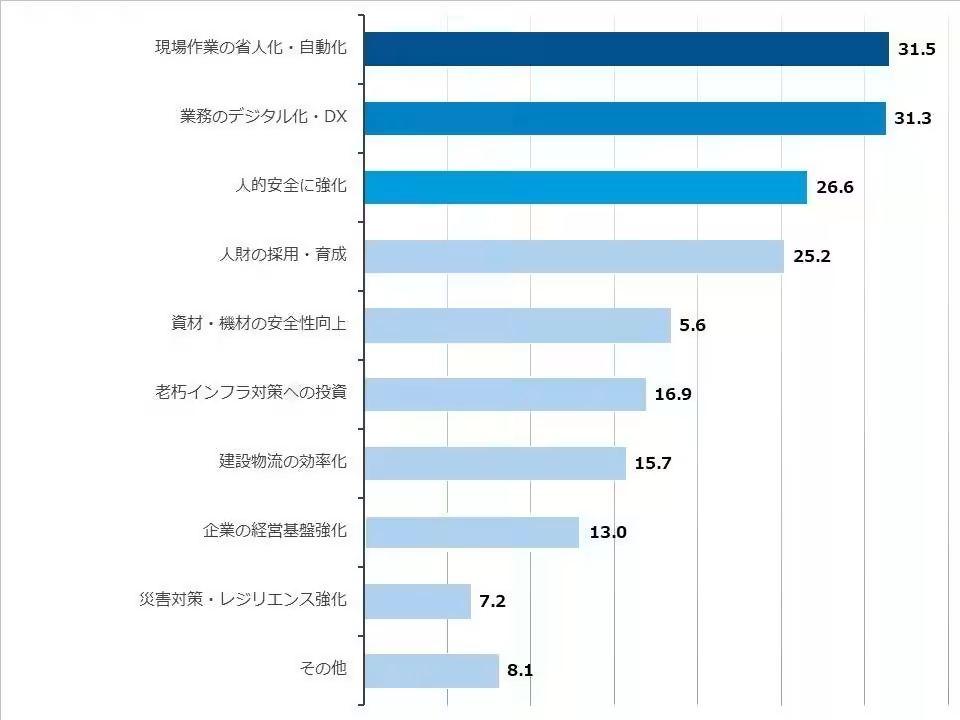
With foresight into the next decade, the survey's participants concluded that the most vital areas for investment include automation and labor minimization (31.5%), closely followed by enhanced worker safety (31.3%) and digital transformation initiatives (26.6%). This indicates a shift away from over-reliance on human labor towards future-ready solutions that incorporate technology.
The broader implications of these findings suggest that the construction industry is not just grappling with shortages, but it faces a fundamental transformation regarding its operational methodologies and workforce management.
Addressing Structural Issues in Labor
As indicated by the results of the survey, labor shortages are not just limited to a lack of available workers; rather, they arise from the structural frameworks within construction projects themselves. The shift towards automation and innovative processes is more than a strategic advantage—it’s become a necessity. With report data confirming that the limitations of both existing work practices and regulations cannot accommodate traditional manpower, industry professionals are beginning to implement more radical changes in how they approach construction.
Takamiya’s Solutions
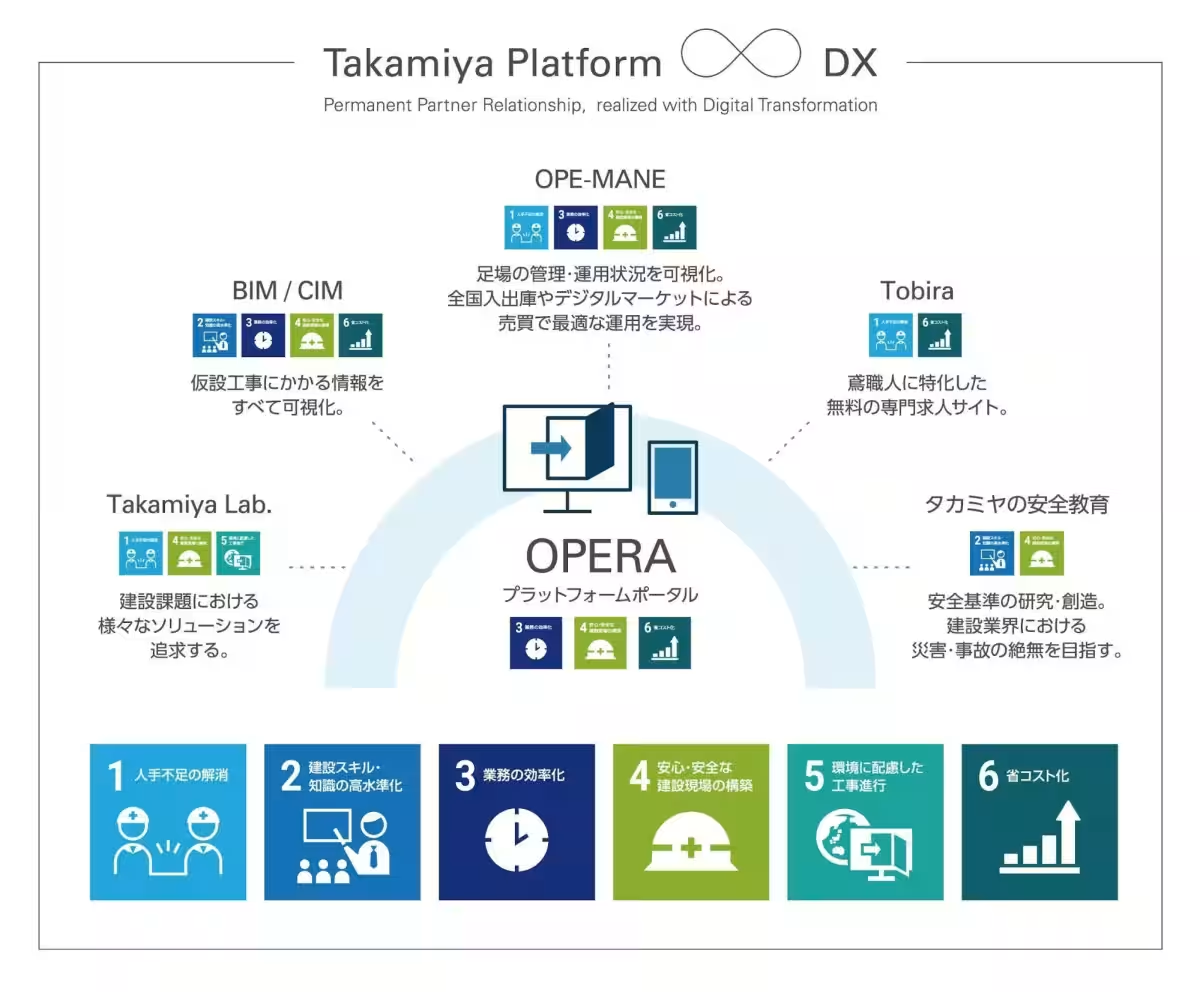
To address these challenges, Takamiya has introduced the Takamiya Platform, which offers a range of construction digital solutions aimed at addressing the ongoing labor shortages and optimizing work processes. From digital orders to management systems for equipment usage, the platform enhances efficiency and cost-effectiveness.
- - OPERA: Facilitates 24/7 online ordering of temporary materials, boosting operational efficiency through digital processes.
- - OPE-MANE: Manages the utilization of scaffolding resources, allowing users to oversee and maintain equipment remotely, akin to an ATM service for scaffolding.
- - Iq-Bid: A real-time marketplace for next-generation scaffolding, enabling users to trade and rent equipment efficiently.
- - BIM/CIM Services: Assist in digitizing construction design through the application of 3D laser scanning technology.
- - Job Portal for Scaffolders: Aims to alleviate labor shortages by enhancing recruitment efforts in this critical workforce segment.
- - Safety Education Programs: Incorporate advanced training methods and simulations for construction workers focusing on fall prevention and safety practices.
With these initiatives, Takamiya aims to not only address the immediate issues at hand but to significantly enhance overall productivity and safety across the construction sector.
Conclusion
As Japan's construction industry navigates through these turbulent times, addressing labor shortages and embracing automation remains pivotal. The insights uncovered from the Takamiya survey outline the necessity for both immediate action and long-term strategic planning. There is hope that by investing in the right technologies and processes, the sector can emerge stronger and more resilient.
Topics Consumer Products & Retail)
【About Using Articles】
You can freely use the title and article content by linking to the page where the article is posted.
※ Images cannot be used.
【About Links】
Links are free to use.